Save the date! Well and Septic Maintenance Training This Spring

We are excited to announce that the Anoka County Water Resource Outreach Collaborative has scheduled another Well and Septic Maintenance Training!

The training is through the University of Minnesota’s Onsite Sewage Treatment Program and will be held in Ramsey, MN on March 10th, 2020.

A flyer and registration link will be developed in the near future, so stay tuned for updates!

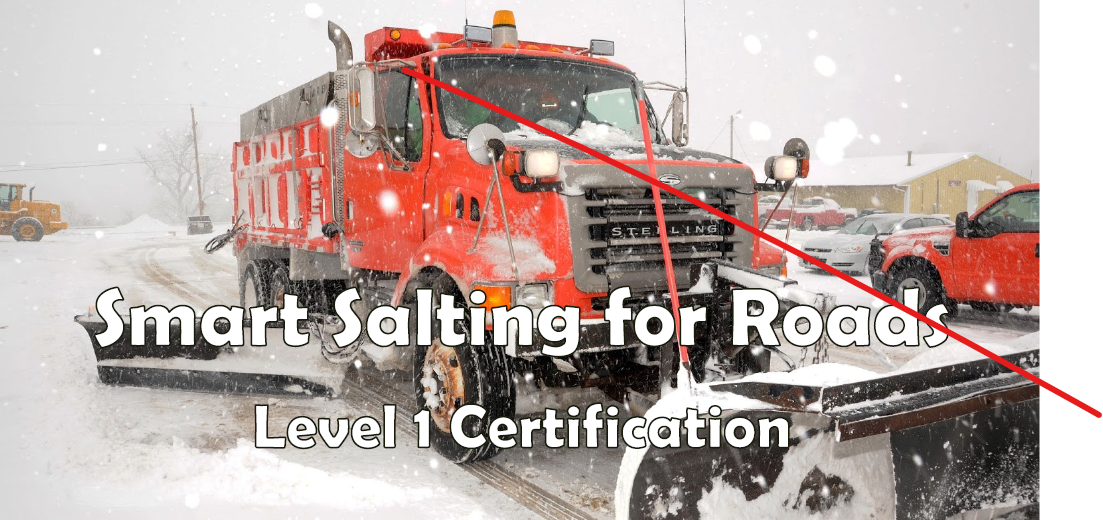
Upcoming Smart Salting for Roads – Level 1 Class

Do any of the following describe you?

  • State, city, and county road maintenance staff
  • Contractors or private maintenance company
  • Staff or volunteer who manages snow and ice at a facility
  • Property manager
  • Distributors of anti-icing/de-icing products
  • An association who hires contractors

If so, this FREE upcoming smart salting training may be for you! Learn practical winter maintenance while saving money and time and minimizing impacts on the environment. Plus, there will be FREE coffee and breakfast!

The Smart Salting Level 1 Roads Certification Training on Wednesday, October 9th from 7:30 am to noon will help you learn how to integrate science with practical winter maintenance through presentations and class exercises. The practices you learn will help you save money, time, and the environment. You will be given a manual to keep as a reference.

What exactly will be covered in the class?

  • Application rates of materials (e.g. salt)
  • How to calibrate equipment
  • Weather conditions
  • Storing your materials
  • New maintenance methods
  • De-icing and anti-icing
  • Environmental effects
  • And more!

You can also GET CERTIFIED! An optional test is offered at the end of the workshop to earn a certification from the Minnesota Pollution Control Agency (MPCA).

Why is this training needed??

The salt applied to parking lots, sidewalks, and roads each year can have detrimental impacts to local waterways, plants, and wildlife. When snow and ice melts, salt runs into lakes and rivers, polluting water and harming aquatic life. The Minnesota Pollution Control Agency (MPCA) estimates that 365,000 tons of road salt are used annually in the Twin Cities, and a single teaspoon of this salt can permanently pollute five gallons of water. At the same time, salt application is an important part of keeping Minnesotans safe in the winter, and correct application of de-icers and anti-icers can make the difference between a treacherous path and a safe walkway.

The class will be held at the Blaine Public Works Facility (1801 101st Ave NE, Blaine, MN 55449). Please register here.

Questions? Contact Emily Johnson (emily.johnson@anokaswcd.org, 763-434-2030 x17)

Funding for this workshop is provided by MPCA through a grant from US EPA, Section 319 Nonpoint Source Management Fund. The course and materials were originally developed for the Mississippi Watershed Management Organization by Fortin Consulting, Inc. Content was created and reviewed through extensive collaboration with local experts.

Climate Week 2019

Climate week is September 23rd through 28th this year, and the Minnesota Department of Natural Resources (DNR) is one of many entities nationwide taking action this week! Check out this article from their news release earlier today.

Climate change and our water resources are intimately connected, so it is important for us to be aware of the impacts of climate change to protect these valuable resources. What will you do this week in recognition of climate week?

Upcoming Conversation on Drinking Water Protection with Environmental Initiative

Environmental Initiative, “a non-profit that helps develop partnerships and collaborative solutions to Minnesota’s environmental challenges” is hosting conversations around the state in regard to drinking water protection, in hopes of developing a statewide collaborative effort to protect drinking water at its source.

There will be a conversation for the NW metro on Thursday, September 26th from 5:30-8 pm at the Coon Rapids Civic Center (11155 Robinson Drive, Coon Rapids, MN 55433) in the Riverwind 2 room. Dinner will be provided from 5:30-6 pm, so please RSVP here or contact Erin Niehoff at eniehoff@en-in.org.

“The aim of the these conversations is to hear about community successes, challenges, and needs surrounding drinking water protection. The conversation will cover topics related to drinking water and land uses, such as landfills, storage tanks, septic systems, storm water runoff from road and land surfaces, agriculture, mining, forestry, industry and more… The conversation will also guide what the collaborative might look like, what it could accomplish, and who might be involved.” 

Learn more about Environmental Initiative here.

Image belongs to Environmental Initiative.

Upcoming Smart Salting Trainings

Whether we like it or not, winter is coming! There are several Smart Salting Certification Trainings coming up in September. For more information on any of these events, head over to the Events page and click on the training you want to learn more about or register for.

September 11th – Smart Salting for Parking Lots and Sidewalks Training

  • Host: Rice Creek Watershed District
  • Location: Blaine City Hall
  • Cost: Free

September 19th – Smart Salting for Parking Lots and Sidewalks Training

  • Host: Coon Creek Watershed District
  • Location: Springbrook Nature Center
  • Cost: $10 – includes a free pavement sensor!

September 26th – Smart Salting for Property Managers Training (NEW!)

  • Host: Rice Creek Watershed District
  • Location: St. Anthony Village City Hall
  • Cost: Free

September 27th – Smart Salting for Property Managers Training (NEW!)

  • Host: Anoka Conservation District and Coon Creek Watershed District
  • Location: SBM Fire Station 3 (11920 Ulysses St NE, Blaine)
  • Cost: $5

Met Council Water Efficiency Grant Program

The Met Council has announced a new grant program aiming to increase water efficiency in the 7-county metro area!

“The Metropolitan Council will implement a water efficiency grant program effective September 30, 2019 to June 30, 2022. Grants will be awarded on a competitive basis to municipalities that manage municipal water systems.”

Amount: $2,000 to $50,000

Application due: September 30, 2019

See the Met Council’s funding page for more details, an application, and an example application.

Comments sought on Rum River development variance in St. Francis

The DNR is seeking public comments on the City of St. Francis variance to wild and scenic rules applied to Rum Riverchapter 6105 .

Within a nearly 500-acre area of land along the Rum River on the City’s north side, the City of St. Francis is proposing to:

  1. Reduce the minimum riparian lot area from the required 4 acres to 20,000 square feet. See Minn. R. 6105.0110, subp. 2(B).
  2. Reduce the minimum non-riparian lot area from the required 4 acres to a density range of 2-7 units/acres. See Minn. R. 6105.0110, subp. 2(B).
  3. Reduce the minimum riparian lot width from the required 250 feet to 70 feet. See Minn. R. 6105.0110, subp. 2(B)
  4. Reduce the OHWL structure setback from the normal high water mark from the required 150 feet to 75 feet. See Minn. R. 6105.0100, subp. 3(B)(1).
  5. Allow attached housing as permitted uses instead of limiting development to single-family residential uses. See Minn. R. 6105.0100, subp. 3)
  6. Allow development to be processed through City’s Planned Unit Development (PUD) process instead of the Planned Cluster Development (PCD) process allowed in rule. See Minn. R. 6106.0140, subp. 3.

Variance to State Rules. The City has petitioned the DNR for the above-referenced variances pursuant to Minnesota Statutes, sections 14.055 and 14.056. The City’s petition requests that DNR grant “discretionary variances” to the above-referenced rules pursuant to Minnesota Statutes, section 14.055 subdivision 4. The DNR will review the application and consider all comments received in developing a decision.

Notice of Variance Petition

Variance Petition

The City of St. Francis has submitted the following documents as part of the petition:

Comments must be submitted by 4:30 p.m. on April 26, 2019.

Email comments to Dan Petrik at daniel.petrik@state.mn.us .

Send written comments to: Minnesota Department of Natural Resources
Attn: St. Francis Variance – Dan Petrik
500 Lafayette Road, Box 25
St. Paul, MN 55155-4025

If you need documents in an alternate format, please contact Dan Petrik at daniel.petrik@state.mn.us. 

Well water wise week 3W | May 6-10, 2019

The Anoka County Community Health and Environmental Services (CHES) Department, in cooperation with 15 municipalities and county agencies, is sponsoring the 20th annual Well Water Wise (3W) week promotion May 6-10, 2019 to encourage residents to check the safety of their private well water. For information on private well testing go to the Anoka County Environmental Services Well Water Testing webpage or call 763-324-4260.

County residents may pick up a well water test kit at participating city and township offices (listed below) or from Environmental Services, Suite 600 of the Anoka County Government Center, 2100 3rd Avenue in Anoka. Water samples can be submitted to the county’s Environmental Services Unit for analysis every Monday from 8 a.m. to 4:15 p.m. and Tuesday from 8 a.m. to noon.

DURING 3W WEEK, samples can be submitted Monday through Thursday (8 a.m. to 4:15 p.m.) and Friday (before noon). The well water testing kit includes details about water collection and submission. A laboratory fee of $30.00 will be charged for coliform bacteria and nitrate-nitrogen analysis.


Unlike public water utilities, private well water is not treated with chlorine to prevent bacteria growth. Simply looking at the appearance of drinking water is not a reliable indicator of whether it is safe to drink. An annual coliform bacteria test is a good way to ensure that your drinking water continues to be free of bacteria.

Nitrate-nitrogen occurs naturally in groundwater and wells at concentrations below one milligram per liter (mg/L). Nitrogen can seep into private wells from a variety of sources including septic systems, nitrogen fertilizers, animal feedlots, and landfills. The Minnesota Department of Health has established a Health Risk Limit (HRL) for nitrate-nitrogen at 10 mg/L. Levels above that point may pose an immediate risk to infants and pregnant women.

The testing of private wells used for drinking water is the responsibility of individual owners. There are an estimated 25,000 private wells in service throughout Anoka County. Only a small percentage of them are tested annually. For more information about well water testing, call the Environmental Services Unit at 763-324-4260.

Pick up a well water testing kit at participating communities and agencies:

Attention lake residents

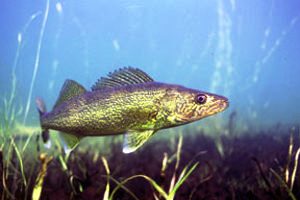
Fish kill events may provide clues about greater ecosystem-level issues such as fish affected by Viral Hemorrhagic Septicemia virus (VHSv), water quality degradation, or invasive species. 

If you spot a fish kill this spring, please report it to the Minnesota Aquatic Invasive Species Research Center using the link below. Fish kills are fairly common – especially following a severe winter. Most fish kills are natural, and not cause for alarm. Researchers at the University of Minnesota will use the information to learn about fish diseases and ecosystem changes. They may even be able to isolate diseases that affect ONLY invasive carp, which may provide new management tools.
https://www.maisrc.umn.edu/report-fishkills

The best source of water quality reports come from lake residents and visitors

Protect your private well from flood contamination

With the risk of floods increasing in many parts of the state, Minnesota health officials urge private well users to prepare for the possibility that their wells might flood. Taking preventive action now may save well users more trouble down the road. 

Wells contaminated with floodwater pose a health risk, but the impact floodwaters have on wells and water quality are often not as visible as other flood damage.

If you think your well might become flooded, store a supply of clean water that will last for at least a few days. Shut off power to the well pump to avoid having floodwater pumped into your plumbing system or home. If you only have a little time before a flood, you can cover the well with a heavy plastic bag or sheeting and secure it with electrical tape. This won’t completely protect your well from contamination, but will help reduce the amount of water and debris that could enter your well.

If floodwater reaches your well, assume your well is contaminated.Water from a contaminated well should not be used for drinking, cooking, or brushing your teeth until the floodwater recedes and the following steps have been completed: 

  • Avoid electrical shock. Do not approach a flooded well until it has been completely disconnected from its power source. 
  • If floodwater covered your well or may have entered your well directly, have a licensed well contractor inspect the well, clean out sediment or debris, and disinfect it. Using your well pump to remove sediment or debris could ruin the pump. A directory of licensed well contractors is available on the MDH website at Licensed Well and Boring Contractor Directory.
  • If floodwater reached your well but you are confident that floodwater did not enter the well, have a licensed well contractor disinfect your well or complete the disinfection yourself. Detailed instructions are available on the MDH website at Disinfecting Flooded Private Water Wells.
  • After you or the licensed well contractor disinfects your well and pumps out the chlorine solution, contact Anoka County Environmental Services to get your well tested for coliform bacteria.
    • If your well water test comes back positive for coliform bacteria, repeat the disinfection and testing process. You may need to disinfect and test your well several times before your well is free of bacterial contamination. 
    • Do not use the water from your well until have been informed you that it is safe and free of bacterial contamination. 

If floodwater came within 50 feet of your well – but did not reach the well – consider having your well water tested for coliform bacteria as a precaution. You do not need to disinfect your well before having it tested. However, if the test comes back positive for bacteria, the well needs to be disinfected. 

For more information and testing information call the Anoka County Environmental Services at 763-324-4260.

Powered by WordPress