Waterspot on Anoka Sandplain Partnership

Great River Greening inspires, engages, and leads local communities in conserving and caring for the land and water that enrich our lives.

Great River Greening inspires, engages, and leads local communities in conserving and caring for the land and water that enrich our lives.

The Anoka Sandplain Partnership is a coalition of conservation stakeholders, led by Great River Greening, with a mission to bring together their collective expertise, resources and connections to advance terrestrial and freshwater resource conservation in this ecological region.

The Anoka Sandplain serves as a critical filter of groundwater in Anoka County (and east-central Minnesota). It also permits valuable groundwater recharge to supply water wells and communities that depend on clean, abundant drinking water. A critical need for the Anoka Sandplain Partnership is the management of water resources that:

  • Protects the natural fresh water stored in aquifers, and
  • Maintains wetlands that naturally cleans water and reduces flood impacts.

Restoring land water and wonder (YouTube video: 3:15)

To learn more go to the Anoka Sandplain Partnership webpage, join the GRG emailing list  or call 651-665-9500.

Hot weather brings algal blooms to lakes and ponds

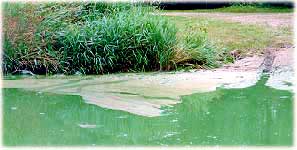
When the summer sun shines and temperatures climb, conditions are ripe for Minnesota lakes to produce harmful algal blooms (HAB). Most algae are harmless, but under the right conditions, certain types of algae can pose health risks. People and animals may become sick if they come into contact with or ingest affected water. In extreme cases, dogs and other animals have died after exposure to lake water containing toxic blue-green algae [Dog dies from blue-green algae poisoning in Minnesota lake, Fox9.com] .

High rainfall results in nutrient-rich runoff entering our lakes, which fuels algae growth. As sunlight increases and temperatures warm, we can anticipate blooms of blue-green algae on many of our lakes,” said Minnesota Pollution Control Agency (MPCA) lakes expert Steve Heiskary.

There are many types of blue-green algae found everywhere, but thrive particularly in warm, shallow, nutrient-rich lakes and ponds. Often blown toward downwind shorelines, it is under these conditions that humans and animals come in contact with blue-green algae and where the risk of algal toxins is greatest.

Not all blue-green algae are toxic, and there is no visual way to predict whether a blue-green algal bloom contains toxins harmful to humans or animals. But harmful blooms are sometimes said to look like pea soup, green paint, or floating mats of scum, and they often have a bad odor. “You don’t have to be an expert to recognize an algae bloom that might be harmful,” Heiskary said. “If it looks bad and smells bad, don’t take a chance. Stay out, and keep children and pets away from the water until the bloom subsides.

For more information about harmful algae blooms see the MPCA Blue Green Algae fact sheet or call the MPCA at 651-296-6300.

If experiencing health effects, contact a medical professional. In addition, people are encouraged to report human health effects to the Minnesota Department of Health (MDH) Foodborne Illness Hotline (monitors all disease outbreaks) at 1-877-366-3455. For health questions, citizens can contact MDH’s Acute Disease Investigation and Control group at 651-201-5414 or visit the MDH’s Harmful Algal Bloom (HAB) web page.

Municipal water quality reports are available

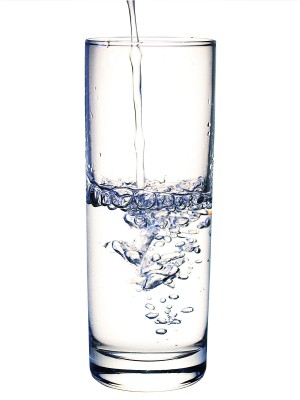
Annual Water Report. Drinking water is safe at Anoka County’s community water supply systems, according to the Minnesota Department of Health’s (MDH) Drinking Water Annual Report. Each year, cities publish reports on the results of water quality tests of their water system. The 2014 water quality reports summarize testing results for Jan 1 to December 31. The reports describe where the drinking water comes from and what is in it. Groundwater, from wells, is the source of drinking water for Anoka County public water suppliers (except Columbia Heights and Hilltop).

Municipal Wellhead Protection.  Community water suppliers are implementing wellhead protection programs to manage potential sources of soils and groundwater pollution near their wells.  Residents and businesses within a Drinking Water Supply Management Area (DWSMA) – near municipal wells – are in a unique position to protect the source of the community’s drinking water – the groundwater below. To see if you are in a DWSMA go to the Anoka County Wellhead Protection map application.

Sealing Unused (Abandoned) Wells. Municipal wells are typically deep wells that use the natural protection of geologic layers to prevent pollution from reaching the well. If old unused wells are near the municipal wells – pollution may pass through the natural protective layers down a corroded well – contaminating the drinking water for the community. To learn more contact your municipal water utility department and view the Sealing Your Unused Well video (MDH, YouTube; 4:36) The cities of Blaine, Circle Pines, Lexington and Lino Lakes have a Well Sealing Cost-Share Grant Program for property owners with wells near these city wells. Future well sealing grant programs will be announced on the KnowTheFlow.us website or contact your city utility to be placed on their list to be notified of future grants.

Do you have a home well? Anoka County Environmental Services recommends that you test the safety of your drinking water annually. Go to the Well Water Testing webpage for more information.

Customers that want a copy of their water system’s annual report (normally published before July) may check the utility website or request a copy from their water supplier:

Springbrook nature camps

The Springbrook Nature Center offers Nature Camps to educate and build understanding of our natural world.  For details see the Nature Camp program. To register or for more information call the Springbrook Nature Center at 763-572-3588.

Summer camps include programs for

  • 5-6 year old campers
  • 7-9 year old campers
  • 10-12 year old campers and
  • Gramp campers (5-12 year old with an adult)

Watering restrictions + creating sustainable turf and water supply

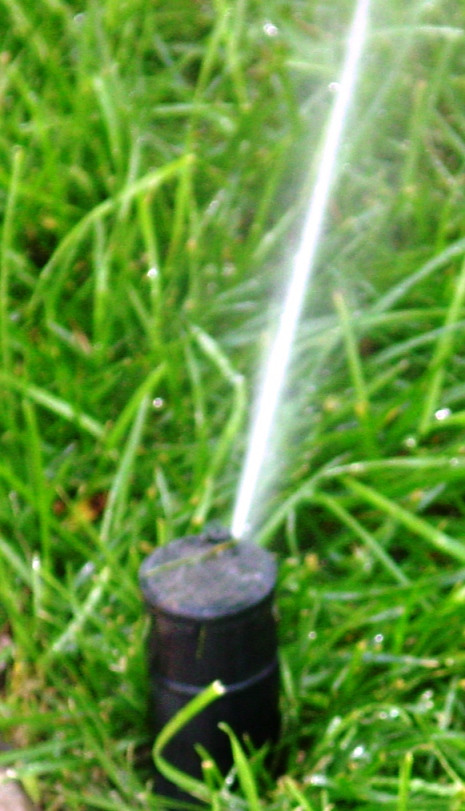
During the summer months water use increases for lawn sprinkling. Homeowner water use in July can be six (6) times greater than January. Sudden increased water demand (especially during a dry summer) can exceed a public water system’s capacity causing the water tower to go dry. Odd-even watering bans keep residents from draining the water tower faster than the city can replace with water from its wells.

Natural water resources are like the capacity of a public water supply system. If ground water withdrawal exceeds natural replenishment (rain and snow) – lake levels could drop and creeks and wetlands may go dry. As communities grow in Anoka County so does the demand for water. The trick is to use water wisely so that our combined water demand doesn’t affect local water supply. The best way to conserve our water resources is not to waste it with unnecessary irrigation.

SMART IRRIGATION PRESENTATION The Anoka County Water Task Force is offering a Smart Irrigation presentation at Bunker Hills Activity Center in Andover (July 16, 2015 at 6 p.m.) free for Anoka County residents, property managers and grounds keepers. Attendees will hear from a turf-grass expert and irrigation professionals how to efficiently use water and irrigation systems to maintain sustainable lawns and plants.

Lawn Watering Tips (from Don Taylor, University of Minnesota Extension Service Horticulturist): (1) Consider whether lawn irrigation is necessary in your situation; (2) Lawn irrigation would normally be minimal in spring until June; (3) Add 1 to 1-1/2 inches of water per week (minus any rainfall) during the summer months; (4) Keep the intervals between irrigations as long as possible; and (5) Water in early morning hours for greatest efficiency.

Residents and businesses throughout Anoka County should take note of city watering restrictions:

Contact your water utility for more information about water conservation, leak detection and water fixtures that conserve water.

Make a healthy splash: share the fun, not the germs

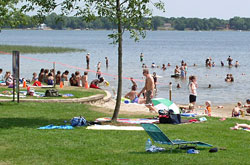
May 18–24, 2015, the week before Memorial Day, marks the eleventh annual Healthy and Safe Swimming Week. Swimming is one of the most popular sports activities in the United States. Pools, waterparks, hot tubs/spas, splash pads, and water playgrounds are great places to have fun, be active, or just relax. Have fun while you swim but know how to stay healthy and safe while enjoying the water!

The best way to prevent recreational water illnesses is to keep germs out of the water in the first place. Swimmers can protect themselves and others by following these six tips:

  • Don’t swallow pool or lake water.
  • Practice good hygiene. Shower with soap before swimming.
  • Wash your hands thoroughly after using the toilet or changing diapers.
  • Don’t swim when you have diarrhea.
  • Take children on bathroom breaks or change diapers often.
  • Change diapers in a bathroom, not at poolside or beachside.

Chlorinated water is not a guarantee against being exposed to germs in the water,” said Trisha Robinson, a Minnesota Department of Health epidemiologist specializing in waterborne diseases. “The best protective measure is for everyone to do their part to keep the germs out.

To report a suspected waterborne illness, call the Minnesota Department of Health’s Foodborne and Waterborne Illness Hotline at 1-877-FOODILL (or 651-201-5655 from the Twin Cities).

Protecting drinking water “everyone has a role to play”

(May, 6, 2015) Commissioner Ehlinger of the Minnesota Department of Health (MDH) says that nitrate pollution is a growing problem around MN, but we can take action to protect our drinking water. “Everyone has a role to play.

Nitrate nitrogen (nitrate) comes from many sources, including fertilizers, manure, septic systems, and natural decomposition of organic matter. Concentrated sources can release excessive amounts of nitrate contaminating a source of drinking water. Infants (less than six months old) who drink water or formula made with high nitrate water can become critically ill and develop methemoglobinemia (also known as Blue Baby Syndrome).

Nitrate in drinking water is a public health concern. Nitrate is also an environmental concern for aquatic organisms, and it contributes to hypoxia or the “dead zone” in the Gulf of Mexico. Nitrate is an essential plant nutrient critical for crop production and green grass that’s in fertilizers

The MDH and Anoka County Environmental Services are responsible for safeguarding the quality of drinking water and enforcing the federal Safe Drinking Water Act (SDWA) in Anoka County. Preventing and treating nitrate contamination in drinking water, the theme for this year’s Drinking Water Annual Report, is an issue that affects many public water systems in Minnesota.

Private well owners are encouraged to test their water for coliform bacteria and nitrate nitrogen annually. For more information go to the Well Water Testing  webpage or call 763-422-7063.

Check the safety of your home/cabin well during Well Water Wise week

The Anoka County Community Health and Environmental Services (CHES) Department, in cooperation with 15 municipalities and county agencies, is sponsoring the 16th annual “Well Water Wise” (3W) promotion May 4-8, 2015 to encourage residents to check the safety of their private well water. For information on private well testing go to the Anoka County Environmental Services Well Water Testing webpage or call 763-422-7063.

County residents may pick up a well water test kit at participating city and township offices (listed below) or in the Environmental Services Unit, Suite 600 of the Anoka County Government Center, 2100 3rd Avenue in Anoka. Water samples can be submitted to the county’s Environmental Services Unit for analysis every Monday from 8 a.m. to 4:15 p.m. and Tuesday from 8 a.m. to noon. During 3W week, samples can be submitted Monday through Thursday (8 a.m. to 4:15 p.m.) and Friday (before noon). The well water testing kit includes details about water collection and submission. A laboratory fee of $30.00 will be charged for coliform bacteria and nitrate-nitrogen analysis.

Unlike public water utilities, private well water is not treated with chlorine to prevent bacteria growth. Simply looking at the appearance of drinking water is not a reliable indicator of whether it is safe to drink. An annual coliform bacteria test is a good way to ensure that your drinking water continues to be free of bacteria.

Nitrate-nitrogen occurs naturally in groundwater and wells at concentrations below one milligram per liter (mg/L). Nitrogen can seep into private wells from a variety of sources including septic systems, nitrogen fertilizers, animal feedlots, and landfills. The Minnesota Department of Health has established a Health Risk Limit (HRL) for nitrate-nitrogen at 10 mg/L. Levels above that point may pose an immediate risk to infants and pregnant women.

The testing of private wells used for drinking water is the responsibility of individual owners. There are an estimated 25,000 private wells in service throughout Anoka County. Only a small percentage of them are tested annually. For more information about well water testing, call the Environmental Services Unit at 763-422-7063.

Well Water Wise Participating Communities and Agencies:

  • City of Andover, City Hall (1685 Crosstown Blvd. NW)
  • City of Bethel, City Hall (23820 Dewey Street)
  • City of Blaine, City Hall (10801 Town Square Drive)
  • City of Centerville, City Hall (1880 Main Street)
  • City of Columbus, City Hall (16319 Kettle River Blvd. NE)
  • City of East Bethel, City Hall (2241 221st Avenue NE)
  • City of Ham Lake, City Hall (15544 Central Avenue NE)
  • City of Lino Lakes, City Hall (600 Town Center Parkway)
  • Linwood Township, Township Hall (22817 Typo Creek Drive NE)
  • City of Nowthen, City Hall (8188 199th Ave. NW)
  • City of Oak Grove, City Hall (19900 Nightingale St. NW)
  • City of Ramsey, City Hall (7550 Sunwood Drive NW)
  • City of St. Francis, City Hall (23340 Cree St NW)
  • Anoka Conservation District (1318 McKay Drive NW, Suite 300, Ham Lake)
  • Anoka County Extension Service (550 Bunker Lake Blvd. NW, Andover)

Fishing and learning at the 2015 Kids Fishing Clinic

The Kids Fishing Clinic (May 2, 2015) brought “schools” of kids down to the Coon Rapids Dam Park to experience the joy and wonders of fishing. Kids learned to tie knots and cast from the shore. But to be a good fisher you have to know your fish and protect the waters that are their home.

MinnAqua is a statewide education program designed to teach angling recreation and stewardship as well as the ecology and conservation of aquatic habitats. MinnAqua shows How to Introduce a Kid to Fishing.

Fishing in the Neighborhood (FiN) is a Minnesota Department of Natural Resources urban fishing program. FiN provides great shore fishing opportunities for the 2.8 million Twin Cities metro residents. Fishing the Neighborhood ponds are intended for beginner anglers to introduce them to the sport of fishing, but can be used by anyone wanting to wet a line.

FiN works with Anoka County Parks Department and other local partners to provide family-friendly settings situated in residential areas. This allows people to enjoy a day at the park and good fishing too. In cooperation with local partners, FiN stocks fish, assesses fish populations, installs fishing piers and shore fishing structures, restores shoreline habitat and sponsors aquatic education to create quality fishing opportunities.

IF YOU MISSED the Kids Fishing Clinic – or if you want another shot at catching your fish – you have other opportunities:

  • Take-A-Kid Fishing Weekend (June 6-8, 2015). Minnesotans 16 or older who take a child 15 or younger fishing don’t need a license that weekend, and opportunities for inexperienced, beginning anglers abound. Catch some quality, family time and plan a special fishing day or weekend. See where to go fishing in Anoka County (DNR public fishing map).
  • CAST (Community and Sheriffs Together) Kid’s Fishing Day and Tournament (Friday, July 31, 2015, 9:00 am – 1:30 pm). Children will be paired up with a Fishing Guide and taken out in a boat. Trophies will be given for the largest Bass, Northern, Pan Fish, and more. All equipment bait, lunch, entertainment and trophies are provided for free. This event is open to children ages 5 – 15 at the Lake George Regional Park on. Please register for this event.

Blaine clean water expert receives public health leadership award

Mr. Jim Hafner, City of Blaine Stormwater Pollution Prevention and Wellhead Protection Manager, has been awarded the 2015 Public Health Leadership Award from the Anoka County Board of Commissioners.

Anoka County Commissioner Robyn West presents Jim Hafner (Blaine Stormwater Pollution Prevention and Wellhead Protection Manager) with the 2014 Public Health Leadership Award.

Anoka County Commissioner Robyn West presents Jim Hafner with the 2015 Public Health Leadership Award.

Jim was recognized for his devotion to the protection and management of water resources in Anoka County through his selfless service as the Chairman of the Anoka County Municipal Wellhead Protection Group. The Group  of ten community water suppliers are cooperatively implementing a unified drinking water protection program for over 155,000 Anoka County residents.

Jim also coordinates Blaine’s stormwater pollution prevention program to maintain clean water. He often provides advice and support to neighboring communities because Blaine understands that its water resources are an interconnected web of ditches, streams, creeks and rivers that flow through many communities as surface water makes its way to the Mississippi River.

Through this Public Health Leadership Award, Anoka County recognizes Jim Hafner and the many municipal, watershed and community leaders that dedicate themselves to the protection of our precious water resources. Congratulations Jim Hafner!

Powered by WordPress