Change your community for the better by volunteering

(Updated 4/15/2016) The Anoka County Board Of Commissioners has proclaimed April 12 – April 18, 2015 as Volunteer Recognition Week In Anoka County.  Volunteers Make Citizen Science Work (EPA YouTube; 2:12).

Anoka County communities have established water resource management programs with their watershed management organization or a watershed district. The community’s surface water management program deals with land runoff (“nonpoint” source) water pollution. Nonpoint sources of pollution are from many everyday activities and actions of people. These include applying fertilizer or pesticides to lawns or gardens in an amount that exceeds what the plants can use, plowing an agricultural field such that erosion results, blowing grass clippings into streets, gutters and storm sewers. All these add up to major nonpoint source pollution loading of nearby ditches, wetlands, creeks, lakes and groundwater.

Make a difference in your community by volunteering:

Check out the Anoka County Volunteer Alliance (brochure) for more volunteer opportunities.

Plan ahead to celebrate arbor day

Each year, on the last Friday of April, and throughout the month of May, Minnesotans recognize the value of trees, forests and the natural resources they represent.  Trees brighten the environment by moderating climate, improving air and water quality, conserving water and energy, and sheltering wildlife.

Many community Arbor Day/Month events include tree sales that require pre-ordering before the event.  Plan ahead to celebrate Arbor Day with the addition of a tree:

Check out the U of M Extension Service article Before Buying Plants, Understand Your Site.

Lino Lakes City Council approves wellhead protection plan

Lino Lakes City Council has approved a plan to protect the groundwater sources of the City’s water supply system. The Lino Lake Wellhead Protection Plan addresses potential sources of water pollution near City wells to keep the groundwater clean and the City water free of contamination.

NOTE: The City of Lino Lakes is currently making cost-share grants available to property owners to seal unused (abandoned) wells located within the City’s wellhead protection area. For more information contact Marty Asleson 651-982-2435 (marty.asleson@ci.lino-lakes.mn.us).

From the Lino Lakes Water Quality Report (2013)

Lino Lakes’ Water Source. The City of Lino Lakes provides drinking water to its residents from a groundwater source: five wells which range from 258 to 338 feet deep, that draw water from the Prairie Du Chien-Jordan and Jordan-St. Lawrence aquifers.

The water provided to customers met all federal drinking water standards in 2013, however the Minnesota Department of Health (MDH) has additionally made a determination as to how vulnerable the source of water may be to future contamination incidents. If you wish to obtain the entire source water assessment regarding your drinking water, please call 651-201-4700 or 1-800- 818-9318 (and press 5) during normal business hours. Also, you can view it online.

Call Tim Hillesheim at 651-982-2452 if you have questions about the City of Lino Lakes’ drinking water or would like information about opportunities for public participation in decisions that may affect the quality of the water.

Well sealing grants available to property owners in Blaine, Circle Pines, Lexington and Lino Lakes

UPDATE 3/16/2015) A detailed map (0.8 Mb) and brochure are now available for this special grant program.

To protect its community drinking water, Blaine, Circle Pines, Lexington and Lino Lakes are making cost-share grants available to property owners to seal unused (abandoned) wells near city wells. Residents and property owners that are inside the city’s Drinking Water Supply Management Areas (DWSMA) may apply to the city for a grant that reimburses them 50 percent of the cost of sealing the well (up to $500 grant). The cost of sealing a home well is typically about $800 – $1,000 (sometimes more with difficult wells).

WellSealingDWSMA-Map(20141211-b)

There are many water wells in use and many more that are not in use. Many homes, offices, stores and restaurants are built before city water is available. For example, every home and business in the cities of Ham Lake, East Bethel and Linwood have a private well on their property because public water is not yet available. The same was true 40-60 years ago in Blaine, Circle Pines, Lexington and Lino Lakes. Eventually all wells become unusable. When a property was connected to city water, the unused well was often buried and forgotten (abandoned).

Q: How do I know if I have an abandoned well on my property? A: If your home was built before city water was available – you have a well. Compare the building construction date from property tax records with the date public water was connected (contact your utilities department). If the construction date was before city water connection date – an unused well likely is on the property. View the video “Sealing Your Unused Well” (YouTube, 4:36).

Q: How do I know if the well on my property was properly sealed? A: Only a state licensed well contractor may seal a well. The contractor files a Well Sealing Record with the Minnesota Department of Health – Well Management Section. Contact the Well Management Section (651-201-4600, email health.wells@state.mn.us) to obtain a copy of your Well Sealing Record.

Disclosing your wells during a sale or property transfer. When a home, farm, or other property is sold or transferred, Minnesota Statutes, section 103I.235, requires that the seller of real estate must disclose the number and the status of all wells on the property and provide a sketch map showing the location of each well. Often the seller seals the abandoned well(s) at that time.

Contact your city Wellhead Protection Manager to obtain a well sealing cost-share grant application:

See the Directory of Area Water Well Contractors for bids to seal abandoned wells. For more information on well sealing go to the MDH Well Sealing webpage.

Legacy (logo)

Fix-a-leak week

Anoka County residents and businesses are urged to check their plumbing fixtures and irrigation systems each year during Fix a Leak Week (March 16-22, 2015). Nationwide, more than 1 trillion gallons of water leak from U.S. homes each year. Current drought conditions coupled with growing water demand challenges businesses and residents to conserve our natural water resources by efficiently using the water that we have.

Toilets are especially leak-prone: it is estimated that some 20% of all toilets are leaking/wasting water (YouTube; 30sec.). But because leaking toilets are often silent, the problem typically goes unnoticed. This can lead to higher water and sewer bills and the waste of an important natural resource.  Leaks can also shorten the lives of septic systems and private wells.

The Minnesota Pollution Control Agency (MPCA) is encouraging residents to check their toilets for leaks by providing a free packet of leak detection tablets to any interested household in Minnesota. Leak detection tablets can be ordered on the MPCA website, by calling 651-757-2999, or by emailing leakdetection.pca@state.mn.us. Supplies are limited.

The MPCA is a promotional partner of WaterSense®, an EPA program that promotes the value of water efficiency and water-efficient products to consumers.  For information on WaterSense® and Fix-a-Leak week, visit www.epa.gov/watersense/.

It’s groundwater awareness week – is your private well safe?

Private well owners must take measures to protect their drinking water. That includes protecting the groundwater that is drawn into the well. National Groundwater Awareness Week (March 8-14) brings attention to the important role that groundwater plays in the health and wellbeing of people. Anoka County Environmental Services and the Minnesota Department of Health recommend all home and cabin well owners read the Well Owners Handbook that provides important information to maintain private wells and protect drinking water.

To start, follow the Three Cs of well maintenance:

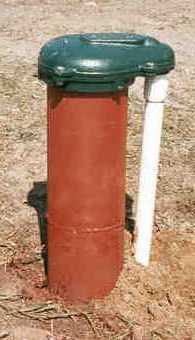
Cap – ensure the well cap is securely attached and not broken or missing, and the connections through the cap are watertight.

Casing – check the well pipe for cracks or corrosion damage. The casing should extend 12 inches above ground level.

Conduit – confirm that the conduit for the electric service wire to the well is securely connected to the well cap.

Anoka County Environmental Services provide water testing services  to residents, recommending that private well owners test their well annually (or anytime there is a noticeable change in water quality such as odors, colors or taste) for total coliform bacteria and nitrate-nitrogen. If a private well owner does not have an arsenic test result – they are encouraged to test the water once to determine if it is above the safe drinking water level.

For more information contact Anoka County Environmental Services at 763-422-7063.

National wildlife week – an inspiration

National Wildlife Week (March 9th through the 15th) is designed around teaching and connecting kids to the awesome wonders of wildlife. The 2015 theme for National Wildlife Week is Inspiring Americans to Protect Wildlife for Our Children’s Future.

IN MINNESOTA    The Minnesota Department of Natural Resources protects and manages our wildlife. Visit the DNR Nongame Wildlife Program webpage to learn what you can do to protect, maintain, enhance, and restore native nongame wildlife resources for their intrinsic values, ecosystem functions, and long term benefits.

IN ANOKA COUNTY    The Minnesota Department of Natural Resources oversees nearly twenty thousand acres (31 square miles) of land conserved within seven Wildlife Management Areas (WMA):

For more information contact the DNR Information Center at (651) 296-6157 or email info.dnr@state.mn.us.

The Wildlife Science Center (5463 Broadway Ave NE, Columbus, MN 55025) provides important services including: research by professionals answering questions about wildlife management and endangered species; hands-on training for wildlife students; getting children excited about science education; and participating in national and international efforts to conserve our natural resources.

WSC provides two guided educational tours every Saturday at 11am and 1pm ($6 for adults, $4 for children 4-12, and free for 3 and under).  Additional education programs include private programs/group tours; preschool programs; scout programs (WSC staff are certified badge counselors); wolf howl bonfires; and overnight programs.  For more information contact the WSC at  651-464-3993 (or email wscinfo@wildlifesciencecenter.org).

*WSC is holding a Pet Clinic (Saturday, March 28, 2015 from 10am to 3pm) by Dr. Lori Ballinger, DVM of Healing Wheels, to get spring checkups for your dogs and cats for a special cost while enjoying the amazing WSC animals.

The Anoka Conservation District encourages property owners to branch out for wildlife through the tree and shrub sale.  Click on the on-line ordering and payment webpage to see the variety of plants available or call ACD at (763) 434-2030.

Fridley awarded the 2014 outstanding conservationist

The Anoka Conservation District (ACD) selected the City of Fridley as the 2014 Anoka County Outstanding Conservationist. Each year ACD recognizes individual and organization accomplishments in conservation that protects and improves the natural resources in Anoka County. 
Mary Jo Truchon presents 2014 Outstanding Conservationists Award to Mayor Lund at the February 23rd Fridley City Council Meeting. Pictured: Kay Qualley (Fridley Environmental Planner), Mary Jo Truchon (ACD Board Chair), Chris Lord (ACD District Manager, Mayor Scott Lund and James Kosluchar (Fridley Public Works Director).

Mayor Lund accepts the Outstanding Conservationist Award at the February 23rd Fridley City Council Meeting.
Pictured: Kay Qualley (Fridley Environmental Planner), Mary Jo Truchon (ACD Board Chair), Chris Lord (ACD District Manager), Mayor Scott Lund and James Kosluchar (Fridley Public Works Director).

This award doesn’t recognize the accomplishments of an institution or government entity.  Rather, it’s about the people.  The elected and appointed officials, dedicated staff and volunteers, civic leaders,  businesses, residents, teachers and students, all come together to create a community that cares about conserving natural resources.” said Mary Jo Truchon, ACD Board Chair.
The community’s commitment is evident, from active recycling and water conservation programs to a well-staffed nature center, from several roadside rain-gardens to ravine stabilization spanning over a quarter-mile, protecting 21 private properties and reducing the annual discharge of 633,600 pounds of sediment and 507 pounds of phosphorus into the Mississippi River.
ACD Conservationist 2014 - Project Photo
The Outstanding Conservationist 2014 award recognizes the people of Fridley for their accomplishments, and serving as an example to others that it’s never too late to conserve what you’ve got. It’s never to late to preserve and protect our natural resources. For more information, contact Chris Lord at the Anoka Conservation District Manager, phone 763-434-2030.
FRIDLEY RESIDENTS: attend a Raingardens For Water Quality Seminar  (April 16th, 6:00 to 7:30 pm) to learn how you can protect and preserve water resources in your neighborhood.

Order your trees and shrubs

The Anoka Conservation District is excepting preorders for the annual Tree and Shrub Sale.  The District offers a wide variety of native stock, including black cherry trees, mixed oak trees, red maple trees, and white pine trees. The trees and shrubs are sold in bare root seedlings or transplants and most are 10″ to 24″ in height. They may be purchased in bundles of ten for $17, or twenty-five for $30 not including tax.  Native prairie seed and tree aides are also available. You do not need to be an Anoka County Resident to order.

The Tree and Shrub Sale website also contains information about the kinds of trees and shrubs to plant in your particular situation along with planting directions.

You may purchase these trees and shrubs by:

  1. Online ordering,
  2. Mail in an Order Form, or
  3. Order by phone (763-434-2030 x10).

Orders will be accepted until mid-April and available for pick up the morning of the last Saturday in April (25th) at the Anoka County Fairgrounds. Please order early to guarantee availability.

For more information call the Anoka Conservation District at 763-434-2030.

The benefits of trees and shrubs. Trees and shrubs provide many benefits beyond the beauty they lend to streets and properties. Overlooked and unappreciated is their ability to reduce the speed and volume of water running off the land into gutters and ditches during a storm. The result is cleaner water as it reaches creeks, rivers and lakes. Plant a tree and let nature do what is does best to keep our water clean.

Grants available for small public water suppliers

The Minnesota Department of Health announces the availability of grants to support Source Water Protection (SWP) of noncommunity transient public water suppliers. See announcement (link).

Noncommunity Transient public water systems serve at least 25 people at least 60 days per year, but not the same 25 people over that period of time. Food and lodging establishments that own and operate an on-site well and water system are eligible for this category of grant.

The SWP grants for noncommunity transient systems shall:

  • Support wellhead protection measures that address a potential contamination source that presents a high risk to a source of drinking water as determined by the MDH;
  • Have a maximum amount of $10,000, which may be increased to $30,000 when three or more public water suppliers apply under the same application; and
  • Require an equal financial cost share amount;

Noncommunity Transient Grant: Request for Proposal and Application Form

Noncommunity Transient Grant: Frequently Asked Questions

For more information about this grant opportunity contact Ms. Cristina Covalschi (SWP Grant Coordinator) Telephone: 651-201-4696, e-mail: cristina.covalschi@state.mn.us.

Powered by WordPress