Warning: deceptive tactics used to sell water treatment systems

Tactics use bogus tests, misrepresent agencies and standards

The Minnesota Department of Health (MDH) is reminding residents to beware of false claims, deceptive sales pitches, and scare tactics being used by some water treatment companies to sell expensive and unnecessary water treatment systems. High profile investigations of groundwater contamination has resulted in a noticeable increase in the number of complaints regarding such deceptive sales activities.

While the pitch varies in these situations, the salesperson nearly always: recites a list of recent groundwater contamination problems; conducts water tests; implies the water is unsafe to drink; and offers a “one-time only” “greatly reduced” price for their water system.  In some of the worst instances, the salesperson has implied or said that he is working with the city’s water utility.

Water from a private well should also be free of unsafe levels of man-made contaminants if the well is properly constructed, is drawing from a safe aquifer, and has not been flooded or otherwise compromised. However, the only way to be certain about the quality of the water from a private well is to have it tested by a competent water testing laboratory. Anoka County residents can get their private well tested through the Well Water Wise program.  Call 763-422-7063 for more information.

Complaints.  Those who believe they have been provided false or misleading information or that they have been subjected to unfair or high-pressure tactics in the course of a sales visit should contact the Minnesota Attorney General’s office Consumer Complaints division at 651-296-3353 or 800-657-3787 or online.

Additional information about drinking water and home water treatment systems is available on the MDH website at:
http://www.health.state.mn.us/divs/eh/wells and
http://www.health.state.mn.us/divs/eh/water/factsheet/com/pou.html
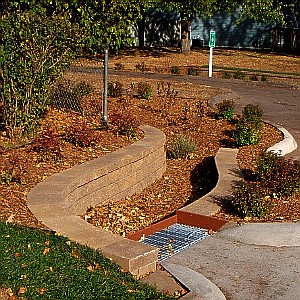
Rain gardens are improving water quality

Rain gardens are a cost-effective best management practice (BMP) to reduce storm water runoff pollution from reaching water resources.  Rain gardens reduce the degradation of water bodies by holding and infiltrating storm-water runoff that would otherwise drain (untreated) to the creek.

SAND CREEK RAIN GARDENS (Coon Creek Watershed District)  Nine (9) curb-cut rain gardens were installed in a Coon Rapids residential neighborhood where storm water runs off into Sand Creek.  The rain gardens are part of a watershed project to protect and improve the quality of the creek.  The Anoka Conservation District (ACD) and the Coon Creek Watershed District identified this cost-effective stormwater BMP to demonstrate how residents and the community can cooperate in protecting our water resources while improving our neighborhoods.  For more information see the 2012 Sand Creek Rain Gardens project profile factsheet (4 Mb) or contact the Anoka Conservation District at 763-434-2030.

WEST MOORE LAKE (Rice Creek Watershed District)   Water quality monitoring has indicated that West Moore Lake is barely meeting state water quality standards. The goal of this project was to improve water quality and enhance residents’ recreation experiences in the future.  If you are interested in learning more about raingardens, please visit the Blue Thumb website. The RCWD offers a Best Management Practices grants and technical support for residents interested in Best Management Practices that improve water quality.  Call the RCWD for more information at 763-398-3070.

DNR issues ice warning for aerated lakes

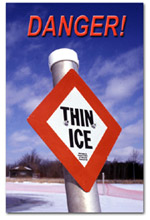
The Minnesota Department of Natural Resources (DNR) warns ice anglers, snowmobilers, skiers and other outdoor enthusiasts to use caution when going onto any lake covered or partially covered with ice, especially those that feature aeration systems.  Aeration systems are generally operated from the time lakes freeze until ice break-up in the spring. They help prevent winter-kill of fish, but they also create areas of open water and thin ice, which are significant hazards.

”Open water areas created by aeration systems can shift or change shapes depending on weather conditions,” said Marilyn Danks, DNR aquatic biologist. “Leaks may develop in air lines creating other areas of weak ice or open water.”

An aerated lake is posted with two types of signs: “Thin Ice” and “Warning” that is posted at all commonly used access points to the lake.  The signs warn people that an aeration system is in operation and to use extreme caution.

Anoka County lakes that likely have aeration systems in operation include: Centerville, Coon, Crooked, Golden, Ham, Martin, Moore (East), Peltier, Shack Eddy (Ramsey), and Spring.

For more information see the DNR press release or call DNR Information Center at 651-296-6157 or toll-free 888-646-6367.

Wetland conservation policy report available

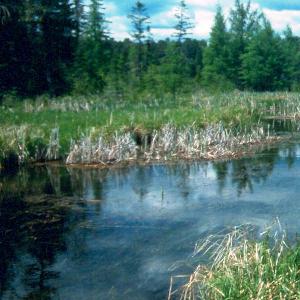
The Minnesota Board of Water and Soil Resources (BWSR) released a report today, evaluating the wetland conservation policy. Key findings and recommendations in the report focused on: defining policy goals and measures of protection and success, enhanced interagency cooperation, and targeting of wetland mitigation. To read the full report, visit the BWSR website at: www.bwsr.state.mn.us or contact Dave Weirens at 651-297-3432.

A full class at the hazardous waste generator workshop (November 27th)

Fifty one (51) representatives from large and small quantity hazardous waste generators attended the Hazardous Waste Fall workshop held by Anoka County Environmental Services.

Presentations included:

For more information about this and future workshops contact Laura Schmidt, Anoka County Environmental Services  (763-422-7253 / laura.schmidt@co.anoka.mn.us).

Attention Anoka County Residents  Managing hazardous waste is everyone’s business. To safely dispose of household hazardous wastes see the information available on the Anoka County Integrated Waste Management webpage or contact Integrated Waste Management at 763-323-5730.

The Noncomm Scoop, Fall/Winter 2012

The Noncomm Scoop (Fall/Winter 2012) newsletter provides information and guidance for the owners and operators of “noncommunity public water systems” (such as schools, churches, resorts, restaurants and other businesses that have their own water supply well).  The presence, health effects and treatment of nitrogen and arsenic in drinking water are the topics of the current issue of the Noncomm Scoop.

Anoka County’s GIS makes mapping and planning accurate and easy

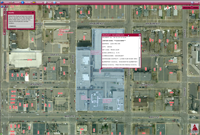
Residents, parents, property owners, businesses, developers, and utilities officials should find the Anoka County Geographic Information System (GIS) website helpful for many uses.

Property Search Map Page

Search for Anoka County parcels by PIN Number or address, with links to detailed property information and recorded plats. Identify parcels, section corners, half-sections and create an aerial map of your property. Use map tools to measure distance and area.  This application is useful for residents and developers submitting applications for building permits or development (and redevelopment) plans.

Drinking Water Supply Management Area Map Page

Use the interactive map to determine the location of wellhead protection areas (called Drinking Water Supply Management Areas or  DWSMAs) for pubic water supply wells.  Pollution from properties within a DWSMA has a higher probability to contaminate the drinking water source for hundreds or thousands of people.  Information provided in this application includes the name and contact information for the wellhead protection manager of each DWSMA.

Go Anoka County Map Page

Use the interactive map to find parks, recreation centers, trails and playgrounds near you.  See where you can swim, skate, play tennis golf, basketball and baseball. Get photos and detailed information about reacreational facilities anywhere in the county.  For more information and resources on getting healthier through physical activity, start with Go Anoka County webpage.

Child Care Locator Map Page

Use this interactive map to find providers close to your home or work. Search for providers within any Anoka County city. And for any provider, click a link to see their listing on the state licensing website.  For more information about finding or operating a licensed child care (day care) establishment in contact the Anoka County Child Care Licensing unit at 422-7146.

East Bethel is marked by its new water tower

East Bethel’s newest and highest structure is the 500,000 gallon water tower tank marking a city poised to grow.

By developing a water utility along the highway 65 corridor, the City of East Bethel will soon join 726 Minnesota municipalities in operating a Community Water Supply system (see article).  Not only will East Bethel provide reliable water service to customers – the system will be operated by certified professionals and the water will be regularly tested to insure that it remains safe to drink.  East Bethel will also implement a wellhead protection program to prevent pollution near city wells and protect the city’s source of water (groundwater).

In addition, East Bethel and the Metropolitan Council are installing sewers and a treatment plant to meet the growing need to treat higher volumes of wastewater generated by businesses.  Some business onsite septic systems do not have the area to expand or capacity to meet future growth.

Order your tree and shrubs now for spring delivery

The Anoka Conservation District (ACD) is taking pre-orders for trees and shrub deliveries in the Spring.  Pre-order to guarantee that the trees and shrubs will be held for you.

The tree order information is listed on the ACD Tree and Shrub Sale webpage which outlines two ways to purchase products by either print and mailing in the form or order and pay online.  The webpage also provides pictures of the native species for sale along with a wealth of information on growth rates, soil types, moisture and sun requirements.

Residents that do not have access to the website can call 763-434-2030 (extension 10) to have a form mailed to them.

Act now to prevent fuel oil leaks and spills

We enjoy our seasons in Anoka County and rise to the challenging conditions they bring.  Keeping our homes warm in winter is the first order of business.  For residents that  heat their homes (or businesses) with fuel oil, that should mean inspecting their tanks and piping to prevent leaks and spills.

More than 40 residential fuel oil spills and leaks occur each year in Minnesota, damaging homes and putting a dent in pocketbooks from cleanup costs and the loss of fuel.  “We see this happen every fall,” said Chris McLain, Petroleum Remediation Supervisor at the Minnesota Pollution Control Agency. “The effects of a fuel oil spill can be devastating. We’ve seen fuel oil spilling into people’s basements, well water becoming undrinkable and homes even becoming unlivable ― and all of this is preventable.”

Fuel oil tanks need regular maintenance to prevent leaks from corrosion, improper installation, faulty piping, failing valves and from weather conditions, such as falling ice, snow packs or flooding.

“A simple survey each fall by homeowners, inspecting the condition of their tanks and piping, is all it would take to prevent many leaks from occurring,” McLain said. “Additionally, homeowners should contact their fuel oil supplier if their tanks are no longer in use, or their usage needs have changed, to prevent tank overfills or leaks from disconnected piping. Some fuel oil suppliers even offer tank and furnace inspection services to assist homeowners in identifying and addressing maintenance issues.

Cleaning up fuel oil spills can cost a homeowner thousands of dollars and years of their time. Don’t let this happen to you this winter. Inspect your tanks and piping, talk with your fuel oil supplier and be ready to heat your home safely.

If you discover a petroleum release from your tank, call the Minnesota Duty Officer at 800-422-0798 for immediate assistance to contain the pollution.

For more information see the Minnesota Pollution Control Agency’s Underground Heating Oil Storage Tanks or Aboveground Heating Oil Storage Tank fact sheets.

Powered by WordPress