Drought can strain water resources – conservation encouraged

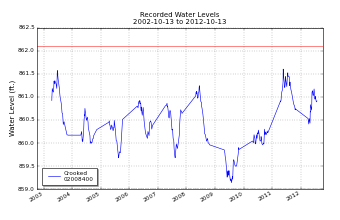
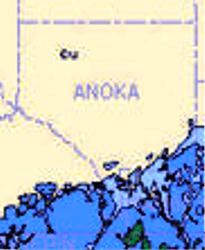
Drought happens when a prolonged period of abnormally dry or unusually hot weather causes an imbalance between available water resources with water demand.  Droughts are subtle – they sneak up and surprise you if you’re not paying attention.  Based on the current U.S. Drought Monitor, Anoka County is experiencing severe drought intensity.  If drought conditions persist, our area may experience a serious hydrologic imbalance.

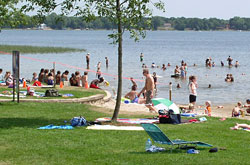
When a serious hydrologic imbalance occurs, soil moisture reserves, groundwater supplies, lake levels and stream flows are negatively influenced. Water-dependent industries including agriculture, public utilities, forestry, and tourism are profoundly affected.

Residents and businesses are encouraged to always use water wisely and conserve this precious resource.  See the Minnesota Department of Natural Resources Water Conservation or Metropolitan Council Water Conservation Toolbox web pages for information about how you can conserve water and save money.

Celebrating 40 years of the Clean Water Act in Anoka County

Forty years ago, public concern about untreated sewage, industrial and toxic discharges, and contaminated stormwater runoff led to passage of a principal law to protect the nation’s waters – the Clean Water Act (CWA).  Based on state and local efforts, CWA sets a national goal “to restore and maintain the chemical, physical, and biological integrity of the Nation’s waters”, with interim goals that all waters be fishable and swimmable.  The Act established a new partnership between up-stream and down-stream communities where objectives and limits were set by the U.S. Environmental Protection Agency, while states and communities would administer CWA programs.

Today, in Anoka County communities, sewage is either collected by city sewers or septic systems are constructed and maintained under city guidelines.  Hazardous and solid waste is managed by Anoka County ordinances to protect our water resources.  Wetlands are recognized as a natural and important part of our landscape.  Watershed Management Organizations have been established to monitor and protect surface water resources.  And pollution from storm water running off of buildings, roads and parking lots is managed to protect streams, lakes and rivers.

For more information see the Minnesota Pollution Control Agency’s CWA 40th Anniversary webpage or the U.S. Environmental Protection Agency’s Water is Worth It  webpage.

Anoka County geologic atlas is being prepared

A county geologic atlas provides information necessary for sustainable management of ground water resources, for applications such as monitoring, water allocation, permitting, remediation, and well construction.  The Anoka County Geologic Atlas will help to understand aquifer properties and boundaries, as well as the connection of aquifers to the land surface and to surface water resources.  It can also provide a broad range of information on geology, mineral resources (including construction materials), and natural history.

The  Anoka County Geologic Atlas is being prepared in two parts.  Part-A has been prepared by Minnesota Geological Survey (MGS) which includes a water well database and 1:100,000 scale geologic maps showing properties and distribution of sediments and rocks in the subsurface.  Part-B will consist of water levels in aquifers, direction of groundwater flow, water chemistry, and sensitivity to pollution.  The geologic atlas was initiated by the Conservation District and the Watershed Management Organizations in Anoka County.

The Part A (surficial and bedrock geology) of the Anoka County Geologic Atlas has been completed.  Part B (hydrology and sensitivity to pollution) is being prepared.  The project is planned to be completed by 2014.

For more information contact Jamie Schurbon at the Anoka Conservation District (763-434-2030 x12).

FEMA is updating Flood Insurance Rate Maps

The Federal Emergency Management Agency is currently updating Flood Insurance Rate Maps (FIRM) in Anoka County.

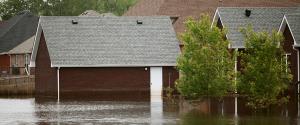
Flood risk can, and does, change over time for many reasons including new development and environmental changes, to name a few. As a result FEMA is updating flood hazard maps across the country. These new flood maps show flood risk at a property-by-property level.

When new maps are issued, your risk classification may change along with your flood insurance requirements.  If your property is mapped outside of a high-risk area, your flood insurance costs will likely decrease. If you’ve been mapped inside a high-risk area, you may be required to purchase flood insurance if your mortgage is through a federally regulated or insured lender.  But you can save money with the PRP Eligibility Extension through a process known as “grandfathering” provided by the National Flood Insurance Program (NFIP).  If your property was newly mapped inside a high-risk flood zone (after October 1, 2008) you may qualify for a PRP flood insurance policy.

Know your area.  Learn about flood risk and see when new flood maps will be available for Anoka County.

Learn more about map changes.

Shoreland grants for aquatic restoration projects

The Minnesota Department of Natural Resources (DNR) is making $225,000 available for grant proposals for restoring native aquatic habitat across the state.  Individual grants can range from $25,000 to $100,000 and are available to  watershed districts, other local units of government, conservation groups and lake associations to conduct aquatic habitat restoration projects with native plants to improve fish and wildlife habitat.

Projects on private properties will have at least 75 percent of the frontage restored with an adjacent buffer zone that is at least 25 feet deep or wide. The focus of these projects must be on reestablishing vegetation for fish and wildlife habitat, Funds cannot be used for rock riprap stabilization or permanent wave breaks.

Grants recipients will be reimbursed for a maximum of 75 percent of the total project costs.  Applicants must be able to fund at least 25 percent of the total project costs from non-state sources. Matching funds may be cash, volunteer labor, and in-kind contributions of materials, equipment and services.

“This is an opportunity for lake associations, local communities and conservation organizations to help enhance native shoreline vegetation and fish habitat in their local lakes, streams and rivers,” said John Hiebert, DNR lake habitat consultant. “Since 1999, more than 350 restoration projects have been funded, restoring more than 136,000 feet of shoreline.”

Applications for grants are available at: www.mndnr.gov/grants/habitat/shoreland.html or by calling the DNR Information Center at 651-296-6157 or toll-free 888-646-6367. Completed grant applications are due Friday, Nov. 9.

Successful applicants will be notified in February and funds will be made available after July 1, 2013.

The grants are funded from state lottery proceeds deposited in the Heritage Enhancement Account. Grants are administered through the DNR Fish and Wildlife Division. Projects are selected and designed with guidance from local DNR fisheries managers.

Learning never ends at the metro children’s water festival

(September 26, 2012) Over 290 Anoka County students attended the 15th annual Metro Children’s Water Festival.  The students attended a number of presentations learning many important lessons PLUS the most important lesson – we are all learning, everyday.  Learning stations at the Festival (Met Council YouTube) include:

  • WaterWater is constantly in motion all around us, rising up into the sky through evaporation from rivers and oceans, and then falling back to Earth as rain or snow. Plants play a major role in the water cycle, drawing water from the soil and releasing it into the air through their leaves. One acre of broad-leafed forest may release as much as 8,000 gallons of water into the atmosphere every day.  (Lukas Johnson, Science Museum of Minnesota, school outreach@smm.org)
  • Singing Rivers: CLEAN IT UP is the refrain for The River Cleanup Boogie – I went down to the river.  To catch me some fish.  But the mud in the water made my kids go “ish!”  I told them not to worry.  It’s been like that awhile when I said let’s clean it up and they began to smile LET’S CLEAN IT UP! (Scott Sparlin, yasure@lycos.com)
  • Well Well Well: It’s not just “dirt” below us.  There are many very different formations of sand and stone (see the Virtual Egg Carton of major rock types).  We stand on a huge geologic layer cake.  Some layers (like sand, gravel, sandstone and limestone) are hydraulically permeable (called aquifers) allowing water to supply a well.  Other layers (like clay, shale, granite and slate) restrict water movement.  In some areas of the country, wells produce crude oil or natural gas.  My my my, there’s a lot more below us than just dirt. (Gary Meyer, Minnesota Geologic Survey, meyer015@umn.edu) ‎
  • The Mystery of the Disappearing Waterfall: A great waterfall moved from Saint Paul to Minneapolis and set the stage for two cities to be born.  Rivers are the reason we are here in the twin cities.  The waterfall, that started 12,000 years ago in St. Paul, was huge and could swallow half of the city.  Now, it’s the gentle Saint Anthony waterfall in Minneapolis.  (Lyndon Torstenson, National Park Service, lyndon_torstenson@nps.gov)
  • The House that Jack Built: Our drinking water comes from a local source.  Either a well or the Mississippi River.  It gets to your faucet by constructing a well or water system and installing plumbing and fixtures to keep the water clean and safe to drink.  (Richard Thron, Mantyla Well Drilling, richardthron@yahoo.com)
  • FLUSH – The Wastewater Story:  Wastewater must be cleaned up before reaching rivers, lakes and groundwater.  A home septic system or treatment plant uses physical and natural processes to remove bacteria and human wastes.  However natural processes will not remove household and industrial chemicals that are not found in nature.  Homes may dispose of waste chemicals safely by dropping them off at a household hazardous waste facility.  Businesses properly must dispose of their chemicals according to law.  (Patti Craddock, Central States Water Environment Association, pcraddock@sehinc.com)
  • Streams and Wetlands: The forces of water have a powerful effect on our environment.  Water is always moving to keep our environment in balance.  Streams carry stormwater from saturated/flooded areas.  Wetlands perform  important functions to store water, control flooding, clean stormwater, and provide habitat for waterfowl and reptiles. (Nanette Geroux, Metropolitan Council Environmental Services, nanette.geroux@metc.state.mn.us)
  • Just Passing Through: Vegetation helps to keep rain water clean by capturing soil particles carried by stormwater.  The roots of plants can absorb pollution keeping it from reaching water resources like lakes, rivers and groundwater.  Water is always “just passing through” but plants help to keep it clean.  (Linda Radimecky, MN Dept. of Natural Resources, linda.radimecky@state.mn.us)
  • The Water Beneath our Feet: In the “slice of earth” we learned that water collects in open spaces between sand grains.  Gravity makes water moves down and through sand, gravel and sandstone that are found in layers (called aquifers) providing water to wells.  Water is the “universal solvent” that will dissolves and mix with practically any chemical resulting in “water pollution.”   The trick is to keep water and potential pollutants from getting together. (Katie Wigen, Washington Conservation District, kwigen@mnwcd.org)
  • A Model Stream: Water doesn’t just flow down a stream channel.  Water is the reason there is a stream channel! And, a flowing river, creek or stream has the power to alter the channel.  For more information check out River Model Clips or Healthy Rivers.  (Brooke Asleson, MN Pollution Control Agency, brooke.asleson@state.mn.us)
  • Macro Madness: We all need water to survive, to drink.  Aquatic insects need clean natural water too.  Using benthic macroinvertebrates (water insects) we can tell the health of a creek, stream or river.  Sensitive invertebrates (like Stonefly Nymph, Mayfly Nimph, and Caddisfly Larvae) found in a stream indicates the quality of the water is good.  (Maggie Karschnia, MN Wetland Health Evaluation Program, msdarschnia@gmail.com)
  • Water Quality – Is Your Understanding Crystal Clear?:  Samples from different water bodies have very different qualities.  A lake is a standing body of water the permits sediment to settle to the bottom and temperature (thermal) layers and established in the water.  Water flowing in a river or creek is constantly on the move having very different characteristics.  (Laurie Sovell, MN Pollution Control Agency, Laurie.Sovell@state.mn.us)
  • How Do Fish Get Mercury?: Like water, mercury can evaporate becoming airborne.  The mercury contaminates rain falling into lakes and rivers.  Fish become contaminated with methylmercury by eating food (plankton and smaller fish) that builds up in their flesh. Fish that eat other fish become even more highly contaminated. Thus, the fish most desirable for many anglers (bass, walleye and northern pike) are the most affected.  (Bruce Monson, MN Pollution Control Agency, Bruce.Monson@state.mn.us)
  • Adopt A River Crime Lab: Trash on land and trash on the river.  The Story of Peanut (the turtle with a peanut shaped shell) is an example of the effects of carelessly disposing trash in the Mississippi River.  (Paul Nordell, MN Dept. of Natural Resouces, paul.nordell@state.mn.us)
  • Watch it Rain!: Erosion is serious problem for both cropland and water quality.  Rain carries soil particles from bare land into ditches, lake and creeks.  Using conservation practices we learned how to manage our land and protect water resouces.  (Mark Zumwinkel, MN Dept. of Agriculture, mark.zumwinkle@state.mn.us)
  • Water Pollution on Trial: Environmental regulations set water quality standards and limits pollution discharged from businesses.  There is a variety of enforcement options to stop pollution and clean up polluted water normally with the cooperation of the business or institution.  When there isn’t cooperation then there may be a trial.    (Joshua Berman, MN Pollution Control Agency, joshua.burman@state.mn.us)
  • Buzzzz…Mosquitos!: When it comes to mosquitoes everyone has an opinion.  Separating opinion from fact is what science education is all about. Mosquitos belong to the Culex order that (like all flies) go through four stages of life: egg, larva, pupa, and adult.  Female mosquitos hunt for blood by detecting carbon dioxide and octenol emitted in the breath and sweat of warm-blooded animals, including us.  (Mike McLean, Metropolitan Mosquito Control District, mmclean@mmcd.org)

The next Metro Area Children’s Water Festival is scheduled for Sept. 25, 2013.  Registration for the lottery drawing will open on February 1, 2013 and close on March 31th.  For more information contact Bart Biernat at Anoka County Environmental Services (763-422-6985, Bart.Biernat@co.anoka.mn.us).

Rake leaves from your curb, gutter and sidewalks

Our wooded properties make us proud to live and work in Anoka County.  As the leaves turn color and fall, they provide a beautiful show and require cleanup.  Decaying plant material that ends up in ponds and streams reduces water quality.  Please do not rake leaves into the street.

Drop-Off Options –  Bring your leaves and grass to the Anoka County Compost Sites for a cost of $4 for up to 4 cubic yards.  The hours for the sites are :

  • Bunker Hills Site (Hanson Blvd. 1 mile north of Hwy 242 in Coon Rapids) Mondays through Fridays from 10 a.m. to 7 p.m. or sundown, whichever is first; Saturdays from 9 a.m. to 5 p.m.; and Sundays Noon to 5 p.m.
  • Rice Creek Chain of Lakes Site (County Road 14 to the east of I-35W) Tuesdays and Thursdays from 10.a.m. to 7 p.m. or sundown, whichever is first; Saturdays from 9 a.m. to 5 p.m.; and Sundays Noon to 5 p.m.

Backyard Composting – Or consider the advantages of composting right in your backyard.

For more information call the Anoka County Integrated Waste Unit at 763-323-5730.

Rum River biomonitoring

The Upper Rum River Watershed Management Organization and Anoka Conservation District have produced an informational video about how small creatures in our water resources can tell us about the quality of the Rum River.

Water you waiting for? (professions in the water industry)

A recent survey (10 jobs Americans can’t live without) found that water/waterwater operators finished behind only registered nurses in the necessity of their jobs to society.

Water You Waiting For?” is a 12-minute video describing the water profession for high school and/or vocational technical school students in four segments:

  • the value of water
  • job responsibilities
  • career successes, and
  • environmental contribution

For information about education in water professions contact Noel M. Lutsey III (763-576-4948, nlutsey@anokatech.edu) at Anoka Technical College or visit the Water Environment Technologies website at St. Cloud Technical and Community College.

Anoka County fish – healthy eating guidelines

Anoka County is in the heart of the land of 10,000 lakes and some excellent fishing.  But how much do you know about the fish?

Most fish in Minnesota are safe to eat.  All the fish in Anoka County lakes and rivers are safe to eat.  But, too much fish may not be healthy.

Any fish (store-­‐bought or sport-­‐caught) could contain contaminants such as mercury that can harm human health especially the development of children and fetuses.  You can’t see, smell or taste the mercury in fish.  That’s why it is important to know which fish are safer than others.

The Minnesota Department of Health has established fish consumption advice to limit exposure to specific fish caught in specific lakes and rivers throughout Minnesota (329 pages, Oct. 2011).  The two guidance documents for Anoka County lakes and rivers are now available:

For more information contact the Minnesota Department of Health Fish Consumption Advice website or call 651-201-5000.

Powered by WordPress