Virtual MS4 Permit Chloride Discussion

Are you a Municipal Separate Storm Sewer System (MS4) permittee?

The new MS4 General Permit is planned to be issued on Monday, November 16, 2020. Existing MS4 permittees will have 150 days (April 15, 2021) to complete and submit the permit application forms to the Minnesota Pollution Control Agency (MPCA).

There will be an opportunity to join other MS4 communities and MPCA staff to learn about the new MS4 requirements for chloride and find out what other MS4 communities have implemented to improve their winter maintenance operations on Monday, October 5th, from 8:30 am to 12 pm. This discussion will be online and hosted by the MPCA. It is a great chance to get a step ahead on planning ways to meet upcoming permit requirements.

The next MS4 General Permit will require specific chloride reduction activities for permittees such as community education, annual training for your winter maintenance staff, proper deicing salt storage practices, and other requirements. Some permittees must also conduct an annual winter maintenance operations assessment to assist in identifying deicing salt reduction opportunities on permittee owned/operated surfaces. The MPCA Smart Salting Assessment tool is one way to complete the assessment requirement.

Register today for this free, online live-stream to openly and informally discuss how we can all reduce the permanent effects of chloride pollution in Minnesota and protect our water resources. Contact Brooke Asleson brooke.asleson@state.mn.us or Cole Landgraf cole.landgraf@state.mn.us with questions and to register.

For more information about the upcoming permit application process, check out the MPCA municipal stormwater website.

Online Children’s Water Festival Next Week – Register Now!

Final reminder that the FREE 23rd annual Metro Children’s Water Festival is online this year, with LIVE online classes from Monday, September 28th to Thursday, October 1st!

Live classes will cover a wide variety of water topics. Some examples include:

  • What lives in water?
  • Who polluted?
  • Journey through a watershed from forest to faucet
  • Mosquito mania

In addition to live classes, many presenters have provided recorded videos, curriculum, and lesson plans on the festival webpage.  If you are looking for water education, there are plenty of accessible and fun opportunities at this festival!

Learn more, see the schedule, and register for the live classes at www.metrocwf.org/virtual.

Although education is geared to meet 4th grade standards, water is vital to everyone, and all interested teachers, students, and their caregivers are welcome to participate.

Anoka County Well Water Testing Remains Limited

The Anoka County Well Water Testing program will continue to operate on a limited basis. Water samples for sanitary analysis (bacteria and nitrates) will be accepted on the last Monday (1-4 pm) and Tuesday (9-11:30 am) of each month until further notice. Water samples for other analyses (arsenic, manganese, lead, etc.) will not be accepted at this time. An appointment and pre-payment over the phone are required. Please see the full details below. The upcoming dates and times for water sample collection are:

  • Monday, September 28th, 1-4 pm
  • Tuesday, September 29th, 9-11:30 am
  • Monday, October 26th, 1-4 pm
  • Tuesday, October 27th, 9-11:30 am

The drop-off table will be located on the 1st floor of the Anoka County Government Center near the main door.

Below are the criteria for dropping off a sample:

  1. Sample kits (sample collection bottle and blue sampling sheet with instructions) must be obtained ahead of time. No kits will be available on the drop-off days. Kit locations are listed below.
  2. A drop-off appointment must be made by calling ahead and paying in advance with a credit card over the phone. No cash or checks allowed, and no credit cards will be accepted the day of drop-off. Call (763) 324-4260 to make an appointment and pay.
  3. The blue sampling sheet must be completed ahead of time. No pens will be available to use at the drop-off table.
  4. Specific water-related questions can be directed ahead of time to Abby Shea at (763) 324-4207.
  5. Only samples for sanitary analysis (bacteria and nitrates) will be accepted at this time. If other testing is desired, it can be performed at a later date or a private laboratory can be recommended.
  6. Social distancing guidelines must be respected, and masks are required. Rules of the drop-off area must be followed.

Water test kits are currently available at the following locations:

  • Andover City Hall
  • Blaine Public Works (1801 101st Ave NE, Blaine; (763) 785-6165 – please call ahead)
  • Centerville City Hall (in the vestibule)
  • East Bethel City Hall
  • Ham Lake City Hall (call and they will set one out for you: (763) 434-9555)
  • Linwood Township Hall
  • Oak Grove City Hall
  • Ramsey City Hall
  • St. Francis City Hall

Feel free to call additional city halls to see if they can provide a water test kit.

Ramsey Conducting Feasibility Study of Water Treatment Plant

Back in 2019, the City of Ramsey detected manganese, an unregulated contaminant, in higher than recommended levels during routine water testing in some of the City wells. Since then, the City has been closely monitoring its water system for manganese and has reduced overall manganese levels by utilizing the City wells with the lowest levels of manganese. Until recently, the City has been able to keep manganese levels below the Minnesota Department of Health’s (MDH) guidance value using this method*.

As the weather has warmed, City water usage has increased, forcing the City to add water from wells with higher levels of manganese. Therefore, City water system customers may experience higher levels of manganese in their drinking water. Two samples from the City water system had levels of manganese above the MDH guidance value for bottle-fed infants in July 2020. The Minnesota Department of Health recommends that bottle-fed infants not consume water with manganese at levels above 100 ppb (parts per billion). The two samples tested at 108 ppb and 131 ppb. Learn more about manganese in drinking water here. You can monitor monthly manganese levels on the City of Ramsey’s website here.

To reduce levels of iron, manganese, and other contaminants in the City’s water system, the City of Ramsey has determined that, of the long-term options available, only a water treatment plant can ensure these contaminants are effectively removed. Therefore, the City is preparing a feasibility study to investigate the City’s source water chemistry and sustainability, alternative treatment processes, alternative treatment plant sites, estimated costs, and preliminary construction schedules. The study is expected to be completed by the fall of 2020, after which the City Council will decide whether or not to move forward with the construction of a water treatment plant.

In the meantime, residents may choose to use home water treatment units such as refrigerators with water filters, pour-through pitchers, units that attach to faucets, and water softeners to try to remove or reduce particular contaminants in their drinking water. See the Minnesota Department of Health’s “Home Water Treatment” for more information.

Manganese can also be present in varying levels in private wells, so private well owners are encouraged to test their wells for manganese. Residents can usually have this done through the Anoka County Well Water Testing program, however, due to COVID-19, the program is limited to bacteria and nitrates testing only. In the meantime, residents may utilize a private, state-certified water testing laboratory to test their well water for manganese. Check back for updates as to when Anoka County will resume full testing capacity.

*The City of Ramsey noted in their article in the September/October 2020 issue of the Ramsey Resident that a side effect of the City using the wells with the lowest levels of manganese is that the water system has more iron in it. This can result in greater discoloration of clothes, sidewalks, and buildings, however, there are currently no health concerns associated with high iron concentrations.

Minnesota Smart Salting Update

A new Minnesota Smart Salting Update from the Minnesota Pollution Control Agency (MPCA) is now available. Articles included in this bulletin are:

  • Spots still open! Free online MPCA Smart Salting trainings
  • Hot off the press! New MPCA Smart Salting training intro video
  • Still need your Roads certificate this year? Get it before the snow flies!
  • Be a Smart Salting host – Bring trainings to your area!
  • Save the Date! Virtual MS4 permit chloride discussion
  • Chloride Reduction Leadership Award – City of Hopkins, MN

Click here to read these articles in the full bulletin.

Be sure to check out the new Smart Salting promo video to learn the value of these important trainings! Here it is below:

Upcoming online Smart Salting trainings:

  • Smart Salting for Parking Lots & Sidewalks Certification:
    • October 13th: Hosted by Riley-Purgatory Bluff Creek Watershed District
    • October 20th: Hosted by Minnesota Nursery and Landscape Association
  • Smart Salting for Property Management Certification:
    • September 29th: Hosted by Mississippi Watershed Management Organization
    • October 19th: Hosted by Crow Wing Soil & Water Conservation District
    • October 21st: Hosted by Ramsey Washington Metro Conservation District
    • November 2nd: Hosted by Freshwater Society

See the MPCA Smart Salting training calendar to pick a training and register.

SepticSmart Week in Minnesota

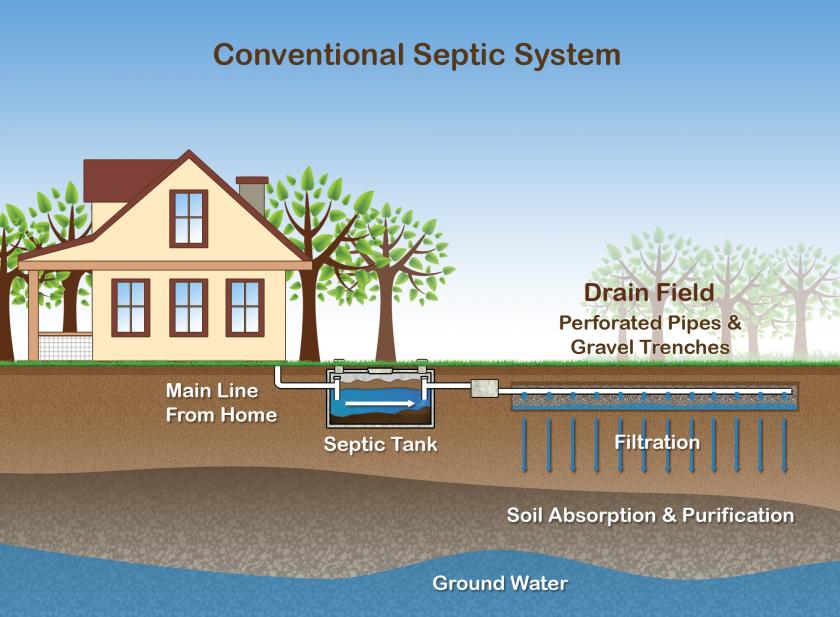
Did you know that over 600,000 Minnesota residents and businesses rely on a septic system to treat their wastewater from things like toilets, sinks, and washing machines?

This week (September 14th-20th) is SepticSmart Week in Minnesota, as declared by Governor Tim Walz.

The Minnesota Pollution Control Agency (MPCA) says this week is a good time to revisit the Do’s and Don’ts of septic systems. The two big Do’s are:

  1. Inspect it (at least every 3 years)
  2. Protect it

Check out this guide by the MPCA to learn how to do these things and to learn what not to do.

By properly maintaining your septic system, you can help protect human health and the environment. You can even save money as well, as septic system repairs caused by a lack of understand about how the system works, or simple neglect, can be quite expensive.

Learn how your septic system works at the MPCA’s Healthy Septic Systems website, which also has additional information for homeowners.

Register to Attend the Online Metro Children’s Water Festival

The 23rd annual Metro Children’s Water Festival is FREE and will be offered online this year from Monday, Sept. 28—Thursday, Oct. 1.

This event has always taken place as an in-person field trip at the State Fairgrounds, but this year, it will be online. The purpose of the festival is to educate 4th grade students about water resources and to present ways they can help ensure a future where both the quantity and quality of water resources are protected and managed wisely.  Although education is geared to meet 4th grade standards, water is vital to everyone, and all interested teachers, students, and their caregivers are welcome to participate.

The festival is offering 9 live online classes via Zoom and 9 pre-recorded sessions that are all about 30-minutes long. Live classes will be followed by time for questions. All classes will be posted on YouTube for future viewing.

Details at metrocwf.org.

Well Sealing Cost-Share Opportunity

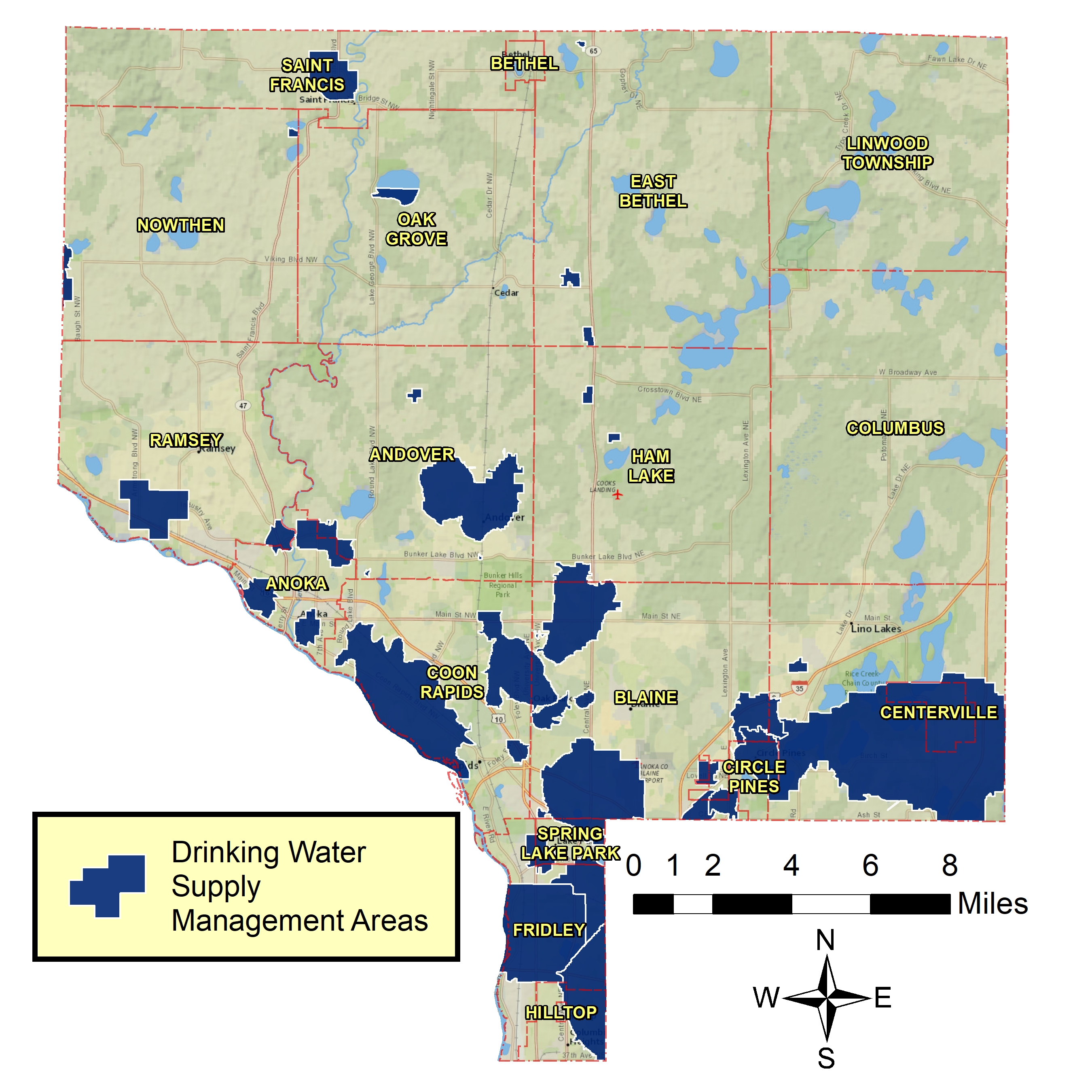
If you have an old well that you no longer use, you may be eligible for cost-share funding to seal it! Unused/unsealed wells could be direct conduits for pollution to reach our drinking water supply, so it is important to have them sealed by a professional. To qualify for up to 60% cost-share, unused/unsealed wells must be located in a Drinking Water Supply Management Area in Anoka County. Learn more about the program and see if you qualify here: www.anokaswcd.org/well-sealing. Call Kris Larson at (763) 434-2030 x11 for more information.

The above information was submitted by the Anoka Conservation District. 

Tips for a Healthy Lawn

Healthy lawns can lead to healthy water quality. Curious as to how you can best maintain your lawn and how this can improve water quality? Check out this how-to video from the Mississippi Watershed Management Organization (MWMO).

The video contains information on the following tips:

  • Tip #1: Adjust Your Mower Height
  • Tip #2: Mulch Your Grass Clippings
  • Tip #3: Sweep Up Leftovers
  • Tip #4: Water Wisely
  • Tip #5: Consider Turf Alternatives

A few simple changes to the way our lawns are maintained can make a big difference in our water quality.

Click here to see the original post from the MWMO.

Photo from the Mississippi Watershed Management Organization. 

2020 Anoka County Water Resources Report

The Anoka County Public Health and Environmental Services Department has updated its Water Resources Report, which the department typically updates every 5 years in coordination with the Anoka County Water Resources Management Task Force.

Click here to view the 2020 Anoka County Water Resources Report.


Brief History of the Report

Following the passage of the Minnesota Groundwater Protection Act of 1989, which emphasized the need for groundwater management planning and implementation by local government having land use authority, metropolitan counties were encouraged to develop groundwater protection plans through legislation (MN Statute 103B.255) and planning grants. As land use planning and zoning within Anoka County is a function of its municipalities, the County originally chose to write a groundwater report instead of a plan. This report has since evolved to encompass all water resources.


The report is planned to be updated again in 2025. Questions about the report can be referred to Abby Shea at Abby.Shea@co.anoka.mn.us.

Powered by WordPress