Source Water Protection Grants Available

Two separate grant programs will be accepting applications between Monday, March 2, 2020 at 8 am and Tuesday, March 31, 2020 at 4:30 pm. The two grant programs, both supporting source water protection, are:

  • Plan Implementation Grant for community and nontransient noncommunity public water supply systems who have an MDH-approved Wellhead Protection Plan or an MDH-endorsed surface water intake protection plan
  • Noncommunity Transient Grant for transient noncommunity public water supply systems.

The purpose of the Plan Implementation Grant is to help public water suppliers implement source water protection measures included in their MDH approved or endorsed plan. These grants do not require a cost share. The minimum grant amount is $1,000 and the maximum grant amount is $10,000. Click here for more information, including frequently asked questions, and to download an application.


The purpose of the Noncommunity Transient Grant is to support measures that address a potential contamination source that presents a high risk to a source of drinking water as determined by the Minnesota Department of Health. An equal cost share is required for receiving this grant. The minimum amount for any grant is $250 and the maximum amount is $10,000. Click here for more information, including frequently asked questions, and to download an application.

We Are Water Exhibit at Science Museum

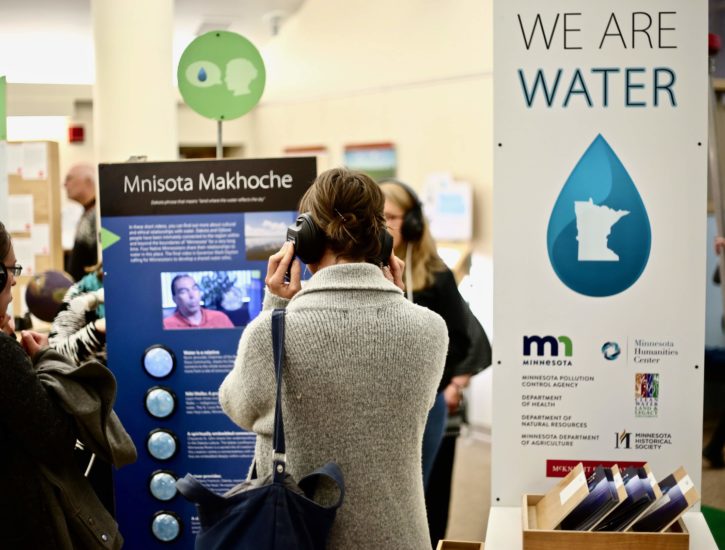
Now through March 22nd at the Science Museum of Minnesota, check out the We Are Water MN exhibit!

The We Are Water MN traveling exhibit examines water issues statewide and in local communities through personal stories, histories, and scientific information. It strengthens Minnesotans’ relationships with water, exposes visitors to new perspectives, and increases participation in water stewardship activities.

The exhibit is located in the lobby of the museum and no admission fee is required in the lobby.

Learn more about the We Are Water exhibit here.

2020 MnTAP Program Available

Business seeking to save money by conserving water and reducing wastewater discharges, energy use, or industrial waste are invited to apply to the University of Minnesota’s Technical Assistance Program (MnTAP) Intern Program. Applications are being accepted now for 2020.

The internship program is supported by the Met Council’s water supply planning department, using Clean Water, Land and Legacy Amendment funds. The Met Council is making $315,000 available over three years to support 15 interns.

The University handles recruitment, hiring, and intern coaching. Student internships are competitive.

Businesses: Learn more and apply here.

Students: Information about MnTAP internships.

This information was summarized from an article published on 2/14/2020 by the Met Council.

2020 Children’s Water Festival Registration Now Open

Attention 4th grade teachers! Sign up your 4th grade classes NOW for the 2020 Metro Area Children’s Water Festival! 

4th grade teachers can sign up their classes for the 2020 Metro Area Children’s Water Festival starting now. The deadline to sign up is Friday, March 20th, 2020.

The Metro Area Children’s Water Festival is open to all metro area 4th grade classes and homeschool students. The festival teaches children about the water cycle and other water-related topics that help children appreciate their natural environment and our water resources.

This year’s festival will have more than 45 interactive learning stations, including the Science Museum of Minnesota. The festival is Wednesday, September 30th, 2020 at the Minnesota State Fairgrounds.

Festival organizers wish every class could come, but the festival is very popular, and the number of students that can be accommodated is limited, so sign up today! Classes selected to attend will be contacted in mid-April.

For more information, head to the festival website at www.metrocwf.org. Register online at www.metrocwf.org/registration.

If you have any questions regarding festival registration and selection, please contact Abby Shea at 763-324-4207 or Abby.Shea@co.anoka.mn.us.

New MDA Groundwater Protection Rule – Restriction Areas Map Available

Areas where the application of nitrogen fertilizer in the fall or on frozen soils will be restricted have been determined. These areas include much of Anoka County (see the image below).

This restriction is part of the new Minnesota Department of Agriculture (MDA) Groundwater Protection rule (Minnesota Rules Chapter 1573). The rule minimizes potential sources of nitrate pollution to our groundwater and thus protects drinking water. With two parts, the rule creates restrictions on the application of nitrogen fertilizer in the fall in areas that are vulnerable to contamination and outlines steps to address and reduce the severity of elevated nitrate levels when they already exist in public water supply wells.

The intention of the rule is “to promote appropriate nitrogen fertilizer best management practices (BMPs) and to involve local farmers and agronomists in adopting the most current science-based and economically viable practices that can reduce nitrate in groundwater”. Click here to learn more about Alternative Management Tools (AMTs). MDA says that “the goal is to involve local farmers and agronomists in problem-solving to address increased levels of nitrate in groundwater”.

Part 1

Notification of areas subject to the restrictions established in Part 1 is happening now and the restrictions will take effect this fall in September 2020. Part 1 of the rule establishes restrictions on application of nitrogen fertilizer if you farm in:

  1. An area with vulnerable groundwater (much of Anoka County)
  2. Protection areas around a public well, known as drinking water supply management areas (DWSMAs), with already high nitrate levels (none in Anoka County at this time)
    • “High” nitrate is determined as 5.4 mg/L or greater nitrate-nitrogen

The “Vulnerable Groundwater Areas” are designated by quarter sections and are determined by one of the following criteria:

If 50% or more of a quarter section is considered vulnerable, the entire quarter section is included. Click here to see an interactive map of these areas across the state. In these Vulnerable Groundwater Areas, nitrate can move easily through soil and into groundwater, which can contaminate groundwater resources.

Part 2

Regulation of Part 2 of the rule, which responds to DWSMAs that already have elevated nitrate levels, could be three years after the rule takes place, at the earliest, and after a DWSMA is determined to meet certain criteria. The goal of this part of the rule is to take action to reduce nitrate levels in groundwater before a public well exceeds the health standard for nitrate of 10 mg/L.

More information

For more information on the rule, check out the Minnesota Department of Agriculture’s website on the topic at https://www.mda.state.mn.us/nfr.


MPCA Smart Salting Program News

The MPCA (Minnesota Pollution Control Agency) Smart Salting Program is “for winter maintenance and property management professionals seeking to maintain safe surfaces using less salt”.

Topics in the 2/10/2020 bulletin include:

  • Several Smart Salting trainings coming up in February (see below)
  • The 20th Annual Salt Symposium will be on August 5th, 2020 – topics: the latest chloride research and innovations, water softening, dust control, fertilizers, and more. Registration opens in March.
  • Salt success in the news – Wright County Highway Dept
  • Free resources to manage public awareness of chloride reduction

Click here to read the bulletin.

Upcoming Smart Salting Trainings:

  • Smart Salting for Property Management: 2/11/2020, 9:00 am-1:00 pm, Host: City of Edina
  • Parking Lots and Sidewalks Smart Salting Training: 2/12/2020, 9:00 am-1:30 pm, Host: Ceres Environmental
  • Parking Lots and Sidewalks Smart Salting Training: 2/18/2020, 9:00 am-1:30 pm, Host: Nine Mile Creek Watershed District
  • Parking Lots and Sidewalks Smart Salting Training: 2/26/2020, 9:00 am-1:00 pm, Host: Damel Corporation, Inc.
  • Parking Lots and Sidewalks Smart Salting Training: 2/28/2020, 8:00 am-1:00 pm, Host: YMCA-Twin Cities

For registration information and locations, see the bulletin.

Spring 2020 Waterline Out Now

The Spring 2020 issue of Waterline is out now! “The Waterline is a quarterly newsletter for water operators, city officials, and others interested in news related to public water systems in Minnesota”, published by the Minnesota Department of Health’s Drinking Water Protection program.

Highlights in this issue include a special story on how the Xcel Energy Center uses St. Paul water to make the ice rink for the Minnesota Wild, a Star Tribune article on water towers (“Why Do We Have Water Towers and What Do They Do?”), a story on a new canine employee at Central Arkansas Water, and the introduction of “Patty Potty” – a creation of the San Jacinto River Authority in Texas to promote its “No Wipes in the Pipes” campaign.

Articles included in the issue:

  • Help Possible for Lead Service Line Replacements
  • What Are Those Spaceship-Looking Things?
  • Water-Wastewater Utilities Treatment and Technology Program Update
  • Community Water Supply Additions
  • Service Connection Fee Increase Takes Effect
  • Sniff This
  • Metro School to Have Special Day for Superintendents and Supervisors
  • Surface-Water Optimization Training in Minnesota
  • Crookston Honored with People’s Choice Award
  • Wild Rink Starts with St. Paul Water
  • Randall Gets Award from the Environmental Protection Agency
  • Grants Awarded for Bottle-Filling Stations
  • Lake Harriet Pump
  • Lewis & Clark Project to Benefit from Increase in Rural Water Funding
  • EPA Turns 50
  • Check out Patty Potty and Other Worthy Sites
  • New Addresses for Minnesota Department of Health Water Websites

Click here to read the issue.

Past issues of the Waterline can be found here.

Subscribe to the Waterline here. 

Reminder: Upcoming Well and Septic Maintenance Training

Have you signed up for the upcoming well and septic maintenance training? If not, sign up today!

Below is the original post from this past October:

“Do you own your own well? How about a septic system? Do you wish you had a better idea of how to take care of them? Then you should plan on attending this upcoming class! Attendees will be provided with a maintenance manual to keep. Refreshments and snacks will be provided.

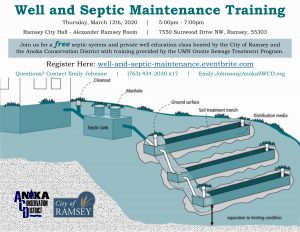
In partnership with the City of Ramsey and the UMN Onsite Sewage Treatment Program, the Anoka Conservation District invites you to a free septic system and private well homeowner education class on Thursday, March 12th from 5-7 pm in the Ramsey City Hall’s Alexander Ramsey Room (7550 Sunwood Dr NW, Ramsey, 55303). Space is limited, so reserve your seat early. Register online here!

Learn about:

  • Potential contaminants in your drinking water well
  • How and when to inspect and maintain your septic system
  • Impacts of faulty or damaged wells and septic systems

Please email Emily Johnson at Emily.Johnson@AnokaSWCD.org or call her at 763-434-2030 x17 with any questions.”

‘Relief’ Art Exhibit Open House

Check out a new art exhibit – Relief – Saturday, February 1, 2020 from 10 am to noon at the Mississippi Watershed Management Organization Stormwater Park and Learning Center.

Relief explores how technological experiences influence the way we understand the outdoors. Artist Alyssa Baguss creates tactile cartographic experiences of Minnesota’s natural water features through experimental processes and materials. (Guests are encouraged to touch the artwork!)

Socialize over coffee, stream tables and art-making. Alyssa Baguss will host a morning of water-related activities paired with beverages and fantastic views of the Mississippi River.

This exhibition was made possible through a Minnesota State Arts Board Artist Initiative Grant.

The MWMO Stormwater Park and Learning Center is located at 2522 Marshall Street NE, Minneapolis, MN 55418.

How to Test Your Well Water Video

Have you seen the Minnesota Department of Health’s new well water testing video? Click here to watch it.

The video explains what contaminants should be tested for and when to test your well water. The image below shows the most significant contaminants to test for:

Anoka County Environmental Services offers a well water testing program. Call 763-324-4260 for more information. You can also search for an accredited lab here. Learn more at www.health.state.mn.us/wellwater.

Powered by WordPress