Wells and Flooding

Flooding seems to be happening more and more often in Minnesota, both in the spring as a result of snow melting and and runoff and after large rain events that cause flash flooding. Over the last few years, some places have been experiencing flooding that have not flooded in the past. Floodwater is not clean – it can contain contaminants such as raw sewage and petroleum or hazardous chemicals. For these reasons, it is important that well owners prepare for the possibility that their wells may flood.

The impact that flooding has on wells and water quality are often not as visible as other types of flood damage. It is important to take preventive action now that may save well users more trouble down the road.

If you think your well might become flooded, store a supply of clean water that will last for at least a few days. Shut off power to the well pump to avoid having floodwater pumped into your plumbing system or home. If you only have a little time before a flood, you can cover the well with a heavy plastic bag or sheeting and secure it with electrical tape. This won’t completely protect your well from contamination but will help reduce the amount of water and debris that could enter your well.

If a well is submerged by floodwater, or floodwater comes within 50 feet for a well, the power for the pumping system should be disconnected, and the well should not be used until flooding is over and floodwaters have receded. 

If floodwater reaches your well, assume your well is contaminated. Water from a contaminated well should not be used for drinking, cooking, or brushing your teeth until the floodwater recedes and the following steps have been completed:

  • Avoid electrical shock. Do not approach a flooded well until it has been completely disconnected from its power source.
  • If floodwater covered your well or may have entered your well directly, have a licensed well contractor inspect the well, clean out sediment or debris, and disinfect it. Using your well pump to remove sediment or debris could ruin the pump.
  • If floodwater reached your well but you are confident that floodwater did not enter the well, have a licensed well contractor disinfect your well or complete the disinfection yourself. Detailed instructions are available on the MDH website here.
  • After you or the licensed well contractor disinfects your well and pumps out the chlorine solution, contact Anoka County Environmental Services or another certified water testing laboratory to get your well tested for coliform bacteria.
    • If you well water test comes back positive for coliform bacteria, repeat the disinfection and testing process. You may need to disinfect your well several times before your well is free of bacterial contamination.
    • Do not use the water from your well until you have been informed that it is safe and free of bacterial contamination.

If floodwater came within 50 feet of your well – but did not reach the well – consider having your well water tested for coliform bacteria as a precaution. You do not need to disinfect your well before having it tested. However, if the test comes back positive for bacteria, the well needs to be disinfected.

Wells that meet the standards of the Minnesota Well Code are the safest wells. The Minnesota Well Code (Minnesota Rules, chapter 4725) has many requirements that can protect wells from flooding, including well location, casing height, and approved well caps. The code requires that wells be located and maintained at a distance of 35 feet or more from the normal high-water mark of a lake, river, or stream. For wells completed in flood areas, the code allows several options:

  • The well casing must extend at least 5 feet above the 100-year flood elevation if the 100-year flood elevation is less than 5 feet above the ground surface at the location of the well; or
  • The well casing must extend at least 10 feet above the ground surface if the 100-year flood elevation is more than 5 feet above the surface at the location of the well and the well must have a watertight cap installed on it; or
  • The well casing must extend at least 2 feet above the ground surface and be surrounded by an outer, cement grouted, protective casing that is installed in compliance with the Minnesota Well Code. Both casing must have approved, waterproof caps installed; or
  • The well casing must extend at least 2 feet about the ground surface and a sealed pitless unit spool or flowing well pitless unit is installed. The casing should be covered with an approved, waterproof, non-vented, compression seal well cap.

See the Minnesota Well Code or consult with a licensed well contractor concerning these options. To determine if a well is, or will be, located in an area prone to flooding, you can check floodplain maps here.

For more information, see the Minnesota Department of Health’s Well Management Program’s website.

Click here for a list of licensed well contractors in and around Anoka County.

Minnesotans Invited to Adopt a Drain in Honor of 50th “Earth Day Birthday”

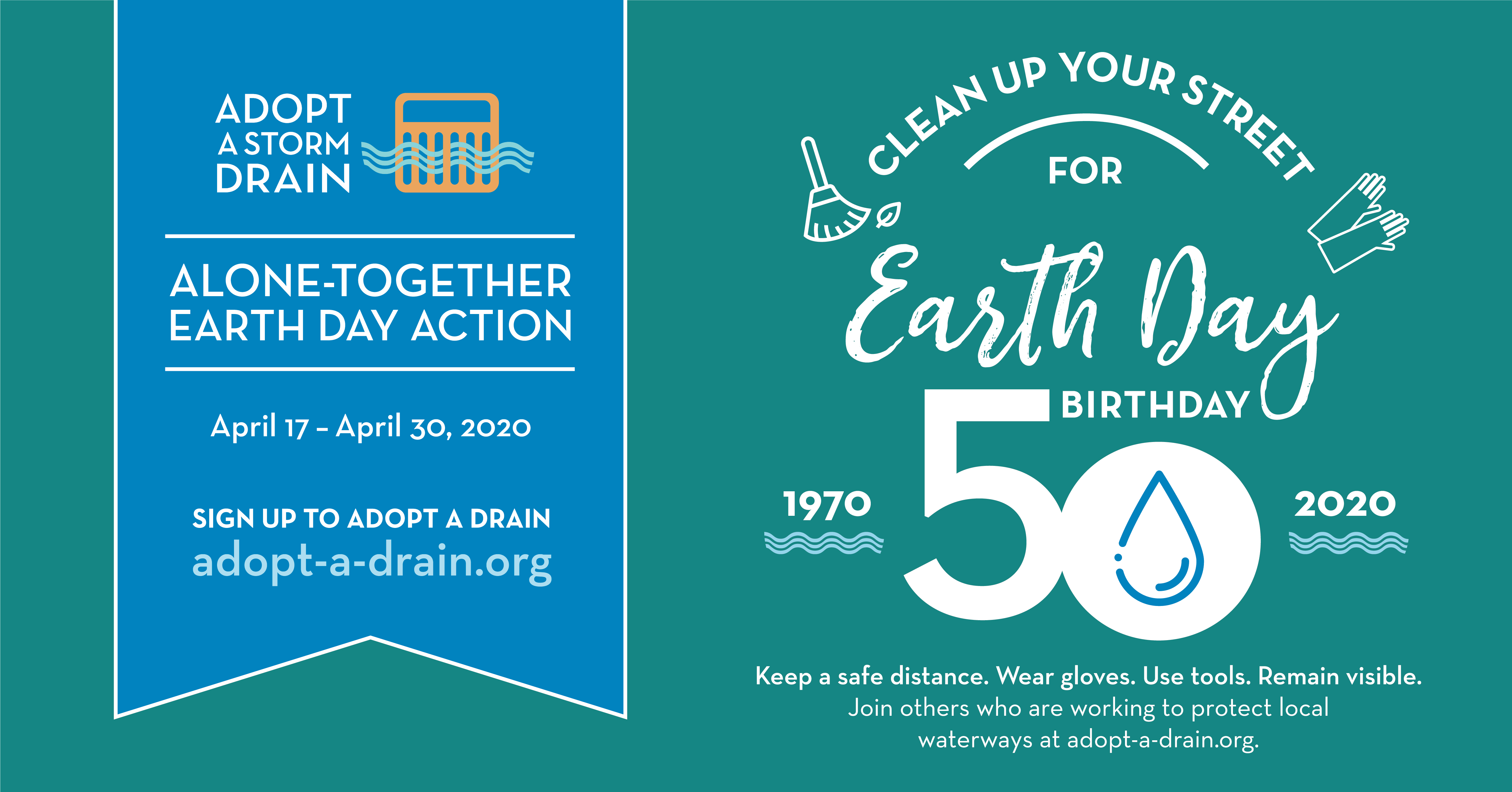
Adopt-a-Drain invites Minnesotans to honor Earth Day’s 50th birthday by cleaning up their own street between April 17th and April 30th. Adopting a storm drain is an easy way to have a positive impact on our environment while maintaining a safe social distance.

Adopt-a-Drain is a program that asks residents to protect nearby lakes, rivers, and wetlands by “adopting” a storm drain near their home. Volunteers sweep leaves, trash, and other debris off the drain and nearby surfaces year-round.

By spending just fifteen minutes cleaning up twice each month, volunteers prevent trash and organic pollutants from flowing through storm drains and into waterways. Since its launch in 2014, Adopt-a-Drain’s 6,000 participants have prevented nearly 200,000 pounds of debris from washing down storm drains and into Minnesota’s lakes and rivers.

Jana Larson, director of the Adopt-a-Drain program, says, “Even though many community cleanup events have been canceled, we can still honor Earth Day by taking joint action to protect Minnesota’s lakes and rivers. Adopt-a-Drain invites everyone to participate in a safe way during social distancing.”

Adopting a drain is a family-friendly activity that can enrich learning at home. Parents and teachers navigating new COVID-19 homeschool arrangements are encouraged to participate in the Earth Day Birthday cleanup and use curricular resources available online at https://waterstothesea.org/AADmodule/. Waters to the Sea is a series of free lesson plans and multimedia activities created by Hamline University’s Center for Global Environmental Education and aligned to Next Generation Science Standards for grades 5-8. Find out more by visiting https://waterstothesea.org/mississippi/.

New volunteers and existing Adopt-a-Drain members who report what they pick up between April 17th and 30th will receive a limited edition temporary tattoo in the mail. To participate, residents in the seven-county metro area, Rochester, and Saint Cloud can adopt a drain and report the amount of debris they collect at adopt-a-drain.org.

The Science Museum of Minnesota is partnering with the Adopt-a-Drain program to promote the Earth Day Birthday celebration; all adopters are encouraged to post photos and videos of their cleaning activities on social media by tagging @adoptadrain and using the hashtags #adoptadrain and #earthdaybirthday2020 to help increase participation in the program.

About Adopt-a-Drain

The Adopt-a-Drain program is a project of Hamline University, with support from the Metro Watershed Partners, a coalition of more than 70 public, private and non-profit organizations committed to water resource education in the Twin Cities metro.

For more information, contact:

Jana Larson

Adopt-a-Drain Program Director

651-523-2812 / jlarson25@hamline.edu

or visit www.Adopt-a-Drain.org

Message to Noncommunity Public Water Systems

The Minnesota Department of Health has issued another message to all noncommunity public water systems:

“The Minnesota Department of Health (MDH) Drinking Water Protection program recognizes that you face exceptional pressures in operating your facilities and businesses during the COVID-19 outbreak. Understanding the pressures that you face, we want to provide you pertinent information so you can continue providing essential supplies of safe drinking water to the public. In addition to this message, you can access further information for public water systems at Public Water Systems and COVID-19. You can also find general COVID-19 updates at Coronavirus Disease 2019 [COVID-19] where you can sign up for general COVID-19 updates.

Drinking Water Safety and COVID-19

According to the World Health Organization, no detections of the COVID-19 virus have occurred in drinking water supplies and, based on current evidence, the risk to water supplies is low. You can find more information from the United States Environmental Protection Agency (EPA) at EPA: Coronavirus and Drinking Water and Wastewater and the Centers for Disease Control and Prevention (CDC) at CDC: Water Transmission and COVID-19.

MDH Drinking Water Protection is Here to Help

MDH Drinking Water Protection (DWP) staff are available to assist you. While we have acted to reduce exposure for staff and public water systems by curtailing most field activity, we remain dedicated to working with you in providing safe drinking water. All DWP staff are available via phone and email. We will respond to any questions, concerns, or contamination situations. If follow-up water sampling is needed, our staff will work with you to determine how to do this safely. Do not hesitate to reach out to us with any questions. Use the Noncommunity Public Water Supply Unit Contact List (PDF) to find the sanitarian and compliance officer for your part of the state, if you are unsure who to contact.

Closures Due to COVID-19

If your facility has experienced an unexpected closure due to COVID-19, or anticipates such a closure soon, please contact your compliance officer as soon as possible or send an email to  health.noncommunitycompliance@state.mn.us. This is especially important if you are required to collect water samples on a monthly or quarterly basis.

Required Water Sampling

If MDH requires you to collect your own water samples, please continue to do so. It is critical that drinking water systems continue to be able to assure their users about water quality. This includes facilities required to collect their own samples for bacteria, nitrate, arsenic, lead & copper, and other contaminants. Note that water system work and sample delivery are part of the critical sectors identified in the Governor’s Stay at Home order.

If you hand deliver samples to a laboratory, we recommend that you confirm they are open and receive direction on specific drop off procedures to maintain social distancing. Please also plan to have the paperwork for your samples completed before traveling to the lab to limit time on site. If you have any questions about sampling requirements or sample delivery, please contact your compliance officer.

Seasonal Public Water Systems

Seasonal public water systems are those that do not operate on a year-round basis, and start up and shut down at the beginning and end of each season. They are required to start up each year according to an approved procedure found at Start-up Procedure for Seasonal Public Water Systems (PDF), and notify MDH of its completion.

If you are the owner/operator of a seasonal water system that fully depressurizes in the off-season, you will receive a reminder notice in the next two weeks with information about the required start-up procedure. After starting up your water system, be sure to complete the notice indicating the date the procedure was completed, and return it to MDH.

If the COVID-19 outbreak has delayed your start-up date, please email compliance staff at health.noncommunitycompliance@state.mn.us or contact your sanitarian. If you are in a delegated local jurisdiction, please contact the local program office.

Although start-up procedure certification is required only for facilities that fully depressurize all their water system(s) in the off-season, those that depressurize only a portion of their system should also follow the approved start-up procedure. This helps ensure these systems are maintained in a sanitary condition. Additional information relating to the start-up procedure is available at Restaurants, Resorts, Campgrounds (Transient).

Safety Precautions When Disinfecting Your Well and Water Sytem

As part of seasonal re-opening or in response to contamination, a well and water system may be disinfected. During this process, high levels of chlorine are circulated throughout your water system, making it dangerous for any contact or consumption. It is important that precautions be taken to minimize the chance for any unintended exposure as follows:

  • Keep children and animals away from the well area while disinfecting;
  • Do not allow anyone to use the water system until the disinfection process is complete;
  • Post a warning notice at each tap such as High Chlorine Warning Notice; and
  • After the disinfection process is complete, thoroughly flush the water system until chlorinated water is entirely removed.

For further guidance on the well and water system disinfection process, please refer to Well Disinfection instructions.

Information for Nontransient Noncommunity Public Water Systems

Certified Operators: During the COVID-19 outbreak, MDH will work with operators and systems having difficulties with operator certification. MDH will not take enforcement against any system because their operator was not able to obtain their training hours as a direct result of COVID-19. Operators are encouraged to maintain training hours to the greatest extent possible using online training options as found on the Minnesota Water Operator Training web page. Once in-person training sessions and operator schools are back in operation, MDH expects any operator who did not have the required renewal hours to complete those hours within 12 months.

Source Water Protection Grants: The “competitive” round of Source Water Protection grants is open for nontransient noncommunity and community public water systems as usual in April. See Source Water Protection Grants page for more details.

Thanks for all your efforts in these difficult circumstances as we work together to keep safe water available all across Minnesota. 

Dave Hokanson, Supervisor, Noncommunity Public Water Supply Unit

New Dates for Well Water Wise Week

Due to the current situation, Well Water Wise week will be postponed this year to June 8-12th, 2020. 

Each year, the Anoka County Public Health and Environmental Services Department, in cooperation with many municipalities and County agencies, puts on the annual Well Water Wise week promotion to encourage residents to check the safety of their private well water. This year will be the 21st annual Well Water Wise week, which is usually held the first full week of May.

County residents may pick up a well water test kit at the participating locations listed below or at the Anoka County Government Center (2100 3rd Ave, Suite 600, Anoka, MN 55303).

Water samples can normally be submitted to Environmental Services for sanitary analysis (coliform bacteria and nitrate) every Monday from 8 am to 4:15 pm and Tuesday from 8 to 11:45 am (excluding holidays).

During Well Water Wise week, however, samples can be submitted Monday through Thursday 8 am to 4:15 pm and Friday 8 to 11:45 am. 

The well water testing kit includes details about water collection and submission. A laboratory fee of $30 will be charged for the sanitary analysis. Results will be mailed to residents approximately 2-3 weeks after sample submission.

If you would like to test your well for other components besides or in addition to the sanitary analysis (coliform bacteria and nitrate), please stop by Anoka County Environmental Services or call 763-324-4260.

Participating Pick-Up Locations:

  • Andover City Hall
  • Anoka Conservation District (Ham Lake)
  • Blaine City Hall
  • Bunker Hills Activity Center (Andover)
  • Centerville City Hall
  • Columbus City Hall
  • East Bethel City Hall
  • Ham Lake City Hall
  • Lino Lakes City Hall
  • Linwood Town Hall
  • Nowthen City Hall
  • Oak Grove City Hall
  • Ramsey City Hall
  • St. Francis City Hall

Late Ice and Open Water Safety

The following DNR news release highlights the need to take lots of precaution with ice conditions this time of year. Stay safe!

“As the winter-to-spring transition unfolds, the way people experience the change in seasons will be a little different this year. But while we stay close to home for our outdoors time and practice social distancing, one thing remains the same. People must put their safety first, especially around lakes and rivers where the ice conditions vary around the state. With many lakes and rivers now ice-free, and the ice where it remains getting weaker by the day, Minnesota Department of Natural Resources conservation officers remind people to be especially vigilant.

‘Ice conditions can be dangerously deceptive this time of year, and people should either stay off altogether or check its thickness frequently with a chisel as they’re walking out,’ said Rodmen Smith, director of the DNR Enforcement Division. ‘If they’re around open water, people need to know the consequences of a fall into cold water can be tragic.’

Falling into cold water causes people to gasp involuntarily and inhale water. Even strong swimmers can be incapacitated quickly. Wearing a life jacket – whether on late-season ice or near open water – gives people a fighting chance to survive a fall into cold water. Anyone on the ice should have ice picks and a whistle with them, and all people who recreate near water should tell someone where they’re going and when they plan to return.

Given their innate curiosity about ice and water, children are especially vulnerable. Adults should ensure kids stay away from ice or open water unless they’re accompanied by a responsible adult.

People who go fishing, which is one of the outdoors activities Gov. Tim Walz highlighted in his “Stay at Home” executive order, should fish waters close to their home. Anglers should share a boat only with people in their immediate household, and maintain a social distance of at least 6 feet between them and other anglers whenever launching their boat or while on the water.

For additional information about ice safety, visit mndnr.gov/icesafety. See mndnr.gov/safety/boatwater/cold-water.html for tips about staying safe in cold water.”

Anoka County Not Accepting Water Samples

With the health and safety of county residents being of utmost concern, the Anoka County Board has decided to close all public-facing services until further notice. This will include the acceptance of water samples. It is not known at this time when sample acceptance is expected to resume. Please stay tuned to this website for updates. 

For information on COVID-19, please use www.anokacounty.us/554/Environmental-Health-Services and www.anokacounty.us/covid19 as resources.

Noncommunity Public Water System COVID-19 Information

The following is a message from the Minnesota Department of Health to all Noncommunity Public Water Systems:

“Owners and Operators of Noncommunity Public Water Systems:

The COVID-19 outbreak has presented many challenges across the state. The Minnesota Department of Health (MDH) Drinking Water Protection program recognizes that you face many pressures in running your facilities and businesses at this time. Understanding that you have many things on your mind, we do want to provide you with some pertinent information regarding COVID-19 and noncommunity public water systems. You can also find general updates at: Coronavirus Disease 2019 [COVID-19].


Is drinking water safe

You may be wondering if COVID-19 is transmitted via drinking water. According to the World Health Organization (WHO), the COVID-19 virus has not been detected in drinking water supplies and the risk to water supplies is low. You can find more information from the United States Environmental Protection Agency (EPA) and the Centers for Disease Control and Prevention (CDC) at the following web pages:


MDH Drinking Water Protection’s role

MDH Drinking Water Protection staff remain available to assist you. While we have taken steps to reduce exposure for staff and public water systems by curtailing field activity and moving staff to telework, we remain dedicated to working with you in providing safe drinking water. All staff are available via phone and email, and will respond to any questions, concerns or contamination situations.

So, don’t hesitate to reach out to us with any questions. See the Noncommunity Public Water Supply Unit Contact List (PDF) where you can find the sanitarian and compliance officer for your part of the state. Also, look for periodic updates from MDH as new information becomes available.


Sampling and laboratories

If you are required by MDH to collect your own water samples, please continue to do so at this time. It is critical that drinking water systems continue to be able to assure their users about water quality.

The laboratories that analyze your water samples are doing their part to maintain operations while protecting their employees. Note that if you hand deliver samples to a laboratory, we recommended that you first check their website, confirm that they are open and receive additional direction on how to drop off samples; some laboratories are changing their drop off procedure to maintain social distancing. If you have any questions, please contact your compliance officer.


Thanks for all your efforts in these difficult circumstances as we work together to keep safe water available all across Minnesota.”

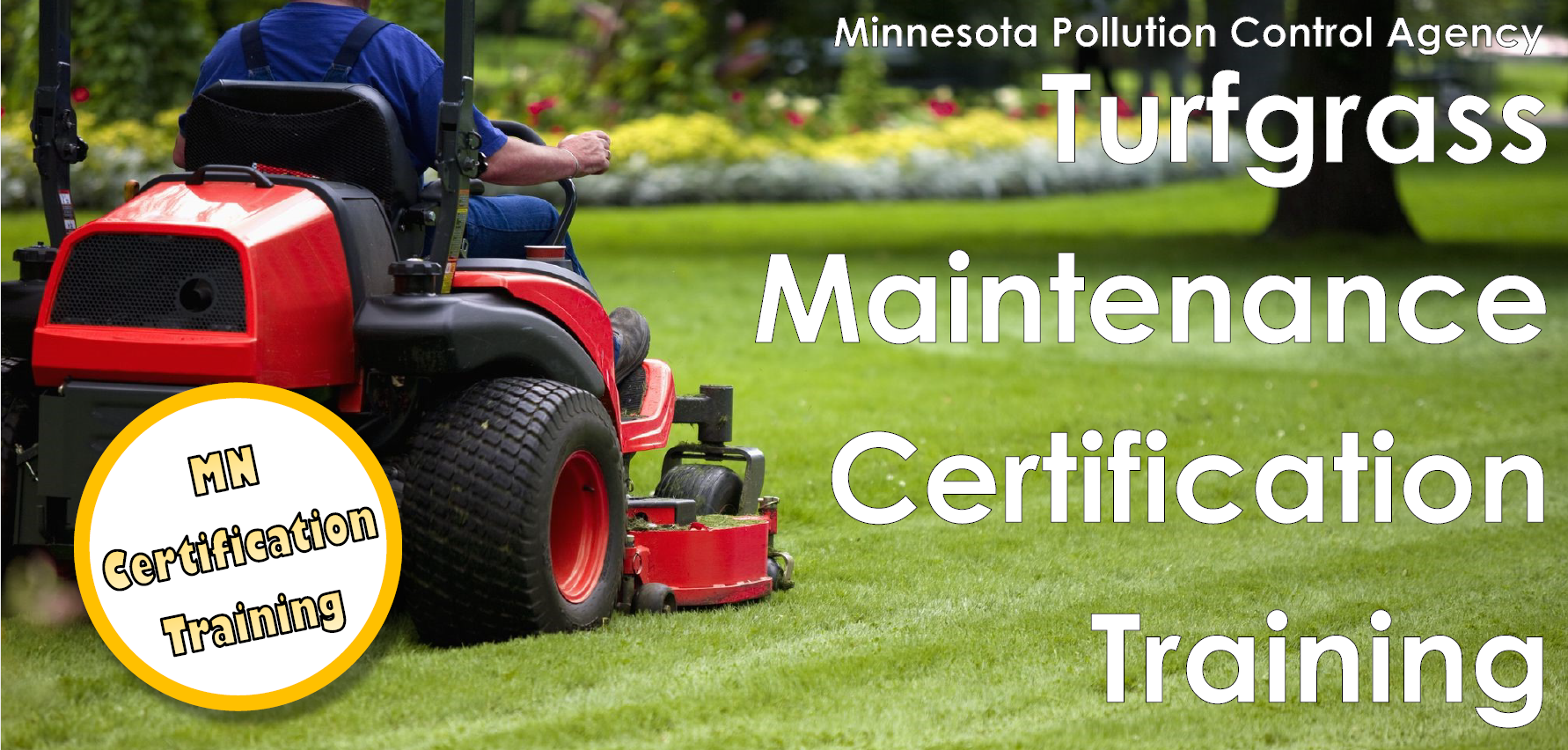
Online Turfgrass Maintenance Certification Training April 9th

This 6 hour training from the Minnesota Pollution Control Agency (MPCA) will help you improve your turfgrass maintenance through presentations and class exercises. The practices taught will help you SAVE money, time, and the environment. The course is FREE and will be taught online – register (see below) for a link.

Training Topics:

  • How turfgrass maintenance affects surface and groundwater
  • Understanding the life cycle of turf and weeds and how this affects maintenance
  • Soil testing, selection and application of fertilizers
  • Equipment calibration & maintenance
  • Mowing techniques
  • Efficient and effective irrigation
  • Weed control practices
  • … and more

Optional Certification

An optional test is offered at the end of the training to earn Minnesota Pollution Control Agency (MPCA) Level I Certification in Turfgrass Maintenance Best Practices. Certified individuals are listed on the MPCA website.

Who Should Attend?

City park departments, schools, property managers and private maintenance companies. This class does not cover golf course or athletic field maintenance. 

Register by contacting Britta Dornfeld at Coon Creek Watershed District: bdornfeld@cooncreekwd.org or 763-258-7305.

Funding for this training is provided by MPCA through a grant from US EPA, Section 319 Nonpoint Source Management Fund, Anoka County Parks, and the Coon Creek Watershed District. The course and materials were originally developed for the Mississippi Watershed Management Organization by Fortin Consulting, Inc. Content was created and reviewed through extensive collaboration with local experts.

One More Week to Register for the 2020 Children’s Water Festival

There is still time to sign up your 4th grade classes for the 2020 Metro Area Children’s Water Festival! Registration closes ONE WEEK from today – March 20th, so sign up today!

The Metro Area Children’s Water Festival is open to all metro area 4th grade classes and homeschool students. The festival teaches children about the water cycle and other water-related topics that help children appreciate their natural environment and our water resources.

This year’s festival will have more than 45 interactive learning stations, including the Science Museum of Minnesota. The festival is Wednesday, September 30th, 2020 at the Minnesota State Fairgrounds.

Festival organizers wish every class could come, but the festival is very popular, and the number of students that can be accommodated is limited, so sign up today! Classes selected to attend will be contacted in mid-April.

For more information, head to the festival website at www.metrocwf.org. Register online at www.metrocwf.org/registration.

If you have any questions regarding festival registration and selection, please contact Abby Shea at 763-324-4207 or Abby.Shea@co.anoka.mn.us.

New Video – Our Groundwater Connection: Contamination

This past summer, the video “Our Groundwater Connection” was posted by the Anoka County Water Resource Outreach Collaborative.

Yesterday, a second video was released, called “Our Groundwater Connection: Contamination”. This video builds on the information viewers learned from the first video, focusing on contamination. The video explains different sources of pollution, how pollutants travel and build up over time, and what happens when wells become contaminated. It also explains how to prevent pollution, since we all have a role to play. As the video states, “Everyone has the responsibility to stop contamination from getting into our groundwater. When we work together to prevent pollution, we can ensure clean drinking water now, and for many generations to come.”

The project was only possible due to the members of the Water Resource Outreach Collaborative pooling their resources. The Collaborative would like to say thank you to our partners from Washington County Public Health and Environment and the Minnesota Department of Health for their input.

Check out the video below!

Powered by WordPress