Class registration is open for the 2015 Metro Children’s Water Festival

Attention 4th grade teachers in the twin-cities metropolitan area! Registration is open for the drawing of classes to attend the 2015 Metro Area Children’s Water Festival that will take place on Wednesday, September 30, 2015 at the Minnesota State Fairgrounds. The Festival will accept 44 classes (over 1,200 students) at this event.

The purpose of the festival is to raise participant’s understanding of water in everyday life. Through understanding the water cycle, and other related natural resources, participants learn to appreciate their natural environment and apply conservation measures for sustained water resources. Classes will be selected from the seven county metropolitan area to balance participation through the metropolitan area.

The 2015 annual Metro Area Children’s Water Festival is the 17th festival that is held on the last Wednesday of September. The students that attended the first Festival are about 26 years old and applying the lessons learned in 1999 to protect and keep our natural resources sustained.

4th Grade Standards. This festival is geared to fourth grade students to match the Minnesota Science Standards for water lessons that are part of the education benchmarks.

Parents of homeschool children are encouraged to register for the lottery drawing that is open to all 4th grade level students.

To register for the 2015 Metro Children’s Water Festival please fill out the Registration Form and submit according to the instructions.
Met Council releases draft water resources policy plan

The Metropolitan Council has released a public comment draft of the 2040 Water Resources Policy Plan (WRPP). The plan places a new emphasis on integrating what the Council does in water supply, surface water, and wastewater.

The WRPP is a regional plan that includes policies and strategies to:

  • Treat wastewater from municipalities and industries to high water-quality standards at affordable and fair rates.
  • Work with partners to preserve the quality and quantity of groundwater and surface water. This will protect public health, support planned growth and development, maintain the health of natural habitats and ecosystems, and enhance recreational opportunities.

Plan focuses on integrated approach to water resources

As the Council gathered more than 200 comments on earlier phases of the draft, the decision was made to shift the plan toward a more integrated approach.

This means the Council will work to sustain the region’s water resources by:

  • Producing the most benefits from regional investments.
  • Opening avenues to pursue reuse of wastewater and stormwater to offset demands on groundwater supplies.
  • Incorporating strategies to support sustainable use of water sources.
  • Undertaking activities and projects that produce beneficial results in the areas of surface water, water supply, and wastewater.
  • Expanding efforts and promoting greater collaboration, financial and technical support, working with partners to address water quality, quantity, and water supply issues.
  • Promoting environmental stewardship in operating the regional sewer system by reusing wastewater, reducing energy use and air pollution emissions, and reducing, reusing and recycling solid waste.

Provide input on the plan by March 20

The Council is accepting comments on the plan through 5 p.m. on Friday, March 20. Learn more and ask questions about the draft 2040 WRPP prior to the formal public hearing at two upcoming informational meetings:

Please RSVP at least four days before the meeting you plan on attending to Judy Sventek by phone at 651-602-1156 or email judy.sventek@metc.state.mn.us.

How to comment

  • Comment forms will be available and can be filled out at a meeting or mailed in.
  • Phone Public Information at 651-602-1500.
  • E-mail public.info@metc.state.mn.us.
  • Testify at the public hearing at 5 p.m. on Tuesday, March 10, in the Metropolitan Council Chambers, 390 Robert St. N., Saint Paul.

Next steps  Once comments are received, the plan is revised to address the comments. The plan is anticipated to be presented to the Council for adoption in April 2015.

Know where to go for a healthier family

Go Anoka County

GO ANOKA COUNTY is an online resource filled with information that identifies opportunities to engage in physical activity. Much of the outdoors activities encourage us to enjoy and appreciate our environment and natural resources as we build and improve our health and stamina. See what it’s all about in 41 seconds with the GoAnokaCounty video (YouTube; AnokaCountyMN; 0:41).

GET READY: Starting a fitness program may be one of the best things you can do for your health. Physical activity can reduce your risk of chronic disease, improve your balance and coordination, help you lose weight — even improve your sleep habits and self-esteem.

GET SET: Starting an exercise program is challenging at first, but if you stay with it, you will find it enjoyable and one that your body looks forward to doing:

  • Start slowly – build up gradually working your way up the fitness ladder.
  • Break things up – you don’t have to do all your exercise at once.
  • Be creative – bike one day, swim another, hike the next (just don’t stop).
  • Listen to your body – if you feel pain, dizziness or nausea, take a break.
  • Be flexible – not feeling good then take a day or two off.

GET GOING: map out your fitness plan with the Go Anoka County Map application to find where to can get your exercise (Anoka County YouTube videos): walking, running, swimming (Bunker Beach), biking, hiking, AquaZumba, snowshoeing, golf, skating, cross-country skiing, tennis, geocaching, summer camps, horseback riding, horseshoes, birdwatching, playgrounds, canoeing, archery, standup paddleboarding, volleyball, softball, soccer, just to name a few.

DOWNLOAD the Healthy Family Guide for information that will help get you going.

Draft groundwater management plan is available for comment

UPDATE (Feb. 3, 2015) The draft North & East Metro Groundwater Management Plan is available for public review. A feedback survey is also available to comment on the draft Plan.

Anoka County residents and businesses get their water from wells that draw from groundwater aquifers located directly below us.  As Anoka County grows, so does our need for water. The questions are:
  • Is there enough groundwater for a sustainable supply in our area?
  • Will there be enough groundwater for growth and development?

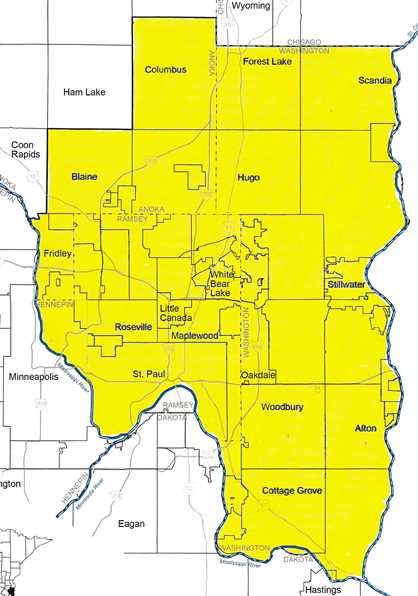
Following the drop in the level of White Bear Lake and other areas lakes – the Minnesota Department of Natural Resources (DNR) established the North & East Metro Pilot Groundwater Management Area that includes Ramsey and Washington Counties plus ten Anoka County communities (Blaine, Centerville, Circle Pines, Columbia Heights, Columbus, Fridley, Hilltop, Lexington, Lino Lakes and Spring Lake Park). Part of Minneapolis (east of the Mississippi River) is also in the N&E Metro Groundwater Management Area. In 2013 and 2014 the DNR has collaborated with residents, businesses and community leaders to prepare a plan to address management and sustainability of groundwater resources in the area.


N&E Metro GWMA (Mar. 5, 2014)

The Minnesota Department of Natural Resources is hosting three local meetings in February to present the draft North & East Metro Groundwater Management Area Plan, and to hear your comments and ideas for improving the plan.   The plan describes actions the DNR will take over the next five years to achieve a sustainable supply of groundwater for communities and the environment.

These local meetings will allow the DNR to introduce the proposed GWMA plan, describe the process used to develop it, and explain the goals and actions in the plan. Most importantly, it gives you the opportunity to ask questions and get answers.

Local Meetings Schedule (6:30 – 8:30 p.m.):

At the local meetings, DNR staff and Advisory Team members will make brief presentations. Following the presentations they will be asking for suggestions and recommendations.

  • 6:00 PM Doors Open
  • 6:30 Presentations
    • Paul Putzier, North & East Metro GWMA DNR Project Manager
    • Project Advisory Team Members
  • 7:30 Discussion, Questions & Answers
  • 8:30 Informal Discussion Time
  • 9:00 Doors Close

Light refreshments will be served. For more information, please contact Paul Putzier: 651-259-5692 or paul.putzier@state.mn.us.

LIVING ON THE EDGE. To illustrate the importance of our groundwater resources the Minnesota Department of Natural Resources has released a video Living on the Edge: Our Water Supply at Risk (YouTube; 7:20).

WHAT CAN YOU DO? Consider home and business water conservation options that are provided on the WaterSense website (USEPA) or on the Water Conservation Toolbox webpage (Metropolitan Council).  Combined, our conservation efforts will add up.

Resolve to be water efficient in 2015

UPDATE (Feb. 2, 2015) Check out the new WATER CONSERVATION webpage by the Metropolitan Council of the Twin Cities to learn why conservation is necessary and how you can be part of the solution to lower lake and groundwater level problems.

Waste is always wrong and often the result of bad habits. Wasting water – a valuable natural resource – is wrong for us all who depend on water. It’s about efficiently using water before lake levels drop and conservation is required. Make a water efficiency resolution each month in 2015.

The dawn of a new year brings with it aspirations that don’t always stick around, but if you keep them simple, New Year’s resolutions can be actions you take instead of promises you break. If the typical weight-loss or exercise resolutions aren’t getting you moving, refocus your efforts on a healthier planet by resolving to save water. KnowTheFlow will do it’s part by keeping you informed and present a new resolution each month. You’ll achieve your most water–efficient year yet.

JANUARY: Make it official. Declare your commitment to making 2015 about water by taking the “I’m for Water” pledge and sharing your resolution on social media. Encourage your friends, colleagues, and neighbors to reduce their water use by connecting with WaterSense on Facebook and Twitter.

January is Radon Action Month

Governor Dayton has proclaimed January 2015 as Radon Action Month to emphasize that every home should be tested for radon as 2 in 5 homes still have dangerous levels (see Unity Hospital Hosts Community Forum on Radon, YouTube video, CTN Studios; 2:07). Fortunately, the risk is largely preventable, by testing homes and fixing radon problems.

Radon is the leading environmental cause of cancer deaths in the United States and the leading cause of lung cancer among non-smokers. More than 21,000 lung cancer deaths are attributed to radon each year in the U.S.

The number of homes fixed (mitigated) has doubled over previous years due, in part, to a new state law that went into effect Jan. 1, 2014. The law requires information to be provided to buyers about radon during a home sale. During the first nine months of 2014, at least 2,389 homes had work done to reduce radon levels; the average for the previous two years was 1,279.

The Minnesota Radon Awareness Act requires sellers to inform buyers whether their home has been tested for radon and if so, what the levels are and whether the home has been mitigated for radon (see Radon in Real Estate Transactions brochure). In addition, sellers must provide a warning statement and a two-page publication to the buyer.

Radon is an odorless, colorless and tasteless radioactive gas that occurs naturally in Minnesota soils. It can enter into all kinds of homes through cracks or openings in walls or foundations. The only way for residents to know if their home has radon is to test.

Anoka County Community Development provides radon test kits for homeowners. For more information go to the Radon Information and Order Form webpage or call Community Development at 763-323-5764.

Closed Landfill Program Celebrates 20 Years

Minnesota celebrates the 20th anniversary of its innovative Closed Landfill Program (CLP), the only program of its kind in the country. Before the CLP, the responsibility to properly close landfills was argued among neighboring communities and property owners through seemly endless lawsuits.

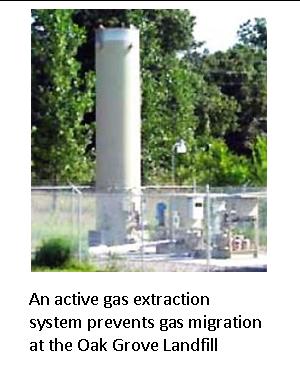
The CLP has been ensuring the proper closure and post-closure care of landfills located throughout the state. This voluntary program was established in 1994 by the MN Legislature and administered by the Minnesota Pollution Control Agency (MPCA). As of November 2014, there are 109 closed landfills in the CLP. Five in Anoka County:

  • Anoka-Ramsey Landfill (Ramsey)
  • East Bethel Landfill (East Bethel)
  • Johnson Brothers Landfill (Blaine)
  • Oak Grove Landfill (Oak Grove)
  • Waste Disposal Engineering Landfill (Andover)

For more information go to the MPCA Closed Landfill Program website or view the Closed Landfill Program Celebrates 20 Years YouTube video (MPCA, 6:15).

The Safe Drinking Water Act turns 40

On December 16, 1974, President Gerald Ford signed into law the Safe Drinking Water Act (SDWA) intended to ensure safe drinking water for the public.  The SDWA applies to all public water supply systems including municipal water utilities and wells that serve mobile home parks, schools, churches and office buildings.  A home or cabin well system is not a public water system.  See Minnesota’s Safe Drinking Water Act 40th Anniversary video (YouTube; 6:43).

Since 1972, the Anoka County Community Health and Environmental Services Department has provided water testing and advice to owners of private wells. Private well owners are encouraged to test the safety of their water annually by picking up a test kit at their city hall or the Anoka County Environmental Services office (Suite 360, 2100 Third Avenue, Anoka, MN 55303). For more information call the Environmental Services office at 763-422-7063.

Water Spot on: Wellhead Protection. Wellhead Protection is a way to prevent drinking water contamination by managing potential sources of pollution in the area near public wells. Much can be done to prevent water pollution, such as the wise use of land and chemicals. Public health is protected and expense of treating polluted water or drilling new wells is avoided though wellhead protection efforts.

If you would like to find out more about Wellhead Protection contact your municipal water utilities department or call the MDH Source Water Protection Unit at 651-201-4700.

Private Well Owner. If your drinking water comes from a private well – you are encouraged to test the water annually to be certain that it is, and remains, safe to drink. For information on testing your private well contact the Anoka County Environmental Services at 763-422-7063.

Local professionals discuss water conservation and pollution prevention at LQG hazardous waste training

Representatives from businesses that produce large quantities of hazardous waste attended the December 9, 2014 Hazardous Waste workshop held by Anoka County Environmental Services.  The attendees recieved information, not only on managing hazardous waste, but on protection of their community’s local water resources and drinking water supply.

Mick Jost, Program Coordinator, MM Technical Assistance Program (email, 612-624-4694)

  • Know your water use – track and record it.
  • Shut off all water taps then monitor meter – if it moves there may be a pipe leak.
  • For tanks, measure water level without extraction – if it drops you may have a leak.
  • Check out Solutions 2014 (MnTAP program report)

Jon Pollock, Division Manager, WCEC Industrial Services – Fridley (email, 763-571-4944)

  • Fuel wastes are hazardous wastes with some important exemptions.
  • The Managing Fuel Wastes MPCA fact sheet is a great reference.
  • Fuel wastes must be properly characterized and managed to comply with rules.

Jim Hafner, Stormwater/Wellhead Manager, City of Blaine, MN (email, 763-785-6188)

  • All storm drains end at a body of water (e.g. lake, stream or river).
  • Keep outdoor areas clear of excess/loose materials (that can wash away).
  • Have a plan and trained staff to clean up accidental spills right away.
  • Have staff use the best practices to prevent the spread of pollution
NEXT WORKSHOP.  Anoka County Environmental Services will be holding a Very Small Quantity Hazardous Waste Generator workshop in the spring (2015).  For more information call Anoka County Environmental Services at 763-422-7093.

Become a Minnesota Master Naturalist Volunteer

Discover the wonders of our natural resources and lead others by becoming a Minnesota Master Naturalist (MMN). Who can become a Minnesota Master Naturalist? Any adult who is curious and enjoys learning about the natural world, shares that knowledge with others, and supports conservation. If you enjoy hiking, bird watching, following tracks, or identifying wildflowers, you’ll love being a Minnesota Master Naturalist Volunteer.

The Minnesota Master Naturalist training courses consists of in-classroom training and field trips. Courses are designed to be a general overview of Minnesota’s three biomes: Big Woods, Big Rivers (BWBR); Prairies and Potholes (PP); North Woods, Great Lakes (NWGL); plus advanced training (ADV). The courses locally available are:

Jan. 14th to May 6th, 2015 – Big Woods Big Rivers at Anoka Ramsey Community College, Coon Rapids. Field trips will take place throughout northern Anoka County. The course cost is $275 and includes course manuals and supplies. For more information contact the course instructor 
Jennifer Braido (email).

Jan. 16th to May 8th, 2015Prairies and Potholes at Anoka Ramsey Community College, Cambridge. Class meet most Fridays (9am-1:10pm) through May 8th (class will not meet on Feb. 27th or March 13th.) Field trips will be incorporated into the class schedule. The course cost is $275 and includes course manuals and supplies. Registration is required. For more information contact the course instructor Peggy Guiney (email).

If the course cost is a hardship, please fill out the scholarship application and send (MMN).

Powered by WordPress