Become a Minnesota Master Naturalist

There are a number of opportunities in our area to learn about the wonders of our natural resources by becoming a Minnesota Master Naturalist.

Who can become a Minnesota Master Naturalist volunteer? Any adult who is curious and enjoys learning about the natural world, shares that knowledge with others, and supports conservation. If you enjoy hiking, bird watching, following tracks, or identifying wildflowers, you’ll love being a Minnesota Master Naturalist Volunteer.

The Minnesota Master Naturalist Volunteer training courses consists of in-classroom training and field trips. Course are designed to be a general overview of Minnesota’s three biomes: Big Woods, Big Rivers (BWBR); Prairies and Potholes (PP); North Woods, Great Lakes (NWGL); plus advanced training (ADV).

The courses available in the Anoka County area include:

BWBR – Kroening Interpretive Center, North Mississippi Reg. Park – Sept. 11, 2013 to Nov. 20, 2013 (9:30 am to Noon)

NWGL – Anoka-Ramsey Community College, Coon Rapids Campus – Aug. 28, 2013 to Dec. 12, 2013 (2:00 pm to 4:45 pm)

NWGL – Wildlife Science Center – Sept. 5, 2013 to Oct. 3, 2013 (6:00 pm to 9:00 pm)

ADV – Rafting the Mighty Mississippi River – Sept. 21, 2014 (9:00 am to 3:00 pm)

ADV – Skulls and Scat – Oct. 12, 2013 (10:00 am to Noon)

How much do the courses cost? Each course costs $200.00 (advanced courses are less) and includes course manuals and supplies.  Scholarships Available. If the $200.00 fee is a hardship, fill out the scholarship application and send it to Minnesota Master Naturalist.  For more information call the MMN office at 888-241-4532.
Stormwater reuse – Centerville leads the way

Centerville and other communities across the metropolitan area are exploring stormwater reuse projects to collect, store and reuse rainwater during dry periods on city-owned lawns, ballfields and other landscaping instead of purchasing water. Municipal and business leaders realize that opportunities abound to better manage stormwater on their properties, help improve their bottom line, and become better stewards of the environment.

Not only are these stormwater reuse facilities saving money on groundwater pumping, they are conserving groundwater, reducing pollution to local lakes and rivers, and reducing costs for complying with new stormwater management requirements. The facilities also create valuable educational opportunities for stormwater management professionals, students and the public.

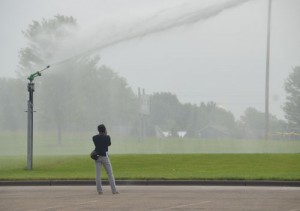
Among the other demonstration sites, the Centerville ballfield irrigation project is the simplest. After studying several options, the city is now capturing “free water” from a local pond and spraying it (after filtering) from giant watering guns over 11 acres of ballfields at Laurie LaMotte Park.

The minimalist and relatively inexpensive project is saving groundwater and keeping pond water from overflowing into Centerville Lake, protecting that body of water from runoff pollution.

Stormwater reuse benefits not only our local water resources by reducing groundwater pumping – but reducing the pollution carried into lakes, rivers and eventually the Golf of Mexico. Centerville is demonstrating a way to be Part of the Solution, Not the Pollution (EPA video).

Attention residents:  You can reuse rain water too by installing a rain barrel to collect rain from your roof.  Did you know that rainwater can actually help to improve the health of your garden, lawn and trees?  Rainwater is naturally soft (as nature intended for plants) and devoid of hardness minerals, chlorine and other chemicals found in city or home well water. For more information see the U of M Extension fact sheet Rain Barrels: A Way of Collecting and Using Rainwater.

Residents urged to ACT for drinking water protection

Acknowledge, Consider, Take action

The Anoka County Municipal Wellhead Protection Group urges you to take three steps (Acknowledge, Consider and Take Action) to protect our important groundwater resource and the source of your drinking water.

​1. ACKNOWLEDGE that preventing ground water pollution protects the water that we drink

  • ​​​​​​Everyone
    • ​​Our lifestyle is due, in part, to our abundance of clean water.
    • Household hazardous substances must be used and disposed of safely.
    • We want our natural resources and our drinking water protected from pollution.
  • For those that own a well or are in a wellhead protection area
    • Protection of a home well begins with the well owner.
    • Residents near a public well have a part in the protection of drinking water.
    • Protection of a community water supply must be a community effort.

2.​ CONSIDER your options to protect the groundwater that is the source of your drinking water

3. TAKE ACTION to prevent pollution of drinking water

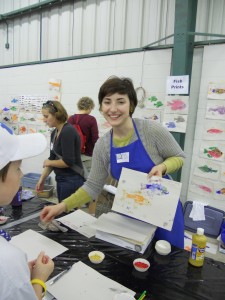
Volunteer at the Metro Area Children’s Water Festival

The participating classes have been selected for the 2013 Metro Area Children’s Water Festival (September 25th) that educates over 1,200 4th grade students each year by bringing water resources professionals, educators and students together at the Minnesota State Fair Grounds.  Selected Anoka County schools are Al-Amal School (Fridley) and Rum River Elementary (Ramsey).

BUT, the organizers are in need of volunteers to support the program by:

  • guiding classes;
  • leading students in hands-on Water Arcade activities;
  • aiding presenters at education stations;
  • performing bus/student safety duties;
  • plus many other volunteer activities including wearing the water drop costume as you quiz students on their knowledge of water facts.

This program is made possible by the variety of volunteers that share the same goal. In fact, it takes over 100 talented and enthusiastic individuals to make Metro CWF possible! Volunteer positions are filled on a first come, first served basis and recruiting starts annually in July. If you are interested in volunteering send your name, email address, phone number, affiliation, and volunteer position interest to Charlie Sawdey at rsawdey@co.carver.mn.us or call 952-361-1810.

Dedication & tour of the Blaine Preserve – July 25th at 6:30 p.m.

A rare piece of Anoka County’s natural history, including nearly a dozen threatened and endangered plants, is being preserved as the Minnesota Department of Natural Resources (DNR) dedicates a Scientific and Natural Area (SNA) in Blaine on Thursday, July 25th at 6:30 p.m. The public is invited to a guided tour of the site to learn about its features.

The dedication of the Blaine Preserve Scientific and Natural Area (SNA) will start at 6:30 p.m. with remarks by state and local officials. The program will be followed by a site tour. Following the tour, people can stay on for 45 minutes of site stewardship work, such as cutting invasive buckthorn or pulling knapweed. Participants should come with waterproof footwear, drinking water and bug repellent.

Located a few hundred yards east of Interstate 35W, just off 95th Avenue, the 63-acre Blaine Preserve SNA site represents one of the state’s rarest types of wetlands, a rich fen, where layers of peat and slightly acidic groundwater create the conditions needed by unusual plants such as cross-leaved milkwort, twisted yellow-eyed grass and the tubercled rein-orchid.

To reach the SNA site from I-35W, take the 95th Avenue exit and travel about 0.3 miles east to the Blaine Preserve Business Park, 3787 95th Ave. NE in Blaine, where free parking will be available for the dedication. Activities will take place at the SNA on the opposite side of the street. (See the DNR News Release)

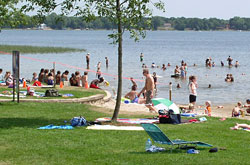
Practice healthy swimming behaviors to stay cool and safe

(Update 7/14/2013) If in doubt – stay out. Recent high temperatures and rain can combine to create harmful blue-green algae in lakes and ponds.  This type of algae can harm pets, livestock, and even people.

Not all blue-green algae are toxic, but there is no visual way to predict whether a blue-green algal bloom contains toxins and is harmful to humans or animals. Harmful blooms often look like pea soup, green paint, or floating mats of scum, and they often have a bad odor. Don’t take the chance: If in doubt – stay out.

Don’t bring germs with you.  It’s hot and everyone is heading for the pool or swimming beach – but don’t bring germs with you.  Anoka County Community Health wants you to take smart precautions to stay cool and healthy.

Germs on and in swimmers’ bodies end up in the water and can make other people sick,” said Dr. Kirk Smith, epidemiology supervisor for the Minnesota Department of Health. “Even healthy swimmers can get sick from recreational water, but the young, elderly, pregnant women and people with weakened immune systems are especially at risk.”

The best way to prevent recreational water illnesses is to keep germs out of the water in the first place:

  • Don’t swim when you have diarrhea.
  • Don’t swallow pool or lake water.
  • Practice good hygiene. Shower with soap before swimming.
  • Wash your hands thoroughly after using the toilet or changing diapers.
  • Take children on bathroom breaks or change diapers often.
  • Change diapers in a bathroom, not at poolside or beachside.

For information about healthy swimming go to Centers for Disease Control and Prevention (CDC) Healthy Swimming web page. To report a suspected waterborne or swimming illness, call the Foodborne and Waterborne Illness Hotline at 1-877-366-3455.

Free workshops available for commercial turfgrass maintenance

The Mississippi Watershed Management Organization is sponsoring a Turfgrass Maintenance with Reduced Environmental Impacts workshop (FREE) for contractors or employees maintaining private or public grounds, landscapers and property managers. Attend either workshop on July 17th or August 1st for commercial and landscape servicing professionals.

Training Description: This six hour training offers information about best practices for managing turfgrass (mowing, seeding, weeds, fertilizer and pesticide application, and more). These practices will help you save money, time, and the environment.

Training Topics:

  • How turf management affects local lakes and rivers
  • Equipment calibration
  • Selection and application of fertilizers
  • Mowing techniques
  • Pesticide application tips
  • Best Practices for turf management
  • Legal issues and additional resources

Workshop participants will receive a copy of the “Turfgrass Maintenance with Reduced Environmental Impacts” manual and a complimentary lunch.

Certification:
Participants will have the option of receiving Level One Certification in Summer Turf Care Best Practices from the Minnesota Pollution Control Agency. Certified practitioners are listed on the MPCA Certified Practitioners website. This can be a great marketing tool!

For more information contact Nancy Mulhern (Fortin Consulting) at 763-478-3606 (nancy@fortinconsulting.com).

Small Quantity Generator – Hazardous Waste Workshop (Aug. 7, 2013)

Announcing  Hazardous Waste Training for Small Quantity Generators (Aug. 7, 2013).

Are you responsible for managing hazardous waste at your facility? This workshop will introduce Small Quantity hazardous waste generators to the management and compliance standards required by Minnesota rules. The workshop it designed for newcomers and those who need a refresher. It covers determination of whether a waste is hazardous, handling, storage, transportation, emergency planning, employee training and record keeping requirements.

For more information contact Laura Schmidt (763-422-7253, Laura.Schmidt@co.anoka.mn.us) or Kathy Piela (763-422-7093; Kathy.Piela@co.anoka.mn.us).

Fishing in the neighborhood (FiN)

The best part of fishing is when your line is in the water. Don’t overlook the many opportunities to get your family and friends together at a lake or stream in your neighborhood. You might be surprised at what Anoka County Parks Department and the Minnesota Department of Natural Resources (DNR) are doing to maintain our waters, stock our local lakes, work with anglers to keep our natural resources in good condition, and establish docks, piers and shorelines for fishing opportunities.

Fishing in the Neighborhood (FiN) is a DNR program aimed at increasing angling opportunities, public awareness and environmental stewardship within the seven-county metro region. As the state’s population has become increasingly urbanized, it is evident that there is a growing need for easily accessible fishing opportunities close to where people live.

FiN builds on existing urban fisheries management activities such as stocking public water with game fish, lake aeration and enhancement of shore-fishing and pier-fishing opportunities. FiN promotes a greater awareness of aquatic habitat needs and the importance of good stewardship. By getting more people involved in angling, FiN will assure that this family-oriented activity continues to be one of Minnesota’s most popular pastimes!

Check out Anoka County area lakes with shorefishing access. And, check out the CAST kids fishing event and tournament at Lake George Regional Park on August 2, 2013 (9am to 1:30 pm). It takes only minutes to get a line in the water in your neighborhood.

Take the survey to improve access to water data

Six state agencies that have primary responsibility for Minnesota’s waters are working to create a single Web portal to the water data they maintain. They are looking for input from water professionals and the general public on how to improve access to data about surface and ground water quality, quantity, projects and more.

Take the online survey and help improve access to Minnesota water data from the Minnesota Pollution Control Agency (MPCA), Minnesota Department of Natural Resources (DNR), Metropolitan Council, Minnesota Department of Health (MDH), Board of Water and Soil Resources (BWSR), and Minnesota Department of Agriculture (MDA): Clean Water Fund Water Resource Survey

Examples of state agency water websites include:

Powered by WordPress