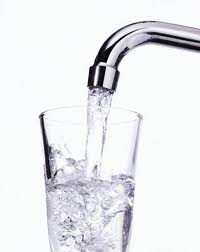
Drinking water quality reports are available

Drinking water is generally in good shape at Anoka County’s community water supply systems, according to the Minnesota Department of Health’s (MDH) Drinking Water Annual Report 2012.  Highlighted in the report is completion of the first phase of a new water and stand-alone wastewater system in East Bethel. “Water is the key to development” said East Bethel City Administrator Jack Davis.

Municipal water suppliers are distributing or posting their 2012 water quality reports. Water quality testing results are summarized in the reports for 2012 (Jan 1 to December 31).

The reports describe where the drinking water comes from and  what’s in it.  Groundwater, from wells, is the source of drinking water for Anoka County public water suppliers (except Columbia Heights and Hilltop). Water supply wells are drilled in the community that it serves. Residents and businesses are in a unique position to protect the safety of their drinking water source – the groundwater below them.

Municipal Wellhead Protection.  Community water suppliers are implementing wellhead protection programs to manage potential sources of soils and groundwater pollution near their wells.  Residents and property owner within a Drinking Water Supply Management Area (DWSMA) are in the best position to protect the source of drinking water to their community.  To see if you are in a DWSMA go to the Anoka County Wellhead Protection map application.

Water service customers that want a copy of their water system’s annual report may check the utility website or request a copy from their water supplier:

Home/cabin water well owners:  The Anoka County Community Health and Environmental Services Department recommends that you test your water supply annually to be certain that it remains safe to drink. For more information see the Well Water Testing webpage or call Environmental Services at 763-422-7063.
July is Smart Irrigation Month

July is historically the peak water demand month because of increased lawn and crop irrigation.  Smart irrigation practices and systems makes every drop of water count by minimizing the waste from over-watering and evaporation.

For more information about how to efficiently irrigate your lawn contact your water utility or go to the Smart Irrigation Month website (Irrigation Association).

Water use and sustainability (new information videos)

In most recent months Anoka County (and most of Minnesota) has experienced precipitation causing drought conditions to ease (see Drought Monitor). Such classifications are helpful in the management of plants and crops.  However, the Drought Monitor does not determine the condition of groundwater resources that can experience depletions due to prolonged and high volumes of water withdrawal.

As our population grows, so does the demand on our water resources.  Most Anoka County residents and businesses get their water from wells that draw from aquifers that are located directly below us.  The question is how much water is down there and will it be enough for future growth and demand. A question that is being asked by our neighbor, White Bear Lake that is the focus of a study by the U.S. Geological Survey and a forum on Water Use: Cutting-edge Conservation (July 16th at 6pm) to address ground water pumping that is likely affecting (lowering) lake levels.

To help understand the importance of our water resources the Minnesota Department of Natural Resources has released new videos on the Mt. Simon Aquifer which is the deepest source of groundwater in Anoka County and the metropolitan region.

The Minnesota Department of Natural Resources mission is to work with citizens to conserve and manage the state’s natural resources. Learn more about Minnesota’s program on the DNR Sustainability of Minnesota’s Ground Waters website and accurate information on water levels and trends on the Water Resources Data webpage.

WHAT CAN YOU DO? Consider home and business water conservation options that are provided on the WaterSense website (USEPA) or on the Water Conservation Toolbox webpage (Metropolitan Council).  Combined, our conservation efforts will add up.

Anoka County Municipal Wellhead Protection Group receives Governor’s Award

(June 4, 2014) Lieutenant Governor Prettner Solon presented the Anoka County Municipal Wellhead Protection Group (ACMWPG) with a Source Water Protection Award for their success in protecting the groundwater source of drinking water for eight communities.  The Group is comprised of the cities of Anoka, Blaine, Centerville, Circle Pines, Fridley, Lexington, Lino Lakes, and Spring Lake Park that have established an innovative and effective program to protect their municipal wells and the groundwater source of their drinking water supply.

These cities serve as an example of how a cooperative approach of land owners, residents, and government agencies can lead to innovative and effective implementation of source water protection efforts. The Anoka County Community Health and Environmental Services Department joined the eight communities of the Wellhead Protection Group to implement this unique and cost-effective process to protect the source of drinking water to municipal wells as they protect the health of Anoka County residents.

Presenting the Governor’s Source Water Protection Award is Minnesota Commissioner of Health Dr. Edward Ehlinger and Lt. Governor Prettner Solon.  Accepting the award is Anoka County Commissioner Carol LeDoux and City of Blaine Wellhead Protection Manager James Hafner (Chairman of the ACMWPG)

For more information on local efforts to protect the groundwater source of your drinking water supply contact your public water supplier.

River art contest

The Mississippi National River and Recreation Area encompasses a 72 mile stretch of the Mississippi River from Dayton/Ramsey to Hastings, Minnesota. The Mississippi has had a long economic history possessing rich historical, cultural, natural and scientific resources. It is also a haven for recreational opportunities and the focus for artists in the National Park Service Experience Your River National Park Art Contest  in June. 

How to Enter

1. Visit the river or a park within the Mississippi National River and Recreation Area. Check out the NPS website at www.nps.gov/miss/planyourvisit for ideas on where you can visit.
 
2. Have an amazing experience and create your art. If you’ve made a physical piece of art, take a high resolution photograph of it.
 
3. Pick out two photographs or digital submissions of your art. Name your submissions with this format: First name_Last name_Image name. (Example: Pat_Smith_MississippiRiver.jpg.)

4. Email your submissions to miss_info@ nps.gov. Be sure to include proper name formatting for each, as well as a short 2-3 sentence description of the experience you would like to convey. Also include a phone number where you can best be reached. In the Subject line please put “Experience Your River National Park Art Contest.”

What if I win?
The winner will be announced mid-July and will receive official recognition at the 25th Anniversary Reunion August 13th, 2013. The prize is an America the Beautiful pass, which will allow free entry to the federal lands for one year. The winner’s art will be used in online and print pieces produced by the National Park Service and Mississippi River Fund to represent the Mississippi National River and Recreation Area.
 
See the official rules and regulations to learn more. 

Bike with a Mississippi River Ranger

Join National Park Service rangers on a bicycle ride at the Coon Rapids Dam and along the Mississippi River. The 10 mile ride include stops along the way. This three hour, family friendly, ride features stops where rangers talk about history, natural resources, and recreational opportunities of the area. Bikers will uncover the rich history and natural resources along river trails from the Coon Rapids Dam to Banfill Locke/Manomin Park.

Participation is free, but registration is required. All rides are limited to 20 participants. Click here to register online, or call the Mississippi River Visitor Center at (651) 293-0200 to make your reservation.

IN ANOKA COUNTY

Location: Coon Rapids Dam Park – East. Coon Rapids, MN. (Google Map)
Dates: Jun 30, Jul 28, Aug 25, Sep 22
Distance: 10 miles
Notes: Anoka County Parks charges a $5 fee if entering by motorized vehicle. It is possible to park for free on the West side of the dam and bike across to meet the Ranger.  Bike rental is available for a fee at the park’s visitor center. Call (763) 757-4700 for their rates and to make a reservation.  Register for this event.

Contact Ann Sarnecki at 651.290.3030 x234 for more information. Visit www.nps.gov/miss to see the entire listing of Bike With A Ranger programs throughout the Twin Cities.

Delay roadside mowing until Aug. 1 for wildlife

More than 40 bird species, including pheasants, use roadsides for nesting from April to August. Delayed mowing of roadsides will be more important than normal this year as the cool, wet weather has delayed bird nesting, according to the Minnesota Department of Natural Resources (DNR).

The late spring will likely impact pheasant nesting” said Nicole Davros, DNR research scientist and pheasant specialist.  It takes six weeks for a hen pheasant to lay eggs and hatch chicks, Davros said.  The peak hatch for pheasants is typically the third week in June, but this year there will probably be a lot of birds still nesting in July, Davros said. Chicks need to be two to three weeks old to escape mowers or other farm equipment.  By delaying roadside disturbances until Aug. 1, most nests can hatch successfully.

If landowners are worried about safety, mowing a narrow strip adjacent to their mailbox or driveway shouldn’t affect nesting hens too much, Davros said. Most pheasant hens place their nests either in the ditch bottom or along the back slope, away from the road. At sites where noxious weeds are a problem, Davros recommends spot mowing or spot spraying for treatment.

For more information, visit the DNR roadsides for wildlife webpage or contact the DNR Information Center at 651-296-6157.

Studies find chemicals widespread in lakes and rivers

Prescription medicines and personal care products are ending up in Minnesota’s lakes and rivers, according to recently released Minnesota Pollution Control Agency studies. The mosquito repellent DEET was the most often detected, along with chemicals used in antidepressants and antibiotics.

The chemicals were all detected at very low concentrations, in the low parts per trillion. But, the MPCA says, the findings are concerning because even at low levels, several of the chemicals are known to interfere with hormone function in fish and other aquatic organisms.

Reports on the studies and summary information are available on MPCA’s webpage. The two reports are titled “Pharmaceuticals and Endocrine Active Chemicals in Minnesota Lakes” and “Pharmaceuticals and Personal Care Products in Minnesota’s Rivers and Streams“.

What you can do. Don’t flush prescription drugs (chemicals) down the drain.  Prescription drugs have the potential to harm water resources and the source of our drinking water (groundwater and the Mississippi River).  Proper disposal not only keeps dangerous drugs from being abused but also prevents harm to our local water resources and wildlife.   Safely and properly dispose of your prescription drugs by following recommendations in the MPCA fact sheet Pharmaceutical Waste: Disposing of unwanted medications or contact Anoka County Integrated Waste Management at 763-323-5730.

Finding better ways to manage pollutants at the WDE closed landfill (Andover)

The Minnesota Pollution Control Agency (MPCA) is using new technologies to make the old Waste Disposal Engineering Landfill, in Andover, a better neighbor.

An active gas-extraction system efficiently draws landfill gases from the buried mixed municipal solid waste. The landfill gases, mainly methane, are burned in an enclosed flare on site, thereby preventing the possible migration of these potentially dangerous gases to nearby homes and sewers.

Additional management was necessary to deal with problems associated with the landfill’s hazardous waste pit containing used paints and solvents. Last spring, polychlorinated biphenols, or PCBs, were found in groundwater beneath the pit. A granulated activated carbon treatment system was installed to capture the PCBs from the extracted groundwater.

Disposing of volatile organic compounds, or VOCs, in the hazardous waste pit was also a challenge. The MPCA solved this problem by installing a system that removes these gases from the pit, cools, compresses, and condenses them into a BTU-rich liquid used in a blended fuel burned in cement kilns across the country.

For information about the operation and remediation of the WDE Landfill contact John Moeger at the MPCA (phone 651-757-2574, email john.moeger@state.mn.us). More information is available in an MPCA fact sheet, Waste Disposal Engineering Closed Landfill update.

Water use and sustainability (an update)

On March 11, 2013 the League of Women Voters ABC (Anoka, Blaine and Coon Rapids) held a forum on Water Supply Sustainability in the North Metro. The conversation continues throughout the state.

Metropolitan Council Environmental Services Manager, Keith Buttleman’s, presentation (Testing the limits of the regions aquifers) shows a shift in metropolitan municipal water use from surface water (i.e. Mississippi River) to ground water that is “not sustainable.

The Minnesota Department of Natural Resources mission is to work with citizens to conserve and manage the state’s natural resources. Learn more about Minnesota’s program on the DNR Sustainability of Minnesota’s Ground Waters website and accurate information on water levels and trends on the Water Resources Data webpage.

WHAT CAN YOU DO? Choose your home/business water conservation options that are provided on the WaterSense website (USEPA) or on the Water Conservation Toolbox webpage (Metropolitan Council).  Combined, our conservation efforts will add up.

Powered by WordPress