Aquatic Invasive Species (Eurasian Watermilfoil and Zebra Mussels)

Businesses required to take Aquatic Invasive Species training

Businesses that rent, lease or decontaminate boats or other water-related equipment are now required to attend Aquatic Invasive Species (AIS) training and acquire a permit under a state law change that took effect in July. “Before this change, the law applied only to businesses such as marinas, dock haulers, boat clubs and others who install or remove equipment from state waters,” said April Rust, Department of Natural Resources (DNR0 AIS training coordinator.

After completing the required three-hour training, lake service providers must pass an exam and obtain a permit from the DNR. The permit is valid for 3 years. Lake service providers must have the permits while providing services. Employees of lake service provider businesses also need to complete a short training course offered free online. Permitted service providers are listed on the DNR AIS database.

The Minnesota Department of Natural Resources (DNR) is offering additional aquatic invasive species (AIS) training to owners of lake service provider businesses in November 6th at Gander Mountain (Blaine). To register for training, find out if a business needs a permit, or for more information contact the AIS Specialist, Keegan Lund ,at 651-259-5828.
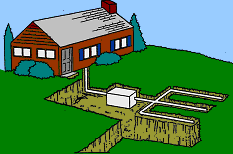
Homeowner Septic System Class, February 25, 2014

(Update 10/29/2013) If you missed the October 28th Homeowner Septic Class – you can still register for the February 25, 2014 class. 

A septic system is professionally designed to treat sewage for a specific home, business, or group of properties. Proper treatment of sewage returns (recycles) water back to groundwater with reduced risk to human health, nearby wells and the environment surrounding your home.

Learn how to keep your septic system operating properly – when to pump, how to protect it from freezing, and more. The Anoka County office of the University of Minnesota Extension Service will be holding a Homeowner Education for Septic Systems (2-hour) workshop on February 25, 2014 at 7:00 p.m.  at the Bunker Hills Activity Center in Andover.  Attendees will receive the Septic System Owner’s Guide and come away more confident and knowledgeable–it’s a wise investment time.

Cost is $10 per family.  Registration is due by February 11th.  For more information, view the Septic System Class registration form or call the extension service at 763-755-1280.

Metro Water Fest offers a peek at water science

(September 25, 2013) Over 250 Anoka County students attended the 16th annual Metro Area Children’s Water Festival.  The students attended a number of presentations learning many important lessons PLUS the most important lesson – water make life possible.

Metro Area Children's Water Festival

Learning stations at the Festival (Met Council YouTube) include:

  • Water (Science Museum of Minnesota)Water is constantly in motion all around us, rising up into the sky through evaporation from rivers and oceans, and then falling back to Earth as rain or snow. Plants play a major role in the water cycle, drawing water from the soil and releasing it into the air through their leaves. One acre of broad-leafed forest may release as much as 8,000 gallons of water into the atmosphere every day.  (Lukas Johnson, Science Museum of Minnesota, school outreach@smm.org)
  • Singing Rivers: CLEAN IT UP is the refrain for the River Cleanup Boogie – I went down to the river.  To catch me some fish.  But the mud in the water made my kids go “ish!”  I told them not to worry.  It’s been like that awhile when I said let’s clean it up and they began to smile LET’S CLEAN IT UP! (Scott Sparlin, yasure@lycos.com)
  • Water in Trees – How does it get up 100 feet: Trees are important to clean water because they help keep soil particals out of our streams, give our streams and lakes shade, and are a place for many bugs to live that our fish and reptiles need to eat.  But in order to be healthy, trees need water too. How do they take in that water and get it all the way up to the top of  the tree? What are the unique properties of water that help make this happen? (Teri Heyer, USDA Forest Service Urban Connections)
  • The House that Jack Built: Our drinking water comes from a local source.  Either a well or the Mississippi River.  It gets to your faucet by constructing a well or water system and installing plumbing and fixtures to keep the water clean and safe to drink.  (Richard Thron, Mantyla Well Drilling, richardthron@yahoo.com)
  • FLUSH – The Wastewater Story:  Wastewater must be cleaned up before reaching rivers, lakes and groundwater.  A home septic system or treatment plant uses physical and natural processes to remove bacteria and human wastes.  However natural processes will not remove household and industrial chemicals that are not found in nature.  Homes may dispose of waste chemicals safely by dropping them off at a household hazardous waste facility.  Businesses properly must dispose of their chemicals according to law.  (Patti Craddock, Central States Water Environment Association, pcraddock@sehinc.com)
  • Streams and Wetlands: The forces of water have a powerful effect on our environment.  Water is always moving to keep our environment in balance.  Streams carry stormwater from saturated/flooded areas.  Wetlands perform  important functions to store water, control flooding, clean stormwater, and provide habitat for waterfowl and reptiles. (Nanette Geroux, Metropolitan Council Environmental Services, nanette.geroux@metc.state.mn.us)
  • Just Passing Through: Vegetation helps to keep rain water clean by capturing soil particles carried by stormwater.  The roots of plants can absorb pollution keeping it from reaching water resources like lakes, rivers and groundwater.  Water is always “just passing through” but plants help to keep it clean.  (Linda Radimecky, MN Dept. of Natural Resources, linda.radimecky@state.mn.us)
  • The Water Beneath our Feet: In the “slice of earth” we learned that water collects in open spaces between sand grains.  Gravity makes water moves down and through sand, gravel and sandstone that are found in layers (called aquifers) providing water to wells.  Water is the “universal solvent” that will dissolves and mix with practically any chemical resulting in “water pollution.”   The trick is to keep water and potential pollutants from getting together. (Angie Hong, Washington Conservation District, angie.hong@mnwcd.org)
  • A Model Stream: Water doesn’t just flow down a stream channel.  Water is the reason there is a stream channel! And, a flowing river, creek or stream has the power to alter the channel.  For more information check out River Model Clips or Healthy Rivers.  (Brooke Asleson, MN Pollution Control Agency, brooke.asleson@state.mn.us)
  • Macro Madness: We all need water to survive, to drink.  Aquatic insects need clean natural water too.  Using benthic macroinvertebrates (water insects) we can tell the health of a creek, stream or river.  Sensitive invertebrates (like Stonefly Nymph, Mayfly Nimph, and Caddisfly Larvae) found in a stream indicates the quality of the water is good.  (Maggie Karschnia, MN Wetland Health Evaluation Program, msdarschnia@gmail.com)
  • Water Quality – Is Your Understanding Crystal Clear?:  Samples from different water bodies have very different qualities.  A lake is a standing body of water the permits sediment to settle to the bottom and temperature (thermal) layers and established in the water.  Water flowing in a river or creek is constantly on the move having very different characteristics.  (Laurie Sovell, MN Pollution Control Agency, Laurie.Sovell@state.mn.us)
  • How Do Fish Get Mercury?: Like water, mercury can evaporate becoming airborne.  The mercury contaminates rain falling into lakes and rivers.  Fish become contaminated with methylmercury by eating food (plankton and smaller fish) that builds up in their flesh. Fish that eat other fish become even more highly contaminated. Thus, the fish most desirable for many anglers (bass, walleye and northern pike) are the most affected.  (Bruce Monson, MN Pollution Control Agency, Bruce.Monson@state.mn.us)
  • Adopt A River Crime Lab: Trash on land and trash on the river.  The Story of Peanut (the turtle with a peanut shaped shell) is an example of the effects of carelessly disposing trash in the Mississippi River.  (Paul Nordell, MN Dept. of Natural Resouces, paul.nordell@state.mn.us)
  • Watch it Rain!: Erosion is serious problem for both cropland and water quality.  Rain carries soil particles from bare land into ditches, lake and creeks.  Using conservation practices we learned how to manage our land and protect water resouces.  (Mark Zumwinkel, MN Dept. of Agriculture, mark.zumwinkle@state.mn.us)
  • Water Pollution on Trial: Environmental regulations set water quality standards and limits pollution discharged from businesses.  There is a variety of enforcement options to stop pollution and clean up polluted water normally with the cooperation of the business or institution.  When there isn’t cooperation then there may be a trial.    (Joshua Berman, MN Pollution Control Agency, joshua.burman@state.mn.us)
  • Buzzzz…Mosquitos!: When it comes to mosquitoes everyone has an opinion.  Separating opinion from fact is what science education is all about. Mosquitos belong to the Culex order that (like all flies) go through four stages of life: egg, larva, pupa, and adult.  Female mosquitos hunt for blood by detecting carbon dioxide and octenol emitted in the breath and sweat of warm-blooded animals, including us.  (Mike McLean, Metropolitan Mosquito Control District, mmclean@mmcd.org)

The next Metro Area Children’s Water Festival is scheduled for Sept. 24, 2014.  Registration for the lottery drawing will open on February 1, 2013 and close on March 31th.  For more information contact Bart Biernat at Anoka County Environmental Services (763-422-6985, Bart.Biernat@co.anoka.mn.us).

Rum River Elementary is going to the Metro Area Children’s Water Festival

Six (6) fourth grade classes (180 students) from Rum River Elementary will be attending the Metro Area Children’s Water Festival being held at the Minnesota State Fair Grounds on Wednesday, September 25, 2013.

The Festival is a hands-on learning experience for 1,200 metro area students to learn ways they can help to ensure a future where both the quantity and quality of water resources are protected and managed wisely.

The Metro Area Children’s Water Festival is an education program of the metropolitan counties through the Metro Area Ground Water Alliance (MAGWA). State agencies and the Metropolitan Council cooperate with MAGWA to develop and maintain this unique education program. Individuals, local businesses, and organizations have donated their time, materials, and financial support to maintain a sustained education program that is now in its 16th year.

The 4th grade teachers bringing their classes are: Mrs. Dietz, Mrs. Landry, Mr. Moore, Mrs. Murray, Mrs. Schantzen, Mrs. Taylor and Dr. Conner will attend.

Grants available for small public water suppliers (October 1-31, 2013)

Minnesota Department of Health’s Source Water Protection Grants for Noncommunity Transient Public Water Supply well owners are available (see announcement).  Grant applications may be submitted on October 1st.  The deadline to submit a grant application is October 31st.

Food and lodging establishments that own and operate an on-site well and water system are eligible for this category of grant.

Grants for noncommunity transient public water supply systems are to:

  • Support wellhead protection measures that address a potential contamination source that presents a high risk to a source of drinking water as determined by the MDH or Anoka County Environmental Services;
  • Have a maximum amount of $10,000, which may be increased to $30,000 when three or more public water suppliers apply under the same application; and
  • Require an equal financial cost share amount;

For more information contact the Drinking Water Protection Program at 651-201-4700 (health.drinkingwater@state.mn.us).

Progress in the Anoka County Geologic Atlas

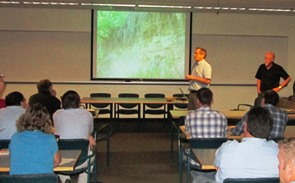
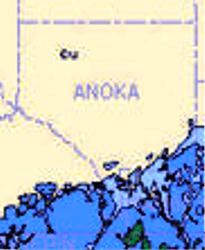
(UPDATE 9/19/2013) The Minnesota Gelogical Survey held a workshop presenting Part-A of the Geologic Atlas of Anoka County.  The last part (Part B) is projected to be completed in 2015.

A county geologic atlas provides information necessary for sustainable management of ground water resources, for applications such as monitoring, water allocation, permitting, remediation, and well construction.  The Anoka County Geologic Atlas will help to understand aquifer properties and boundaries, as well as the connection of aquifers to the land surface and to surface water resources.  It can also provide a broad range of information on geology, mineral resources (including construction materials), and natural history.

The  Anoka County Geologic Atlas is being prepared in two parts.  Part-A has been prepared by Minnesota Geological Survey (MGS) which includes a water well database and 1:100,000 scale geologic maps showing properties and distribution of sediments and rocks in the subsurface.  Part-B will consist of water levels in aquifers, direction of groundwater flow, water chemistry, and sensitivity to pollution.  The geologic atlas was initiated by the Conservation District and the Watershed Management Organizations in Anoka County.

The Part A (surficial and bedrock geology) of the Anoka County Geologic Atlas has been completed.  Part B (hydrology and sensitivity to pollution) is being prepared.  The project is planned to be completed by 2015.

To help understand the importance of our water resources the Minnesota Department of Natural Resources has released new videos on the Mt. Simon Aquifer which is the deepest source of groundwater in Anoka County and the metropolitan region.

For more information contact Jamie Schurbon at the Anoka Conservation District (763-434-2030 x12).

Drink more water for a healthier lifestyle

The Partnership for a Healthier America (PHA), of which First Lady Mrs. Obama is honorary chair, has announce an initiative to encourage everyone to make an easy choice to improve their health and well-being every day: drink more water.

I’ve been looking for as many ways as possible to help families and kids lead healthier lives. I’ve come to realize that if we were going to take just one step to make ourselves and our families healthier, probably the single best thing we could do is to simply drink more water,” said First Lady Michelle Obama. “That’s it – it’s really that simple. Drink just one more glass of water a day and you can make a real difference for your health, your energy, and the way you feel. So Drink Up and see for yourself.

In the next year, supporters of the effort will carry the Drink Up logo on nearly 300 million packs of bottled water; more than half a billion bottles of water; 200,000 packages of reusable bottles; and more than 10,000 reusable bottles. Additionally, more than 10,000 outdoor public taps are expected to carry the brand over the next few years.

Visit www.youarewhatyoudrink.org to join in a virtual “Cheers!” to water, or to find the initiative on Instagram (www.instagram.com/urH2O), tagging their pictures #DrinkH2O.

Well water sampling for hydrologic mapping in Anoka County

Water samples from wells in Anoka County will be collected and analyzed for water chemistry over the next two months by the Minnesota Department of Natural Resources (DNR).  The samples will be tested to learn the time it takes rain to percolate into the various aquifer layers and how water moves through the geologic formations below.

DNR hydro-geologists will collect and analyze water samples that will be used in the groundwater section of the Anoka County Geologic Atlas that is currently being developed. The atlas is a cooperative effort involving staff from the Minnesota Geological Survey, DNR Ecological and Water Resources Division, Anoka County and the Anoka County Soil and Water Conservation District.

DNR staff will be contacting county residents for permission to draw a sample from their well, which involves collecting a water sample and measuring the depth to water in each well. The selection of wells for sampling will be based on geology, location, well depth, and well construction. Water samples will come from wells drawing water from aquifers at varying depths. Owners of wells that are sampled will receive a report of the laboratory results for their well.

Preserving the long-term quality of the region’s surface and groundwater resources requires accurate information based on sound scientific principles. A county geologic atlas will aid residents, landowners and communities in their plans for development, land use management, and water resource protection.

The Minnesota Geological Survey has already published Part A of the atlas, which illustrates details of each county’s geology. In 2015, the DNR will publish the groundwater portion of the atlas (Part B). The current plan for the Part B reports will include maps and descriptions of the hydrogeology, cross sections illustrating groundwater conditions and the pollution sensitivity of groundwater in the county.

Funding available to restore native shoreland aquatic habitat

The Minnesota Department of Natural Resources (DNR) is making $225,000 available for grant proposals to restore native aquatic habitat. Individual grant requests can range from $25,000 to $100,000. Cost-share grants are available to local units of government, conservation groups and lake associations to conduct aquatic habitat restoration projects with native plants to improve fish and wildlife habitat.

Projects on private properties will have at least 75 percent of the frontage restored with an adjacent buffer zone that is at least 25 feet deep or wide. The focus of these projects must be on re-establishing vegetation for fish and wildlife habitat. Funds cannot be used for rock riprap stabilization or permanent wave breaks.

Grant recipients will be reimbursed for a maximum of 75 percent of the total project costs. Applicants must be able to fund at least 25 percent of the total project costs from non-state sources. Matching funds may be cash; volunteer labor; and in-kind contributions of materials, equipment and services.

“This is an opportunity for lake associations, local communities and conservation organizations to help enhance native shoreline vegetation and fish habitat in their local lakes, streams and rivers,” said John Hiebert, DNR lake habitat consultant. “Since 1999, more than 350 restoration projects have been funded, restoring more than 136,000 feet of shoreline.”

Applications for grants are available on the Aquatic Habitat Restoration website or call John Hubert (651) 259-5212 (john.hiebert@state.mn.us). Completed grant applications are due Friday, Nov. 8.

Home school class (Anoka Parks Department)

2013-2014 Home school program is open for registration

The Anoka County Parks and Recreation Home School Program begins in October. Wargo Nature Center’s professional naturalists provide quality environmental, recreational and natural history programs. Program sessions are designed 1st through 12th grades.  For 1st and 2nd grade with separate sessions for 3rd through 5th and 6th through 12th grades.

Two-hours sessions will be held the third Thursday of the month (October through May).  There will be a morning session (10:00 to 12:00 p.m.) and a afternoon session (2:00 to 4:00 p.m.).  The program starts promptly so please come early.

Pre-registration and pre-payment of $4/student (plus tax) is required.  Space is limited so be sure to use the online registration and sign up for the season.

Check out the Anoka County Parks 2013-14 Home School Brochure for more information or call the Wargo Nature Center at 651-429-8007.

Powered by WordPress