Community watering restrictions are going into effect

As Anoka County communities grow – so does our demand for water. The trick is to use water wisely so that our combined water demand doesn’t exceed our local water resources supply. During the summer months water use increases for lawn sprinkling. A homeowners water use in July can be six (6) times greater than January.

Lawn Watering Tips (from Don Taylor, University of Minnesota Extension Service Horticulturist): (1) Consider whether lawn irrigation is necessary in your situation; (2) Lawn irrigation would normally be minimal in spring until June; (3) Add 1 to 1-1/2 inches of water per week (minus any rainfall) during the summer months; (4) Keep the intervals between irrigations as long as possible; and (5) Water in early morning hours for greatest efficiency.

Residents and businesses throughout Anoka County should take note of city watering restrictions:

Contact your water utility for more information about water conservation, leak detection and water fixtures that conserve water.

Well Water Wise (3W) week (May 2-6, 2016) test your home/cabin well

The Anoka County Community Health and Environmental Services (CHES) Department, in cooperation with 15 municipalities and county agencies, is sponsoring the 17th annual “Well Water Wise” (3W) week promotion May 2-6, 2016 to encourage residents to check the safety of their private well water. For information on private well testing go to the Anoka County Environmental Services Well Water Testing webpage or call 763-422-7063.

County residents may pick up a well water test kit at participating city and township offices (listed below) or in the Environmental Services Unit, Suite 600 of the Anoka County Government Center, 2100 3rd Avenue in Anoka. Water samples can be submitted to the county’s Environmental Services Unit for analysis every Monday from 8 a.m. to 4:15 p.m. and Tuesday from 8 a.m. to noon. During 3W week, samples can be submitted Monday through Thursday (8 a.m. to 4:15 p.m.) and Friday (before noon). The well water testing kit includes details about water collection and submission. A laboratory fee of $30.00 will be charged for coliform bacteria and nitrate-nitrogen analysis.

Unlike public water utilities, private well water is not treated with chlorine to prevent bacteria growth. Simply looking at the appearance of drinking water is not a reliable indicator of whether it is safe to drink. An annual coliform bacteria test is a good way to ensure that your drinking water continues to be free of bacteria.

Nitrate-nitrogen occurs naturally in groundwater and wells at concentrations below one milligram per liter (mg/L). Nitrogen can seep into private wells from a variety of sources including septic systems, nitrogen fertilizers, animal feedlots, and landfills. The Minnesota Department of Health has established a Health Risk Limit (HRL) for nitrate-nitrogen at 10 mg/L. Levels above that point may pose an immediate risk to infants and pregnant women.

The testing of private wells used for drinking water is the responsibility of individual owners. There are an estimated 25,000 private wells in service throughout Anoka County. Only a small percentage of them are tested annually. For more information about well water testing, call the Environmental Services Unit at 763-422-7063.

Pick up a well water testing kit at participating communities and agencies:

  • City of Andover, City Hall (1685 Crosstown Blvd. NW)
  • City of Bethel, City Hall (23820 Dewey Street)
  • City of Blaine, City Hall (10801 Town Square Drive)
  • City of Centerville, City Hall (1880 Main Street)
  • City of Columbus, City Hall (16319 Kettle River Blvd. NE)
  • City of East Bethel, City Hall (2241 221st Avenue NE)
  • City of Ham Lake, City Hall (15544 Central Avenue NE)
  • City of Lino Lakes, City Hall (600 Town Center Parkway)
  • Linwood Township, Township Hall (22817 Typo Creek Drive NE)
  • City of Nowthen, City Hall (8188 199th Ave. NW)
  • City of Oak Grove, City Hall (19900 Nightingale St. NW)
  • City of Ramsey, City Hall (7550 Sunwood Drive NW)
  • City of St. Francis, City Hall (23340 Cree St NW)
  • Anoka Conservation District (1318 McKay Drive NW, Suite 300, Ham Lake)
  • Anoka County Extension Service (550 Bunker Lake Blvd. NW, Andover)

Unique opportunity for Coon Rapids residents to get rain sensor

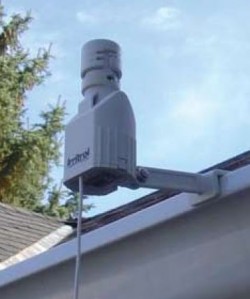
Attention Coon Rapids residents. Interested in conserving water when you water your lawn? Participate in a pilot program where you could receive a new irrigation sensor. (ABC News article)

The City of Coon Rapids is excited to launch a pilot program for ten selected households in Coon Rapids to receive lawn irrigation sensors to help reduce water consumption. Applicants must be Coon Rapids residents who have lived in their homes at least three years, have underground working sprinkler systems and have used those systems the previous three years.

Selected households must be willing to allow the City of Coon Rapids to access and utilize water data from the previous three years and three years after installation of the irrigation sensor. Residents chosen will also be required to complete an annual assessment via email or mail about how the irrigation system works and explain changes/issues. If awarded the irrigation sensor, installation will be provided by Best Irrigation and must be completed before June 1, 2016. See City agreement for details (agreement will be provided to participants chosen for the program).

Print out the program application and information about the sensor below.

Rain Sensor Information Sheet  Irrigation Pilot Program Application

For more information contact Colleen Sinclair at 763-767-6540.

Soil and water stewardship week

Abundant natural resources are more than just a source of pride – they are recreational and economic drivers for Anoka County. Conservation and protection is the foundation of the Anoka Conservation District (ACD).  ACD has worked hard for our soil, water and wildlife, managing programs that work toward the conservation and healthy use and development of our natural resources.

The Minnesota Board of Water and Soil Resources (BWSR) honors and celebrates the work of Soil and Water Conservation Districts including Anoka Conservation District as part of Soil and Water Stewardship Week, April 24 – May 1, 2016.

Soil and Water Conservation Districts play a unique role because they provide soil and water conservation services to private landowners at a local level,” LeAnn Buck, Minnesota Association of Soil and Water Conservation Districts Executive Director, said.  “Seventy-eight percent of Minnesota’s lands are private, and helping to increase conservation efforts on those lands is essential to keeping Minnesota’s natural resources healthy and strong.

This is the 61st annual Soil and Water Stewardship Week, organized by the National Association of Conservation Districts (NACD).  Stewardship Week is one of the largest national annual programs to promote conservation. NACD represents the nation’s 3,000 conservation districts, which were established to encourage resource conservation across the country.  This year’s theme – We all need trees – highlights the many ways trees are vital in our daily lives.

For more information about Soil and Water Stewardship Week and how you can get involved in local conservation efforts, contact the Anoka Conservation District  at 763-434-2030.

Keeping hazardous chemicals out of drinking water

Greg Kottsick (Fridley Utilities Manager) gave the attendees at the Anoka County Hazardous Waste Management Training (for Very Small Quantity Generators) some good reasons to properly manage their wastes. “Generating hazardous waste is part of doing business, but it should never reach a municipal water supply well contaminating a community’s drinking water,” said Kottsick.

Fridley is a member of the Anoka County Municipal Wellhead Protection Group of ten water suppliers (Andover, Anoka, Blaine, Centerville, Circle Pines, Fridley, Lexington, Lino Lakes, St. Francis and Spring Lake Park). Municipal water suppliers are going the extra mile to protect the groundwater source of their community’s drinking water. Businesses and institutions in Anoka County attend the annual Hazardous Waste Generator Workshops to keep up on the latest management techniques to prevent pollution from harming our air, land and water resources.

Topics included in the hazardous waste workshop:

  • License Requirements
  • Manifests and Records
  • Waste Accumulation and Container Management
  • Aerosol and Electronic Wastes
  • Wellhead Protection and Water Pollution Prevention
  • Recycling Latex Paint (Amazon Environmental)
  • Business Recycling Assistance (Anoka County Recycling & Resource Solutions)
  • Calculating and Reducing License fees

A small quantity generator hazardous waste workshop will take place in September. For more information contact Laura Schmidt at Anoka County Environmental Services (763-422-7253, Laura.Schmidt@co.anoka.mn.us).

Water action week in Minnesota (April 17 – 23, 2016)

Governor Mark Dayton has proclaimed April 17 – 23, 2016, to be Water Action Week in Minnesota. Learn what you can do to protect water quality and conserve water in your home and your community:

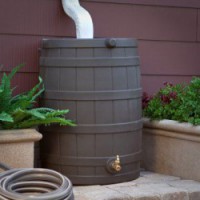
SPRINKLE SMARTLY. Water your lawn early in the morning, and don’t water your sidewalk and driveway. Shut your sprinkler off if it’s raining (make sure the rain sensors are working if you have them), and set the timer. Consider putting a rain barrel under your downspout to capture water, so you can use it later. More yard and garden tips.

TURN THE FAUCET OFF  when you’re brushing your teeth. Water comes out of the average faucet at 2 gallons per minute; you can save 4 gallons of water by just turning off the tap. Start a wash cycle only when you have a full load of dishes or clothes. Consider reusing towels instead of just using them once. What you can do in your home.

MIND THE GUTTER. Keep your leaves and grass clippings out of the street, or they will wash into the storm drain and eventually into our lakes and rivers. Phosphorus from leaves and grass creates green slime in the lakes from algae growth. Ways to reduce nutrients in lakes and streams.

AVOID CESSPOOLS. Maintain your septic system — especially if you have a house on a lake. Do you really want to be swimming in sewage? A poorly functioning septic system may not remove pathogens, nutrients, and other chemicals from the used water before it enters our groundwater or lakes. Septic system information for homeowners.

BUFFER YOUR SHORELINE. Natural shorelines of perennial vegetation help filter out phosphorus, nitrogen and sediment by slowing runoff and trapping sediment. The vegetation absorbs pollutants, preventing them from entering the water supply. More buffers are needed all around Minnesota, from lakeshores and river banks to water running through farm fields. Compare water quality with and without buffers.

DON’T BE A DRIP. At one drip per second, a faucet can leak 3,000 gallons in a year, and a running toilet can waste up to 200 gallons of water each day. Most leaks are easily repaired and can mean big savings. For even more savings, consider installing high efficiency fixtures and appliances. Don’t let your toilet run away.

KEEP IT CLEAN. Modern car washes use a lot less water per vehicle and recycle their water. Plus all that dirty, soapy water doesn’t end up running out of your driveway, down the stormdrain, and into some unlucky lake, stream, or wetland. Spoil yourself and your car by taking a trip to the car wash. Spring cleaning tips for protecting water.

GO TO A LOW NITROGEN DIET. Use as little nitrogen fertilizer on lawns and fields as possible. More is not always better and may mean less cash in your wallet. Learn more about reducing nitrogen fertilizer use by contacting your Soil and Water Conservation District Office. Why reducing nitrogen is important.

KNOW AND VOLUNTEER IN YOUR COMMUNITY. Get involved! Learn about local programs to protect water that are presented in the Anoka County Water Resources ReportVolunteer to monitor a lake or stream, join a local lake association, or attend your local watershed district meeting (local contacts). Clean, healthy water is connected to economic opportunities and healthy communities. Find an opportunity to volunteer.

Dump water-holding containers to reduce mosquito-borne illnesses

Water makes all life possible. Don’t make life easy for mosquitos and the illnesses they spread. The Minnesota Department of Health (MDH) and the Metropolitan Mosquito Control District (MMCD) encourage everyone to remove from their property any small water-holding containers that could fill with rainwater this spring and be used as breeding areas by mosquitoes.

When outdoors this spring, take time to look for water-holding containers on your property,” said Kirk Johnson, Vector Ecologist at the Metropolitan Mosquito Control District. “We still have several weeks before the mosquitoes developing in those containers become adults that can bite people. 

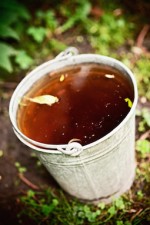
Containers that people wish to keep (for example, 5-gallon pails, wheelbarrows, children’s wading pools), can be turned over when not in use to prevent the collection of rainwater and any possible use as breeding sites by mosquitoes. Property owners can also look for water-holding holes or depressions in trees (often pockets form where two or more trunks meet near the ground) and fill these with soil or sand to prevent mosquito use.

The attention on Zika nationally has prompted us to re-evaluate our mosquito control efforts and how those efforts can help reduce the risk from La Crosse encephalitis, West Nile virus and other vector-borne diseases,” said Dr. Ed Ehlinger, Minnesota Commissioner of Health.

None of these container-breeding mosquitoes fly far from where they breed, so it is quite possible for people to keep them away from their homes and families by removing the water sources they require.

A little bit of container removal work right now can go a long way to protect your family this summer,” said Dave Neitzel, MDH Vectorborne Disease Epidemiologist.

For more information on mosquitoes and mosquito-borne disease prevention, visit the preventing mosquito-borne disease MDH webpage.

Proposed rules for Mississippi River Corridor Critical Area open for comments

Proposed rules aimed at protecting the metro portion of the Mississippi River are now available for public comment, according to the Minnesota Department of Natural Resources.

The proposed rules will replace a 37-year-old executive order that currently regulates development in the Mississippi River Corridor Critical Area (MRCCA) a 72-mile land corridor along the Mississippi River in the Twin Cities metropolitan area governed by special land development regulations.

During this comment period, an administrative law judge will review the proposed rules and take public input through a formal comment and public hearing process. Interested parties may submit written comments to the judge and/or provide oral comments at three public hearings including a June 15th meeting at Greenhaven Golf Course Event Center (Anoka, MN).

Developing modern rules will go a long way toward improving efficiency and consistency while protecting the essential values that led to the area’s original designation,” said DNR Commissioner Tom Landwehr. “That’s something we hope landowners, local units of government and river advocates can all support.”

The proposed rules, district maps, statement of need and reasonableness, and other information are available on the DNR’s project website.

Low interest loans available for well and septic fix-up

Anoka County Community Development has Agricultural Best Management Practices (AgBMP) Loans available for water quality improvements. Loans are limited to $200,00 for a maximum of ten (10) years at an interest rate of 3%. Loans can be used to repair or seal water wells and repair or replace a septic system at homes and commercial properties.

The program purpose is to improve water quality as identified by Cities or the County in local water plans. It is unique in its structure and is not duplicated by other programs or funding sources.

The AgBMP Loan Program provides financing at below-market interest rates. These low interest loans save you money making it more economical to implement practices that improve and protect water quality.

For more information contact Barb McKusick at 763-323-5722 or email.

Order your rain barrel & compost bin to recycle rainwater and reduce waste

Have you ever watched a river of rainwater run down your driveway into the gutter, ditch, or storm sewer? Collecting rain-soft roof runoff in a barrel is a good way to reuse/conserve high quality water. Rain barrels have been around for thousands of years, but today people are re-discovering that they also protect our local water while saving money on water bills and having a ready source of natural rainwater to nurture plants and gardens (instead of hard groundwater from wells, chlorine from public water or sodium salt-softener water).

The Recycling Association of Minnesota (RAM) is holding a series of events to distribute rain barrels and compost bins. Pre-order a rain barrel and compost bin on the RAM website and then pick up your order at the event of your choice. Some local distribution events include:

*Anoka County residents are eligible for $14 reduction in the cost of the compost bin at St. Francis and Ramsey events. For more information, please contact Brita Sailer at 651-641-4560 or email: brita@recycleminnesota.org

EDUCATORS: consider installing a rain barrel at your school as a practical tool to demonstrate the sustainable use of water resources outside the classroom window. Contact your local watershed management organization or the Anoka Conservation District to learn about education grants that may be available.

Powered by WordPress