Water Master Stewards coming to Anoka County communities

The Rice Creek Watershed District and Mississippi Watershed Management Organization are seeking volunteers committed to water resource protection and driven to make a difference by becoming a Master Water Steward. By combining your talents and energy with your local watershed organization – you can protect and enhance the lake, creek, river, wetland and groundwater resources that offer recreation opportunities and supply drinking water in your community.

Stewards will learn about the water issues that the watershed and other agencies are addressing. Watershed staff and local experts will support Stewards to complete a capstone project in the first year.

What Master Water Stewards Do

  • Identify pollution sources and create strategies for reducing pollutants.
  • Be an example of how water pollution can be controlled in your neighborhood.
  • Educate neighbors and businesses on the environmental problems in their area.
  • Target pollution sources that are harming water resources such as pet waste, fertilizer or pesticides.
  • Encourage community action to reduce water pollution by coordinating the installation of rain-gardens (3:55 video by Anoka Conservation Dist.), rain-barrels and other rain-scape techniques.

Rice Creek Watershed DistrictMississippi Watershed Management Organization


Rice Creek Watershed District will hold classes every other Tuesday evening from 6-8 pm between January 19 and July 12, 2016, and the cost is $200 (scholarships available). For more information contact Jessica Bromelkamp at jbromelkamp@ricecreek.org or 763-398-3073. Please click here to find out if you are located within the RCWD.

Mississippi Watershed Management Organization will hold an information session on Tuesday, November 17, 2015 at 6:30 p.m. For more information contact Michele Ross, Program Specialist at 612-746-4983 or mross@mwmo.org. To see if you are located in MWMO, view the map: MWMO watershed.

More opportunities to volunteer in the protection of local water resources are available by contacting the Anoka Conservation District or the watershed organization in your community:
Order your trees and shrubs

The Anoka Conservation District is excepting preorders for the annual Tree and Shrub Sale.  The District offers a wide variety of native stock, including black cherry trees, mixed oak trees, red maple trees, and white pine trees. The trees and shrubs are sold in bare root seedlings or transplants and most are 10″ to 24″ in height. They may be purchased in bundles of ten for $17, or twenty-five for $30 not including tax.  Native prairie seed and tree aids are also available. You do not need to be an Anoka County Resident to order.

The Tree and Shrub Sale website also contains information about the kinds of trees and shrubs to plant in your particular situation along with planting directions.

You may purchase these trees and shrubs by:

  1. Online ordering,
  2. Mail in an Order Form, or
  3. Order by phone (763-434-2030 x10).

Linwood Township Awarded 2015 Outstanding Conservationist

The Anoka Conservation District selected Linwood Township as the 2015 Anoka County Outstanding Conservationist. Linwood’s dedicated residents and civic leaders prove what can be done to protect their precious natural resources in a cost-effective way.

A member of the Sunrise River Watershed Management Organization, Linwood is implementing water planning, resource monitoring, inventory and diagnostic studies. Through success in obtaining Clean Water Fund grants Linwood was able to install carp barriers at Typo Lake and Martin Lake.

Linwood Township has earned the title 2015 Anoka County Outstanding Conservationist

Jamie Schurbon (Water Specialist), Vici Nass (ACD Board Member) Bob Millerbernd (Linwood Township Board Member)

Jamie Schurbon (Water Specialist), Vici Nass (ACD Board Member) Bob Millerbernd (Linwood Township Board Member)

Rake leaves from your curb, gutter and sidewalks

Our wooded properties make us proud of our communities.  As the leaves turn color and fall, they provide a beautiful show BUT require cleanup.  Decaying plant material that ends up in ponds and streams reduces water quality.  Please do not rake leaves into the street.

Composting is a microbial process that converts plant materials such as grass clippings and leaves to a more usable organic soil amendment or mulch. Gardeners have used compost for centuries to increase soil organic matter, improve soil physical properties, and supply some of the essential nutrients for plant growth. Mulching refers to the practice of applying a layer of materials such as compost, leaves, or grass clippings to the soil surface in order to modify soil temperature and moisture as well as control weeds and soil erosion.

Because many communities ban outdoor burning and have laws that prohibit dumping of leaves and grass clippings into landfills, composting and mulching have become attractive ways to manage yard waste and recycle natural materials.

Drop-Off Options –  Bring your leaves and grass to the Anoka County Compost Sites at a cost of $5 for up to 4 cubic yards (50 cents for each additional cubic yard).  Come back to the compost site to get a compost that your can use in your yard and landscaping. The hours for the sites are :

  • Bunker Hills Site (Hanson Blvd. 1 mile north of Hwy 242 in Coon Rapids) Mondays through Fridays from 10 a.m. to 7 p.m. or sundown, whichever is first; Saturdays from 9 a.m. to 5 p.m.; and Sundays Noon to 5 p.m.
  • Rice Creek Chain of Lakes Site (County Road 14 to the east of I-35W) Tuesdays and Thursdays from 10.a.m. to 7 p.m. or sundown, whichever is first; Saturdays from 9 a.m. to 5 p.m.; and Sundays Noon to 5 p.m.

Backyard Composting – Or consider the advantages of composting right in your backyard.

For more information call the Anoka County Recycling and Resource Solutions at 763-323-5730.

Hazardous waste workshop a success

In Anoka County, industrial and commercial businesses that produce any amount of hazardous waste are regulated as hazardous waste “generators.” A generator must comply with pollution control requirements based upon the amount of waste they produce. These requirements are part of the Minnesota Hazardous Waste Rules and Anoka County Hazardous Waste Ordinance. They are designed to protect people and the environment from the effects of improper management of hazardous wastes from commercial sources.

Representatives from businesses that produce very small and small quantities of hazardous waste attended the September 16, 2015 Hazardous Waste workshop held by Anoka County Environmental Services (763-422-7093) (program slides).  The attendees recieved information, not only on managing hazardous waste, but on protection of their community’s water resources and drinking water supply.

Businesses, nonprofit organizations, and units of government that generate most types of hazardous waste at sites in Anoka County are required to report that waste annually to Environmental Services, pay a fee, and obtain a license for the subsequent year. “Businesses that generate hazardous wastes in Anoka County have made management of the wastes a priority for the protection of our natural and water resources” said Bart Biernat, Environmental Health Specialist.

Household Hazardous Waste. Businesses are not the only generators of hazardous wastes in Anoka County. Workshop attendees were challenged to help get the message out to residents that they should also protect our natural resources by properly disposing of their household hazardous wastes at the Anoka County Household Hazardous Waste Facility.

Attendees learned that efforts to manage their hazardous wastes were appreciated by county and city agencies, and watershed management organizations that plan and manage local water resources for economic and recreation use. Plus, local groundwater is the source of drinking water to homes and entire communities. Many public water suppliers have established Wellhead Protection Areas to address pollution sources (such as business hazardous waste and household hazardous waste) near public water wells.

NEXT WORKSHOP.  Anoka County Environmental Services will be holding a Large Quantity Hazardous Waste Generator workshop on Wednesday, September 23, 2015.  For more information call Laura Schmidt at 763-422-7253.

Septic Smart Week (Sept. 21-25, 2015)

SepticSmart logo

During SepticSmart Week homeowners are reminded to regularly pump their septic tank(s) every 2 years (3 years minimum) and protect their drain field from digging and damage by heavy vehicles and machinery.

One in five Anoka County homes have a well and septic on their property.  Maintaining a septic system is important because the sewage we put down the drain must be cleaned up before it gets into groundwater, wells and the water that we drink. Plus, a properly constructed and maintained septic system reduces pollution while recycling water back into our natural environment.

For most home and cabin wells, the nearest source of possible water pollution and dangerous bacteria is their septic system. Septic systems that are not maintained in good working order not only hurt the environment but risk your family’s health. Plus, you may be flushing thousands of dollars down the drain by damaging your septic system!

For information on septic systems see the Pumping and Maintenance of Septic Systems (YouTube video, 4:20), register for a septic system class, or contact the Anoka County Extension Service office at 763-755-1280. For information on testing the safety of your home well go to the Anoka County Environmental Services Well Water Testing webpage or call 763-422-7063.

It isn’t difficult to maintain a septic system. Just like a wastewater treatment plant, homeowners have to keep their system in good condition to keep it working right. All it takes is regular maintenance. For financial assistance in repairing your septic system go to the Agricultural Best Management Practices Loan webpage or call Anoka County Community Development at 763-323-5722.

Fall Recycling/Cleanup Events in September

By choosing to recycle, we reduce consumption of fossil fuel, create jobs in Anoka County and Minnesota, conserve natural resources and create environmental benefits. For information about recycling opportunities in your community, check out the Anoka County Residential Recycling Opportunities webpage.

  • Since it takes less energy to manufacture products from recycled materials than it does to manufacture the  same product from virgin (new) materials, recycling decreases demand for fossil fuels and increases our energy independence.
  • Recycling contributes to our economy — approximately 20,000 jobs in Minnesota are supported by the industry. These jobs pay an estimated $760 million in wages and add nearly $3 billion to Minnesota’s economy.
  • Recycling, and buying recycled products, helps keep Minnesota’s lakes and rivers clean. Manufacturing products from recycled materials generates less water pollution than manufacturing from virgin (new) materials.

Your individual recycling efforts do make a difference! Prepare for the winter months by cleaning out the garage and basement.  To help you, there are community recycling days held in September:

  • Andover (Saturday, September 12, 2015, 9am-1pm) 763-755-5100
  • Anoka (Saturday, September 26, 2015, 8am-Noon) 763-576-2700
  • Blaine (September 19, 2015, 10am-2pm) 763-784-6700
  • Circle Pines (Saturday, September 19, 2015, 10am-2pm) 763-784-8598
  • East Bethel (Saturday, September 26, 2015, 8am-Noon) 763-367-7840
  • Fridley (Saturday, October 3, 2015, 9am-1pm) 763-572-3594
  • Ham Lake (Saturday, September 12, 2015, 8am-Noon) 763-434-9555
  • Lino Lakes (Saturday, September 19, 2015, 10am-2pm) 651-982-2400
    • Lino Lakes Recycling Video (YouTube-LinoLakeRecycling; 0:45)
  • Linwood (Saturday, September 26, 2015, 8am-Noon) 651-462-2812
  • Nowthen (Saturday, September 19, 2015, 8am-Noon) 763-441-1347

Protect Your Groundwater Day – Sept. 8, 2015

On Protect Your Groundwater Day (September 8, 2015) the National Ground Water Association urges you to take action to protect an important natural resource — groundwater.

When it comes to hazardous household substances:

When it comes to water conservation:

  • Modify your water use to conserve
  • Install a water efficient plumbing fixtures to save water, energy and money.

If you own  a water well

  • Test your water well annually (Anoka County Environmental Health).
  • Move possible contamination sources a safe distance from the wellhead.
  • Get your septic system cleaned and inspected every other year.
  • Properly seal abandoned wells (MN Dept of Health, YouTube; 4:36) because they can funnel polluted water into groundwater, a neighbor’s well or a nearby municipal well.

Andover’s drinking water protection plan moves forward

The City of Andover is in the process of amending its wellhead protection plan to protect the safety of drinking water that is supplied to residents. An information meeting was held at Andover City Hall Council Chambers where David Berkowitz (Andover Director of Public Works and City Engineer) was available to answer questions and discuss the process of amending the Andover Wellhead Protection Plan.

With the addition of a municipal well – the City’s Drinking Water Supply Management Area (DWSMA) has expanded to include additional land area where Andover will apply pollution prevention to protect the groundwater that is drawn into City wells. With the completion of Part 1 of the Plan, the City will collect comments and recommendations from residents as it sets protection goals to complete Part 2.

“Fortunately for Andover the vulnerability of aquifers used by municipal wells is either low or moderate” reported David Berkowitz. The recently released Andover Water Quality Report for 2014 states that no contaminants were detected in the distribution system at levels that violated federal drinking water standards.

Andover’s Wellhead Protection Plan (Part 1) includes information pertaining to:

  1. The delineation of the wellhead protection area(s),
  2. The Drinking Water Supply Management Area boundaries, and
  3. An assessment of the vulnerability of the wells and DWSMAs.

A copy of the amended Part 1 plan is available at Andover City Hall. For more information contact David Berkowitz at  763-767-5133.

David Berkowitz (Andover City Engineer) presents the revised Drinking Water Supply Management Area

David Berkowitz (Andover City Engineer) presents the revised Drinking Water Supply Management Area


Household hazardous waste collection events

When certain household chemicals are not used up, they can become household hazardous waste. Many household products contain the same chemicals as manufacturing and industrial products that can pollute soils and groundwater if not properly disposed. Anoka County communities have joined forces to maintain the quality of our natural water resources by offering residents solutions to properly dispose of household hazardous wastes and recycle other wastes.

Anoka County Recycling and Resource Solutions will hold three (3) Household Hazardous Waste Collection Events from 9:00 a.m. to 1:00 p.m. at the Anoka County Fairgrounds on:

  • Saturday, August 8
  • Saturday, September 12 and
  • Saturday, October 10 CANCELLED
  • Tuesday, October 6

For more information go to the RRS Household Hazardous Waste Collection webpage or call 763-323-5730.

Anoka County has a permanent solution: Drop off your household hazardous waste at the Anoka County Household Hazardous Waste (HHW) Facility. HHW offers residents a place to properly dispose of household wastes that cannot be managed at home or other collection sites. The permanent year-round facility is located at 3230 – 101st Ave. N.E. in Blaine. From April through October, the HHW facility is open Monday, Friday and Saturday 9:00 a.m. to 3:00 p.m. and Wednesday 2:00 p.m. to 8:00 p.m. The HHW facility is closed Labor Day, September 7th.

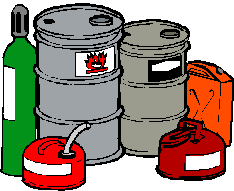
Labeling is the easiest way to identify hazardous products. Look for the words caution, warning, danger, or poison on a products label. These “signal words” indicate a degree or hazard level and are required by law to be on the labels of hazardous products.

Labeling is the easiest way to identify hazardous products. Look for the words caution, warning, danger, or poison on a products label. These “signal words” indicate a degree or hazard level and are required by law to be on the labels of hazardous products.

Powered by WordPress