Municipal drinking water quality reports are available

Drinking water is safe at Anoka County’s community water supply systems, according to the Minnesota Department of Health’s (MDH) Drinking Water Annual Report 2013. Each year, cities publish reports on the results of water quality tests of their water system. The 2013 water quality reports summarize testing results for 2013 (Jan 1 to December 31). The reports describe where the drinking water comes from and what is in it. Groundwater, from wells, is the source of drinking water for Anoka County public water suppliers (except Columbia Heights and Hilltop).

Safe Drinking Water Act. This year (2014) marks the 40th anniversary since the passage of the Safe Drinking Water Act. Anoka County public and municipal water suppliers have kept their users safe from water-borne diseases and harmful pollutants through regular testing and addressing water pollution before it reaches their water wells. See the Safe Drinking Water Act 40th Anniversary (YouTube video, 6:43).

Municipal Wellhead Protection.  Community water suppliers are implementing wellhead protection programs to manage potential sources of soils and groundwater pollution near their wells.  Residents and businesses within a Drinking Water Supply Management Area (DWSMA) that is near municipal wells are in a unique position to protect the source of the community’s drinking water – the groundwater below. To see if you are in a DWSMA go to the Anoka County Wellhead Protection map application.

You have a home well? Anoka County Environmental Services recommends that you test the safety of your drinking water annually. Go to the Well Water Testing website.

Customers that want a copy of their water system’s annual report (normally published before July) may check the utility website or request a copy from their water supplier:

Six steps to make summer swimming safe

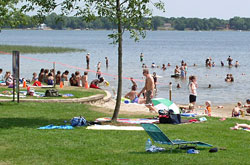
The Fourth of July holiday will be a busy time at beaches and public pools. Anoka County Community Health and Environmental Services Department encourages residents to take precautions to keep families healthy and happy in the water.

The best way to prevent recreational water illnesses is to keep germs out of the water and off beaches in the first place. Swimmers can protect themselves and others by following these six tips:

  1. Don’t swallow pool or lake water.
  2. Practice good hygiene. Shower with soap before swimming.
  3. Wash your hands thoroughly after using the toilet or changing diapers.
  4. Don’t swim when you have diarrhea.
  5. Take children on bathroom breaks or change diapers often.
  6. Change diapers in a bathroom, not at poolside or beachside.

The most common symptom of recreational water illness is diarrhea, which in some cases can be severe enough to result in hospitalization. Symptoms may not develop until a week or more after swimming. For more information about healthy swimming, visit the Minnesota Department of Health’s Waterborne Illness web page or the Centers for Disease Control and Prevention Healthy Swimming web page.

To report a suspected waterborne illness, call the Minnesota Department of Health’s Foodborne and Waterborne Illness Hotline at 1-877-FOODILL (or 651-201-5655 from the Twin Cities).

Delay roadside mowing for pollinators and pheasants

Delaying roadside mowing until Aug. 1 benefits pheasants, songbirds, pollinators and more, according to the Minnesota Department of Natural Resources. “With a growing concern for pollinators, we all need to do our part to protect wildflower habitat” said Carmelita Nelson, DNR prairie grassland coordinator. Roadsides with native wildflowers are especially beneficial to native bees. The loss of habitat is one of the critical causes of the decline of both wild bees and honeybees.

Roadsides also provide more than 500,000 acres of pheasant nesting areas where one-fourth to one-third are hatched. “After a difficult winter and wet spring, we are concerned about pheasant nesting this year” said Scott Roemhildt, DNR information officer. Most pheasant hens are currently sitting on nests and will hatch their broods in mid- to late June. The peak hatch time for pheasants is the third week in June, but there are still a lot of birds nesting in early July. Hens will only hatch one brood per year. 

Chicks need to be at least two to three weeks old to have any chance of escape from mowers. Roadsides are also important habitat to teal, mallards, gray partridge, many grassland songbirds, frogs and turtles.

The way roadsides are managed can influence the abundance of local wildlife populations. Roadsides should also be protected from burning, crop tillage, grazing, blanket spraying of herbicides and vehicle encroachment during these months. At sites where noxious weeds are a problem, it is recommended that landowners use spot mowing or spraying for treatment. For more information visit the DNR’s Roadsides for Wildlife website or contact the DNR Information Center at 651-296-6157 or 
888-646-6367.

Anoka County residents can learn more about how you can support our local pollinators by attending the Master Gardener’s program Pollinator’s Garden for a Healthy Environment (registration required) on July 9th at 7:00 pm (a Walk in the Garden series by Anoka County Master Gardeners).

Caution: turtles are crossing roads to nest

The Minnesota Department of Natural Resources (DNR) is asking people to leave turtles alone as they cross roads to reach nesting areas. Each year at this time, many female turtles move from lakes, ponds, wetlands, rivers and streams to nesting areas, where they deposit their eggs in self-excavated nests.

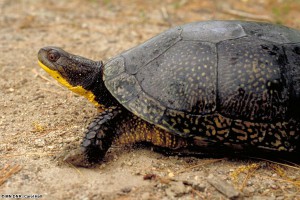
Unfortunately, many nesting areas are separated from the turtles’ wintering areas by roads they cross as they make their way to nests. “Many turtles and other species are killed on Minnesota roads each year, especially during the nesting season,” said Carol Hall, DNR herpetologist. The rare Blanding’s turtle is found in a number of Anoka County areas including the Sandhill Crane Natural Area and the Columbus Lake Conservation Area.  Help reduce turtle road deaths:

  • Allow unassisted road crossings. When turtles can safely cross roads unaided due to a lack of oncoming traffic, allow them to do so. Observe from a distance and avoid rapid movements. Doing otherwise may cause turtles to change direction, stop, or seek shelter within their shells.
  • Avoid excessive handling. Excessive handling can disrupt normal behavior. Prolonged examination of turtles should be limited to only one or two turtles of each species.
  • Maintain travel direction.  Always move turtles in the same direction they were traveling when encountered. Turtles should always be moved across roadways in as direct a line as possible.

People who see a turtle or other animal on the road, should slow down, and safely drive around it. Many people want to help turtles cross the road but the best approach is to let the turtle cross on its own. There are nine turtle species in the state, some of which are protected.

For more information see the MN DNR Turtles webpage. or view the turtle video.

Comments invited on Mississippi River Corridor Critical Area rules

(UPDATE: 6/17/2014) A public meeting will be held at the Green Haven Golf Course (Anoka, MN) on July 16th (6:30 to 9:00 p.m) to present the draft rules and hear comments and recommendations.

The Mississippi River Corridor Critical Area (MRCCA) is a land corridor along the Mississippi River within the seven-county metro area. The critical area designation recognized the unique economic, ecological, recreational and scenic values of the river and established districts and standards regulating some aspects of land use within the corridor’s 54,000 acres. The proposed rules would replace the existing state and local regulations that guide land development. This regulatory framework is getting its first update in 35 years. The 60-day comment period is intended to gather feedback on the working draft rules before they are revised and proposed for formal rule adoption.

The Minnesota Department of Natural Resources (DNR) invites public comments and recommendations on the proposed rules for protection of the river corridor. 
The working draft rules, maps, rulemaking schedule, and other information are available on the DNR’s project website. The DNR also plans to hold public information meetings and open houses in corridor communities this summer. People interested in receiving further information about those meetings should subscribe to the agency’s email updates at the project website.

Take the Conservation District’s Stakeholder Survey

The Anoka Conservation District is beginning their 2015-2019 Comprehensive Plan development process.

Public comments and recommendations on the Conservation District’s local priorities, issues and approaches to natural resources conservation are welcomed by completing a survey.

Your responses to this survey will be considered during the planning process. Completing this survey will take 10 to 15 minutes.

City watering restrictions are going into effect

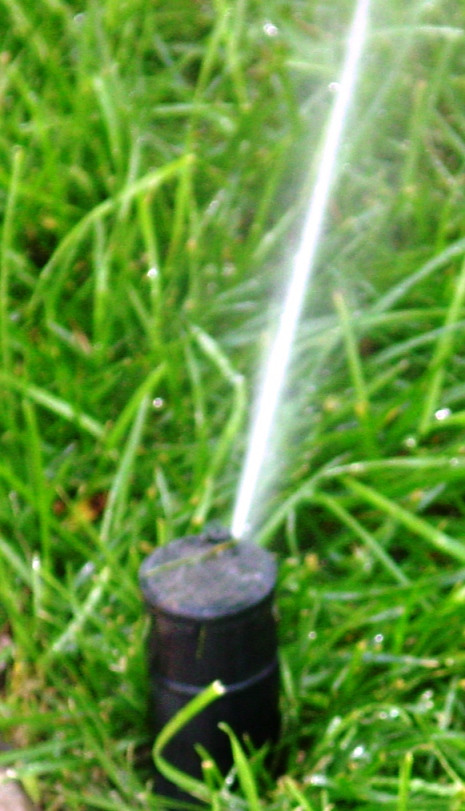
As Anoka County communities grow – so does our demand for water. The trick is to use water wisely so that our combined water demand doesn’t exceed our local water resources supply. During the summer months water use increases for lawn sprinkling. A homeowners water use in July can be six (6) times greater than January.

Lawn Watering Tips (from Don Taylor, Extension Horticulturist): (1) Consider whether lawn irrigation is necessary in your situation; (2) Lawn irrigation would normally be minimal in spring until June; (3) Add 1 to 1-1/2 inches of water per week (minus any rainfall) during the summer months; (4) Keep the intervals between irrigations as long as possible; and (5) Water in early morning hours for greatest efficiency.

Residents and businesses throughout Anoka County should take note of city watering restrictions:

Contact your water utility for more information about water conservation, leak detection and water fixtures that conserve water.

Unused water wells must be sealed for everyone’s health

It’s the law: unused wells must be sealed.  During this construction and demolition season, the Anoka County Municipal Wellhead Protection Group asks residents, property owners and developers to be on the lookout for old unsealed wells as you dig, demolish and develop.  It is estimated that there are over 20,000 unused wells in Anoka County.

Before cities like Blaine and Fridley established their water supply systems – many many home, business and farm wells were used. As cities like Andover and St. Francis expand their water systems – many many homes and businesses will discontinue using their wells. Wells no longer in use were often buried and forgotten. But there are ways to find lost wells (webpage).

Unused wells that have not been properly sealed can be a source of groundwater pollution, potentially contaminating nearby drinking water wells. They may threaten the safety of city water wells by allowing pollution to rapidly move down old decayed wells into deep groundwater.

Well sealing is the process of clearing debris and filling the well with a special material called grout according to the Minnesota Well Code. Only a licensed well contractor may seal a well to certify proper closure. By Minnesota law, a well must be in use, be under a maintenance permit (if unused), or be sealed by a licensed contractor. A well must be sealed if it’s:

  • not in use (abandoned or non-functional),
  • contaminated,
  • improperly sealed (without inspection/certification),
  • a threat to the quality of the groundwater, or
  • otherwise poses a threat to health or safety.

For more information contact the Minnesota Department of Health’s Well Management Unit at 651-201-4600, go to the MDH Well Sealing webpage or see the Well Sealing video (YouTube; 4:36).

Well in excavation

Forum: metro water supply planning – updating the master plan

The Metropolitan Council is initiating the process of updating the Twin Cities Metropolitan Area Master Water Supply Plan, with the goal of engaging city staff from the beginning of the process.

These forums are meant to provide local government planning and water utility staff with information about the scope and schedule of the update, including the connection between the Master Plan and local water supply plans. Participants are asked to provide feedback about the format of the Master Plan and recommendations to make the plan as useful as possible. For more information about these forums contact Linda Henning (Linda.Henning@metc.state.mn.us) at 651-602-1279.

Tuesday, June 10, 2014 from 8:30 to 10:30 a.m.

Golden Valley City Hall (Council Chambers)

7800 Golden Valley Road, Golden Valley, MN 55427

Tuesday, June 24, 2014 from 8:30 to 10:30 a.m.

Eagan City Hall (Council Chambers)

3830 Pilot Knob Road, Eagan, MN 55122

Hazardous waste workshop was a success

Representatives from businesses that produce very small quantities of hazardous waste attended the May 13, 2014 Hazardous Waste workshop held by Anoka County Environmental Services.  The attendees recieved information, not only on managing hazardous waste, but on protection of their community’s water resources and drinking water supply.

“I’m impressed with our generators that aren’t required to attend this workshop, but still do to make sure that they are handling their waste properly” said Laura Schmidt, Hazardous Waste Specialist.  Only larger volume generators (small and large) must complete periodic training to continue to be licensed.  The attendees at this workshop included representatives from:

  • Anoka Technical College, Anoka
  • Anoka Ramsey Community College, Coon Rapids
  • Bermo Inc., Blaine
  • Calson Toyota, Coon Rapids
  • Lorenz Bus Service Inc., Blaine
  • Metro Mosquito Control District, Andover
  • National Sports Center, Blaine
  • Visual Impact Signs, Fridley

NEXT WORKSHOP.  Anoka County Environmental Services will be holding a Small Quantity Hazardous Waste Generator workshop on Wednesday, August 12, 2014.  For more information call Elizabeth Lyons at 763-422-7071.

Powered by WordPress