Celebrate kids to parks day (May 17th)

The Kids to Parks Day is a nation-wide program of the National Park Trust to encourage children (and parents) to discover through outdoor activities and take part in their parks everywhere. There is a necessity to engage young people with our treasured natural areas.

The Anoka County Parks Department is making it possible for families to get outdoors in parks where residents enjoy the benefits of healthy activities. County parks are protected and maintained in their natural condition that not only benefit people but wildlife and our natural resources.  Check out the programs and services that engage children and families in the wonderful natural areas right in your neighborhood:

For more information call Anoka County Parks Department at 763-757-3920 or the Wargo Nature Center at 651-429-8007.  For more information about the National Kids To Parks Day program contact the National Park Trust.

Well Water Wise week (May 5-9, 2014)

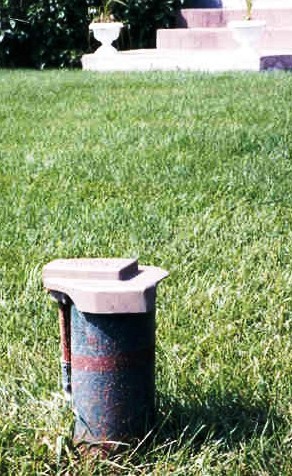
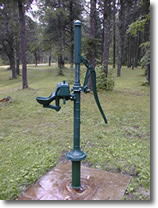
Private (home and cabin)  well owners must perform an annual test to ensure that their water supply remains safe to drink.  The Anoka County Community Health and Environmental Services Department, in cooperation with 13 communities, is sponsoring the 15th annual Well Water Wise Week (3W).

Anoka County’s 3W promotion coincides with National Drinking Water Week in which communities recognize the success of their public water supplier to reliably provide safe drinking water (to obtain a copy of water testing for your community supply contact your water utility department).  Anoka County’s 3W cooperators would like all residents to recognize the importance of regular testing of their drinking water supply and maintaining private wells to prevent pollutants from entering their water supply or the groundwater near their well.

Unlike public water utilities, private well water is not treated with chlorine to prevent bacteria growth. Simply looking at the appearance of water is not a reliable indicator of whether it is safe to drink.  An annual coliform bacteria test ensures that your drinking water is free of micro-organisms.

Nitrate-nitrogen occurs naturally in groundwater and wells at concentrations below one milligram per liter (mg/L). Nitrogen can seep into private wells from a variety sources including septic systems, nitrogen fertilizers, animal feedlots and landfills.  The Minnesota Department of Health has established a Health Risk Limit (HRL) for nitrate-nitrogen at 10 mg/L. Levels above that point may pose an immediate risk to infants and pregnant women.

Residents may pick up a well water test kit at participating city and township offices (listed below) or at the Environmental Services office, Suite 360, of the Anoka County Government Center at 2100 Third Avenue, Anoka, MN 55303. Water samples can be submitted to the Environmental Services every Monday from 8 a.m. to 4:15 p.m. and Tuesday from 8 a.m. to Noon.  During 3W week only, samples can be submitted Monday through Thursday (8 a.m. to 4:15 p.m.) and Friday (before Noon). The well water testing kit includes details about water collection and submission.  A laboratory fee of $30 will be charged for bacteria and nitrate nitrogen analysis. For additional water testing (e.g. arsenic, lead, fluoride, iron, chloride and total hardness) contact Environmental Services at 763-422-7063 to obtain the proper sample kit and instructions.  See the Well Water Testing video (YouTube, 4:16).

Well Water Wise kits are at participating communities and agencies:

Guidelines for drinking water protection at seasonal establishments and events

As temperatures rise, people move outside to golf courses, water parks, soccer fields, and baseball diamonds.  It also means starting up seasonal wells and installing water dispensers at parks, campgrounds, golf courses and outdoor catered events. To get started right – businesses and organizations must sanitize your water well and stored water dispensers. Then, perform a test to be certain that the water that looks okay is safe to drink.

Anoka County Community Health and Environmental Services Department encourages operators of seasonal water well systems and on-site water dispensers to properly open wells and clean (sanitize) water dispensers by following the Department guidelines:

For more information call 763-422-7063.

Be a Volunteer Water Monitor – be part of the solution

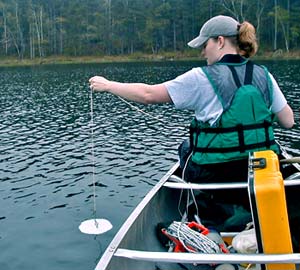
The Minnesota Pollution Control Agency (MPCA) is recruiting volunteers to help track water quality changes in lakes and streams in Anoka County’s communities through the Citizen Lake and Citizen Stream Monitoring Programs.  Make a weekly tour of your lake or take a healthy walk along a nearby stream as you measure and record water quality.

Volunteer data helps Anoka County, cities, watershed management organizations and lake associations to see trends in water quality and find ways to protect our water resources. In some cases, volunteer-collected data is the only lake and stream data available, making individual, business, or organizational involvement critical.

Volunteers perform short and simple tests at their designated lake or stream once a week throughout the summer. Equipment and training are provided by the MPCA. Volunteers benefit by learning more about their favorite lake or stream, supporting a high quality of life, and helping to maintain and protect the unique waters that define our community.

WATERSPOT on Lake George.  The Lake George Conservation Club (LGCC) has been a Volunteer Water Monitor (see Lake George website) for many years providing information that helps the Lake George Improvement District (LGID) address water quality problems including the presence of Eurasian Watermilfoil, an aquatic invasive species.  This year (2014) the LGID, LGCC and the Anoka Conservation District are expanding and combining their monitoring programs to gain a better understanding of the lake and what lake property owners and users can do to preserve this shining water gem.

To become a volunteer or learn more about the program: view the Citizen Science Program (MPCA YouTube; 3:46) or Volunteers Make Citizen Science Work (EPA YouTube; 2:12), visit the MPCA’s Citizen Water Monitoring web page, or call 651-296-6300.

Anoka County law enforcement provides a safe way to dispose of drugs and protect water resources

Don’t flush prescription drugs (or other dangerous chemicals) down the drain. Prescription drugs have the potential to pollute local water resources (groundwater and the Mississippi River) – the source of our drinking water. Proper disposal will not only keep dangerous drugs from being abused but also prevent harm to water and wildlife (e.g. fish and ducks).   Safely and properly dispose of your prescription drugs.

The Anoka County Sheriff’s Office along with its law enforcement partners (Blaine, Centennial Lakes, Columbia Heights, Fridley, and St. Francis Police Departments), provide a lobby Prescription Drug Take Back drop box to dispose of unused or unwanted prescription drugs. Participation in the Take Back is free and anonymous. All prescriptions will be accepted and destroyed so that they are not abused or pollute local water resources.

No syringes, needles, or other hazardous materials will be accepted. The Prescription Drug Take Back program will operate during lobby hours, Monday through Friday. The program is located at participating city offices and the Anoka County Sheriff’s Office (13301 Hanson Blvd. NW in Andover, MN 55304). For more information contact the Anoka County Sheriff’s Office at 763-323-5000.

Comments invited on the Upper Mississippi River report

The Minnesota Pollution Control Agency (MPCA) is seeking comments on the Upper Mississippi River water quality improvement report and protection plan. High concentrations of bacteria have reduced the quality of the river. The Total Maximum Daily Load (TMDL) report (a determination of the maximum pollutant a water body can tolerate) focuses on excess fecal bacteria, mainly E.coli.  The public comment period continues through May 6.

Mississippi River Basin Map (MPCA)The study and protection plan addresses 22 (of 51) tributary reaches of the Mississippi River that are impaired for aquatic recreation, due to E.coli, and where restoration efforts need to take place. E. coli monitoring is used to indicate the potential presence of waterborne pathogens that can be harmful to human health.  E. coli comes from human, livestock, and wildlife waste.

The draft report is available on the MPCA’s TMDL projects web page, or at the MPCA office. Comments may be submitted to Barb Peichel, MPCA, 520 Lafayette Road, St. Paul, MN 55155. For more information, contact Barb at 651-757-2646.

ATTEND the Mississippi River Forum (May 30, 2014) to learn about coordination of the many organizations and projects that prevent water pollution; protect the River and its tributaries; and monitor the quality of life within the River basin.

CHECK OUT the enhanced EPA How’s My Waterway application and website to help you find information on the condition of lakes, rivers and streams on your smart phone, tablet or desktop computer.

Very Small Quantity Hazardous Waste Generator Workshop

Announcing  Hazardous Waste Training for Very Small Quantity Generators (May 13, 2014).

Are you responsible for managing hazardous waste at your facility? This workshop will introduce Small Quantity hazardous waste generators to the management and compliance standards required by Minnesota rules. The workshop it designed for newcomers and those who need a refresher. It covers determination of whether a waste is hazardous, handling, storage, transportation, emergency planning, employee training and record keeping requirements.

For more information contact Laura Schmidt (763-422-7253, Laura.Schmidt@co.anoka.mn.us) or Kathy Piela (763-422-7093; Kathy.Piela@co.anoka.mn.us).

Coon Rapids and Columbia Heights are GreenStep Cities

The City of Coon Rapids has recently been designated a Minnesota GreenStep City to boost sustainability of local natural resources and the quality of life for its citizens. Coon Rapids joins Columbia Heights as the second Anoka County community in the Greensteps program. By adopting best practices, Coon Rapids and Columbia Heights are helping to ensure the sustainability of local resources now and for generations to come.

Each best practice can be implemented by completing one or more actions at a 1, 2 or 3-star level, from a list of four to eight actions. Coon Rapids will establish the particular best practices that address its sustainability challenges to focus on cost savings, energy use reduction, and encourage civic innovation.

The continuous improvement program best practices include:

  • efficient stormwater management (to minimize pollutants in rainwater runoff);
  • surface water quality (improve local water bodies);
  • efficient water and wastewater facilities (to maintain drinking water and sewer services);
  • solid waste reduction (increase waste reduction, reuse and recycling); and
  • urban forests (increase tree and plant cover).

The Coon Rapids City Council recently passed a resolution to join the GreenStep program. For more information contact Coleen Sinclair, Coon Rapids GreenStep Coordinator at 763-767-6485 (csinclair@coonrapidsmn.gov).

For information about the Columbia Heights Greensteps actions contact the coordinator, Jesse Davies at 763-706-3706 (Jesse.Davies@ci.columbia-heights.mn.us)

Public health starts here with you

April is Public Health Month – and public health starts here with you

Public health is the science and art of preventing disease, prolonging life and promoting health through the organized efforts and informed choices of society, organizations, public and private, communities and you.

Environmental health is the branch of public health concerned with all aspects of the natural and built environment that may affect human health. Environmental health issues include natural and man-made disasters, air and water quality, chemical and radiological exposures, food borne disease outbreaks, and other health safety issues.  The Know The Flow website is a collaboration of Anoka County’s local agencies, organizations and individuals whose common goal is to maintain an environment that supports healthy people and sustained natural resources. 

Imagine a place without public health (YouTube video; 1:53)

For more information about Anoka County’s programs to promote healthy people and a healthy environment go to the Anoka County Community Health & Environmental Services Department webpage or call 763-422-7030.

Plan ahead to celebrate Arbor Day

Each year, on the last Friday of April, and throughout the month of May, Minnesotans recognize the value of trees, forests and the natural resources they represent.  Trees brighten the environment by moderating climate, improving air and water quality, conserving water and energy, and sheltering wildlife.

Many community Arbor Day/Month events include tree sales that require pre-ordering before the event.  Plan ahead to celebrate Arbor Day with the addition of a tree:

Powered by WordPress