Restoring Hardwood Creek in Lino Lakes and Hugo

Hardwood Creek is a valuable natural feature to residents and property owners in Lino Lakes. But in 2002 the creek was found impaired because pollution had reduced oxygen in the water so that fish and aquatic insect populations were falling or even missing. Hardwood Creek flows through Hugo into Lino Lakes and empties into Peltier Lake.

The Minnesota Pollution Control Agency and the Rice Creek Watershed District have partnered with Anoka and Washington Counties and the Cities of Lino Lakes and Hugo to find solutions that restore the natural quality of Hardwood Creek.

ERODING SOILS  A study determined that eroding soils were destroying important stream habitat and lowering dissolved oxygen making Hardwood Creek uninhabitable for many species of fish. The MPCA and RCWD took steps to address these problems. First Step – eroding stream banks were stabilized using logs, native plants and grasses. Second Step – a section of the creek was reconnected to the original meandering path. By “re-meandering” the creek, speed of water flow was slowed therefore reducing erosion and the amount of dirt washing into Hardwood Creek during rain events. Nutrient pollutants (e.g. lawn fertilizer) bind to dirt particles that can pollute the water when washed into the creek. Nutrients lower the level of dissolved oxygen in water.

Hardwood Creek Restoration (step 2)

The Third Step – is up to members of the community. Landowners adjacent or near Hardwood Creek are asked to work with the Rice Creek Watershed District to improve the quality of water that runs off their land and into the creek or storm water sewers that drain into the creek.

For more information or to learn how you can help restore Hardwood Creek contact the Rice Creek Watershed District at 763-398-3070 or see the links below about controlling soil erosion and protecting the quality of surface water.

Minnesota Master Naturalist class at Anoka-Ramsey Community College

Through the Minnesota Master Naturalist partnership with Anoka-Ramsey Community college, six community members can take the spring Field Biology course. Class starts on Jan. 16, 2014 and meet Thursdays (5:30-8:30pm) through May 8th. Two Sat. field trips are on April 5th and May 3rd (8:30 am – 4:30 pm). For more information contact Peggy Guiney.

Who can become a Minnesota Master Naturalist volunteer? Any adult who is curious and enjoys learning about the natural world, shares that knowledge with others, and supports conservation. If you enjoy hiking, bird watching, following tracks, or identifying wildflowers, you’ll love being a Minnesota Master Naturalist Volunteer.

The Minnesota Master Naturalist Volunteer training courses consists of in-classroom training and field trips. Course are designed to be a general overview of Minnesota’s three biomes: Big Woods, Big Rivers (BWBR); Prairies and Potholes (PP); North Woods, Great Lakes (NWGL); plus advanced training (ADV).

How much do the courses cost? Each course costs $200.00 (advanced courses are less) and includes course manuals and supplies.  Scholarships Available. If the $200.00 fee is a hardship, fill out the scholarship application and send it to Minnesota Master Naturalist.  For more information call the MMN office at 888-241-4532.

Reduce your salt use

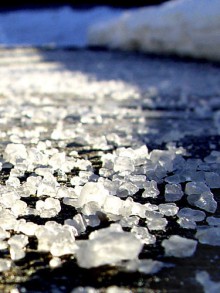
Ice, is part of our winter wonderland making walking and driving hazardous. Salt, is part of the cure for icy roads and sidewalks. Moderation, is necessary in applying salt to roads and sidewalks to reduce water pollution as salty water runs off into ditches, streams, lakes wetlands and rivers.

The Minnesota Pollution Control Agency (MPCA) is considering listing several lakes as impaired because excessive chloride (salt) concentrations in the water: Chloride and Our Water – Monitoring The Mix (YouTube video, 3:20).

Simple things that homeowners can do to reduce pollution while staying safe:

  • Watch a video – Improved Winter Maintenance: Good Choices for Clean Water.
  • Shovel –  The more snow and ice you remove manually, the less salt you will have to use and the more effective it can be. Get out there early and keep up with the storm. You may even decide that salt isn’t needed.
  • Colder than 15°F – most salts stop working at this temperature. Use sand for traction instead. See the MPCA’s table to learn which products work at which temperature.
  • More isn’t better – more salt does not mean more melting. Be patient – give the salt time to work. Use less than 4 pounds of salt per 1,000 square feet (an average parking space is about 150 square feet). One pound of salt is approximately a heaping 12-ounce coffee mug. Consider purchasing a hand-held spreader to help you apply a consistent amount.
  • Sweep up extra – salt or sand remaining on dry pavement is no longer doing any work and will be washed away. Use this salt or sand somewhere else or throw it away.
  • Slow down – adjust your driving for the conditions and make sure to give plow drivers plenty of space to do their work.

Homeowner Septic System Class, February 25, 2014

Cooking for a crowd this holiday season? Please remember not to pour fat and grease down the drain–it can clog your septic system. That’s just one of 100 tips that you’ll hear from the Anoka County Extension Service experts at their septic system class. 

A septic system is professionally designed to treat sewage for a specific home, business, or group of properties. Proper treatment of sewage returns (recycles) water back to groundwater with reduced risk to human health, nearby wells and the environment surrounding your home.

Learn how to keep your septic system operating properly – when to pump, how to protect it from freezing, and more. The Anoka County office of the University of Minnesota Extension Service will be holding a Homeowner Education for Septic Systems (2-hour) workshop on February 25, 2014 at 7:00 p.m.  at the Bunker Hills Activity Center in Andover.  Attendees will receive the Septic System Owner’s Guide and come away more confident and knowledgeable – it’s a wise investment of time.

Cost is $10 per family.  Registration is due by February 21st.  For more information call the extension service at 763-755-1280.

N & E Metro Groundwater Management Area includes Anoka County

(UPDATE 12/18/2013) A list of the Ten Cities That Could Run Out of Water – Growing Populations, Stressed Water Supplies (The Weather Channel) indicates that water resource management and supply issues are found across the nation.  “Securing access to plentiful, renewable sources of fresh water is among the biggest struggles large cities around the world face. Growing populations and declining fresh water supplies – from rapidly depleting aquifers as well as drought-stricken reservoirs and rivers – mean that cities are scrambling to find solutions…

(12/3/2013) Anoka County residents and businesses get their water from wells that draw from groundwater aquifers located directly below us.  As our area grows, so does demand for water. Is there enough groundwater?

The Minnesota Department of Natural Resource (DNR) has established a North & East Metro Pilot Groundwater Management Area (including part or all of Anoka County) to:

  • Improve information about area groundwater resources;
  • Reinforce partnerships for sustainable groundwater use;
  • Improve compliance with existing groundwater regulations; and
  • Assure sustainable groundwater supply for future generations.

To illustrate the importance of our groundwater resources the Minnesota Department of Natural Resources has released a video Living on the Edge: Our Water Supply at Risk. The DNR is expected to establish the boundaries of the North and East Metro Groundwater Management Area, plus a management plan, later in 2014.

WHAT CAN YOU DO, NOW? Consider home and business water conservation options that are provided on the WaterSense website (USEPA) or on the Water Conservation Toolbox webpage (Metropolitan Council).  Combined, our conservation efforts will add up.

The Watershed Approach to protecting water resources

The Minnesota Pollution Control Agency has produced a four-part video (YouTube) series highlighting Minnesota’s watershed approach to restore and protect water resources. Each small watershed is part of the more extensive watershed for a larger stream or lake in the vicinity. These larger watersheds are in turn part of even larger drainage networks, and so on. The largest-scale watershed is called a basin. Minnesota has 10 basins, some of which include portions of neighboring states or Canada.

As an example, the boundaries of the Coon Creek and the Rice Creek Watershed Districts are based on the land areas where precipitation collects into the creeks as they flow to the Mississippi River Basin. Watershed Districts and Watershed Management Organizations are the local agencies that implement the protection of water within their watershed.

Part 1 – What is a watershed? (3:35)

Part 2 – How Minnesota got to where we are (2:20)

Part 3 – A watershed approach (4:05)

During a 10-year cycle, each of the state’s 81 major watersheds (10 each year) is evaluated with priorities and goals for improvement established, and actions designed to restore or protect water quality.

Part 4 – Getting involved in the process (5:35)

Learn more about Minnesota’s Watershed Approach and why each resident and business within their watershed must do their part to restore and protect their local water resource. Residents in the Rum River watershed can learn more about the Watershed Restoration and Protection Project (WRAPP) being developed by the Anoka Conservation District by calling the District at 763-434-2030.

The Mississippi River Corridor Critical Area

The Mississippi River Corridor Critical Area (MRCCA) was established in 1979 by Executive Order for the unique 54,000-acre land corridor along the Mississippi River through the Twin Cities Metropolitan Area. Land use in the corridor is guided by local zoning ordinances including the communities of Anoka, Coon Rapids, Fridley and Ramsey. These communities are coordinating their land use management programs with the Minnesota Department of Natural Resources (DNR) and the National Parks Service (NPS) to protect and enhance this unique water feature.

Maps of MRCCA in Anoka County are provided by the DNR (current district boundaries and designations are under reveiw):

Mississippi River Corridor Critical Area

The DNR is preparing draft rules for the management of the MRCCA that are expected to be available to the public in early 2014. There will be many opportunities for public comment on the draft rules in the future. For more information go to the Mississippi River Corridor Critical Area webpage.

Take the Community Health Survey

UPDATE (12/10/2013) The Anoka County Community Health Survey has been extended through January 13, 2014.

Help identify Anoka County’s most important community health issues. Take the Anoka County Health Survey online (in English or Spanish). The Survey includes environmental health issues about protecting water resources and drinking water safety. To learn more about the survey and how to get copies in other languages, read the news release.

We appreciate the time residents take to complete the survey. While we understand time is precious, the answers provided give us an important community perspective of what citizens think should be addressed in terms of the entire community and its health,” said Carol LeDoux, Anoka County Commissioner.

*All responses are anonymous and cannot be associated with an individual. For more information, contact Anoka County Community Health at 763-422- 7030.

Minnesota’s Water Quality Standards Review

The Minnesota Pollution Control Agency (MPCA) is conducting a Triennial Standards Review (TSR) to obtain public input on the need for amendments and revisions to rules governing state water quality standards (WQS).  The MPCA seeks public comments on the quality of Minnesota’s lakes, rivers, streams, wetlands and groundwater to consider WQS modifications for the next three year period.  Comments should be submitted to the MPCA in writing before 4:30 pm on January 15, 2014.

A public meeting for those interested in asking questions and/or providing their comments in person will be held at the MPCA’s St. Paul office on December 11, 2014 from 1:30 pm until 4:30 pm; the meeting will also be webcast and recorded.

For further details and additional information, please go to the MPCA’s Water Quality Standards website.

*Note that rulemaking to implement revisions to state WQS is conducted separately from the TSR.  The 2013 TSR is not part of the rulemaking process.   Please check the MPCA’s Water Quality Standards website frequently for updated information.

Improving the Rum River dam as a barrier to Asian Carp

The City of Anoka wants to improve the Rum River Dam to make it a redundant barrier to Asian Carp. Asian carp have been making their way up the Mississippi River system over the past several decades causing serious damage to native fish populations by dominating food and habitat resources. Sport fishing is a $2.8 billion industry in Minnesota. If Asian carp reach our valuable water resources they will damage recreational and commercial opportunities.

Mille Lacs Lake, one of Minnesota’s premier fisheries, is connected to the Mississippi River by the Rum River. Similar to the Coon Rapids Dam, the Rum River Dam in Anoka has potential to serve as a redundant barrier to Asian carp. This investment in the Rum River Dam would help protect one of the defining assets of the Minnesota fishing industry.

A coalition of Rum River watershed partners is established to protect the Rum River which includes: 1,600 square miles of watershed area; 1,780 miles of rivers and streams; over 200 smaller lakes; and Mille Lacs Lake.

The City of Anoka is requesting $5 million in 2014 state bonding/capital investment funding to improve the Rum River Dam as a redundant barrier to Asian Carp.  For more details see the Rum River Dam Fact Sheet or contact Tim Cruikshank, Anoka City Manager, at 763-576-2711 (tcruikshank@ci.anoka.mn.us).

Powered by WordPress